1 citations
,
July 2024 in “International Journal of Cosmetic Science” Hair curvature is the main factor affecting curly hair manageability and product preferences.
July 2009 in “International Journal of Cosmetic Science” Japanese women's curved hair has an uneven internal structure and varied amino acid composition.
 January 2006 in “Seibutsu Butsuri”
 Curly and straight hair differ in how their internal fibers are arranged.
 21 citations
,
July 2010 in “International Journal of Cosmetic Science”
21 citations
,
July 2010 in “International Journal of Cosmetic Science” Older people's hair becomes less shiny because it gets more uneven and curved.
 November 2022 in “Hair transplant forum international”
 The long hair preview technique in body hair transplantation offers high-quality, natural results.
January 2022 in “Surgical & Cosmetic Dermatology” Isotretinoin can rarely cause hair to grow curly.
1 citations
,
January 2025 in “International Journal of Cosmetic Science” Age-related hair curvature increases due to internal structural changes from grooming.

LGF injections may improve early Peyronie's disease by reducing penile curvature and plaque size.

PRP injections with tadalafil and stretching safely improved Peyronie's symptoms but didn't significantly change curvature long-term.
April 2020 in “International Journal of Cosmetic Science” The study found that minor protein differences between curved and straight Japanese hair are unlikely to significantly affect hair structure.
 53 citations
,
October 2014 in “Free radical biology & medicine”
53 citations
,
October 2014 in “Free radical biology & medicine” Defective mitochondrial DNA replication causes aging symptoms and increased oxidative damage in mice.
29 citations
,
September 2017 in “Genes” Selecting specific KRTAP26-1 gene variants can improve wool quality in sheep.
4 citations
,
April 2018 in “Journal of vacuum science and technology. B, Nanotechnology & microelectronics” The conclusion is that a new method can identify cosmetic residues on hair and match them to their products.
January 2026 in “Andrology” PRP injections are safe but don't significantly improve Peyronie's Disease.
Caffeine therapy helped hair recovery after chemical and traction damage.

The KRTAP36-1 gene affects wool quality in Chinese Tan lambs.

Variant G of the KRTAP20-1 gene improves wool curliness in Chinese Tan sheep.
65 citations
,
May 2006 in “Journal of Structural Biology” Hair curliness is due to uneven distribution of different cortices within the hair fiber.
55 citations
,
December 2021 in “BMC Veterinary Research” Certain genes in Iranian sheep are linked to wool production and heat adaptation.
26 citations
,
September 2005 in “International Journal of Dermatology” Hair shape is determined by genetic, molecular, and cellular factors.
 8 citations
,
January 1986 in “The Journal of Dermatologic Surgery and Oncology”
8 citations
,
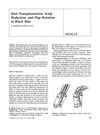
January 1986 in “The Journal of Dermatologic Surgery and Oncology” Hair loss surgeries like grafts, scalp reductions, and flap rotations can be effective for black men with proper technique adjustments.
 2 citations
,
August 2016 in “Experimental Dermatology”
2 citations
,
August 2016 in “Experimental Dermatology” Finasteride treats baldness but may cause lasting sexual side effects.
2 citations
,
January 2011 Relaxers straighten African hair by breaking down its helical structure using strong bases.
1 citations
,
July 1935 in “Nature” Animal hair can curl tightly on its own, especially in foxes, due to changes in keratin.
 January 2026 in “Journal of Clinical and Investigative Dermatology”
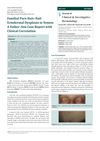
 A father and son in Yemen have a genetic condition causing hair loss and nail problems.
 November 2025 in “BMC Genomics”
 Genetic differences in sheep affect wool type, with fat and immune genes influencing hair traits.
September 2025 in “Animals” The KRTAP22-2 gene in sheep does not significantly affect wool traits.
 February 2025 in “Indian Dermatology Online Journal”
 Pincer nails are rare in lupus patients and may be managed conservatively.
April 2017 in “Journal of Dermatological Science” Asymmetric hair follicle differentiation causes the unique shape of kinky hair.
October 2005 in “The Journal of clinical investigation/The journal of clinical investigation” Genetic manipulations that extend lifespan in mice may not work as effectively in humans.