 July 2025 in “Scientific Reports”
 RG and RJ gels speed up burn wound healing better than other treatments.
 July 2025 in “Scientific Reports”
 Six key genes can predict bladder cancer outcomes and may serve as prognostic biomarkers.

Menopause-related skin changes may increase fungal infections and inflammation.
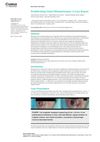
Recognizing and fully removing giant pilomatrixomas is crucial to prevent them from becoming cancerous.
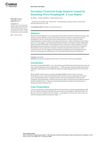
Brunsting-Perry pemphigoid can cause scarring hair loss and may be underdiagnosed.

Dual TCR Treg cells are common in various mouse tissues and show diverse characteristics.
 December 2024 in “Clinical Cosmetic and Investigational Dermatology”
 Alopecia areata might help slow down certain cancers.
 August 2024 in “Frontiers in Pharmacology”
 Antibody treatments show promise for hair loss but need more research.
 August 2024 in “Qucosa (Saxon State and University Library Dresden)”
 White fat tissue in the skin helps control inflammation by affecting certain immune cells.
 July 2024 in “Journal Of Stem Cell Research”
 Mesenchymal stem cells improve skin appearance and structure in dermatology and aesthetic medicine.
 March 2024 in “Frontiers in genetics”
 Different types of fibroblasts play specific roles in wound healing and cancer, which could help improve treatments.

New insights into cell communication in psoriasis suggest innovative drug treatments.
 December 2023 in “Curēus”
 COVID-19 vaccination does not significantly increase the risk of developing alopecia areata.
 December 2023 in “bioRxiv (Cold Spring Harbor Laboratory)”
 AP-2α and AP-2β proteins are essential for healthy adult skin and hair.
 November 2023 in “Klìtinna ta organna transplantologìâ”
 MSC-derived exosomes can help treat COVID-19, hair loss, skin aging, and arthritis.
 October 2023 in “Biomedical science and engineering”
 Innovative methods are reducing animal testing and improving biomedical research.
 October 2023 in “bioRxiv (Cold Spring Harbor Laboratory)”
 A protein called EGFR protects hair follicle stem cells, and when it's disrupted, hair follicles can be damaged, but blocking certain pathways can restore hair growth.
 October 2023 in “bioRxiv (Cold Spring Harbor Laboratory)”
 Immune cells are essential for early hair and skin development and healing.
 October 2023 in “Frontiers in medicine”
 Targeted immunotherapy could be a promising new treatment for hair regrowth.
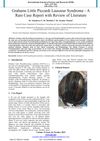 October 2023 in “International Journal of Science and Research (IJSR)”
 Early diagnosis of GLPLS is crucial to prevent complications, but scarring alopecia is irreversible.
 September 2023 in “bioRxiv (Cold Spring Harbor Laboratory)”
 FOL-026 peptide can help repair blood vessels and promote growth, offering potential treatment for vascular diseases.
 September 2023 in “Research Square (Research Square)”
 TNC+ fibroblasts play a key role in skin inflammation by interacting with T cells.
The case shows the difficulty in diagnosing certain conditions when standard tests are negative.
 June 2023 in “Romanian Medical Journal”
 The case shows how hard it is to tell apart Multiple Autoimmune Syndrome from other similar autoimmune conditions, but correct diagnosis is key for treatment to work.
 January 2023 in “Discovery immunology”
 T cells and bacteria in the gut and skin help maintain health and protect against disease.
 August 2022 in “Revista de la Universidad Industrial de Santander/Salud UIS”
 Stress-related hair loss was reversed with a special medication.
 July 2022 in “International journal of KIU”
 Genetics influence opioid addiction risk, diet affects COVID-19 severity, Aerva lanata may harm kidneys, some plants fight fungi and cancer, and nursing students need better contraceptive knowledge.
 May 2022 in “Gastroenterology”
 Targeting NETs may help reduce fibrosis in Crohn's disease.

No single biomarker is reliable enough for diagnosing and assessing SLE.
 February 2022 in “Research Square (Research Square)”
 High TSPEAR levels in colorectal cancer predict worse outcomes.