 1 citations
,
October 2018 in “Madridge journal of dermatology & research”
1 citations
,
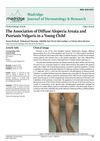
October 2018 in “Madridge journal of dermatology & research” A young child with alopecia areata and psoriasis improved with treatment, suggesting a link between the two conditions.
1 citations
,
May 2017 in “InTech eBooks” New treatments focusing on immune pathways show promise for stubborn hair loss.
 1 citations
,
January 2017 in “Springer eBooks”
1 citations
,
January 2017 in “Springer eBooks” Understanding the immune-related causes of Alopecia Areata has led to potential treatments like JAK inhibitors.
 1 citations
,
January 2016 in “Dermatology Review”
1 citations
,
January 2016 in “Dermatology Review” Vitamin D might help treat alopecia areata.
 1 citations
,
November 2014 in “Elsevier eBooks”
1 citations
,
November 2014 in “Elsevier eBooks” Future research should focus on making bioengineered skin that completely restores all skin functions.
1 citations
,
December 2012 in “Papers on Anthropology” Certain proteins and cytokines are key in causing psoriatic skin issues.
1 citations
,
August 2005 in “Springer eBooks” Alopecia areata is an autoimmune disease with genetic links, treatable with certain medications, and can affect mental health.
 1 citations
,
January 2004 in “Journal of Physiology & Pathology in Korean Medicine”
1 citations
,
January 2004 in “Journal of Physiology & Pathology in Korean Medicine” Thuja orientalis extract significantly promotes hair growth in mice with hair loss.
August 2026 in “The Journal of Dermatology” dWAT actively supports hair growth by interacting with immune cells.
 July 2026 in “Archives of Dermatological Research”
 Adaptogenic herbs like ashwagandha, rhodiola, and schisandra may help treat stress-related skin issues.
July 2026 in “The scientific and practical journal Dermatology and infectious diseases” Systemic isotretinoin is very effective for treating dissecting cellulitis of the scalp.
June 2026 in “Health Science Reports” Key genes and pathways in alopecia areata were identified, suggesting new treatment targets.
June 2026 in “Frontiers in Immunology” JAK inhibitors effectively treat inflammatory skin diseases by targeting specific cytokine signals.
 June 2026 in “Eurasian Journal of Medicine”
 Baricitinib effectively regrew hair in a woman with alopecia universalis after other treatments failed.
 May 2026 in “International Journal of Molecular Sciences”
 Plucked hair follicles can be used for regenerative therapies and personalized medicine.
 April 2026 in “DiRROS repository (University of Maribor)”
 MSC-derived EVs have potential as therapeutic agents but face challenges like production complexity and high costs.
April 2026 in “Biosaintifika Journal of Biology & Biology Education” Hypoxia-induced MSC exosomes may boost hair growth in alopecia.
 April 2026 in “Frontiers in Immunology”
 Certain genes may be linked to autoimmune conditions in people with alopecia areata.
 April 2026 in “Journal of Inflammation Research”
 Alopecia areata and atopic dermatitis share immune system issues, and treatments like JAK inhibitors can help both.
 March 2026 in “Medeniyet Medical Journal”
 EH-MSCs may help treat hair loss by boosting regeneration and reducing inflammation.
 March 2026 in “Journal of Translational Autoimmunity”
 Ruxolitinib helps regrow hair in alopecia areata by blocking inflammation, reducing stress, and controlling cell death.

Deucravacitinib improves symptoms and reduces inflammation in Lichen Planopilaris.
 February 2026 in “MedScien”
 Mesenchymal stem cells can help delay skin aging and improve wound healing.
February 2026 in “Frontiers in Immunology” Skin diseases like acne and psoriasis are linked to stress, gut health, and inflammation, with new treatments focusing on gut and mind-body approaches.
 February 2026 in “Eduvest - Journal Of Universal Studies”
 Janus Kinase Inhibitors are promising new treatments for various skin conditions due to their effectiveness and safety.
 February 2026 in “Clinical Cosmetic and Investigational Dermatology”
 Low humidity changes skin gene expression, but emollients can help manage these changes.
 January 2026 in “Journal of Contemporary Medicine”
 Vitamin D may help prevent or reduce hair loss after COVID-19.
January 2026 in “IECCMEXICO” Chronic inflammatory skin disorders are caused by immune system problems, not just skin issues.

JAK inhibitors effectively regrow hair in alopecia areata but hair loss often returns after stopping treatment.

Deuruxolitinib is approved to treat severe alopecia areata in adults.