 February 2026 in “International Journal of Science and Research (IJSR)”
 Ayurvedic treatment with Prachana and external applications effectively promoted hair regrowth in alopecia areata.
February 2026 in “Clinical Traditional Medicine and Pharmacology” Both Unani treatments effectively reduced hair shedding in Telogen Effluvium.
 1 citations
,
January 2017 in “The Annals of Clinical and Analytical Medicine”
1 citations
,
January 2017 in “The Annals of Clinical and Analytical Medicine” Vitamin D receptor gene changes don't affect alopecia areata risk.
 May 2023 in “Journal of complementary medicine & alternative healthcare”
 Ayurveda's descriptions of genetic disorders align with modern genetic understanding.
 March 2024 in “Research Square (Research Square)”
 Combining genetic and physical trait analysis improves diagnosis accuracy for monogenic diabetes.
 April 2023 in “Tikrit Journal of Pharmaceutical Sciences”
 Deferasirox effectively reduces iron overload in ß-thalassemia patients but may cause some manageable side effects.
 June 2023 in “British journal of dermatology/British journal of dermatology, Supplement”
 A child with skin and tooth symptoms was found to have a genetic mutation causing cardiocutaneous syndrome, leading to heart problems.
 January 2026 in “Journal of Ayurveda and Integrated Medical Sciences”
 Tryushana Churna and Kanchanara Guggulu may help improve hypothyroidism symptoms.
 May 2026 in “Zenodo (CERN European Organization for Nuclear Research)”
 The serum with microneedling effectively treats alopecia areata by enhancing drug delivery and is safe and patient-friendly.
 February 2019 in “International journal of scientific reports”
 Unani medicine helped regrow eyebrow hair in 45 days.
 October 2023 in “Psychiatry research. Case reports”
 A new HRAS gene variant may cause a range of symptoms including intellectual disability and psychiatric issues.
Ayurvedic herbs may reduce side effects and improve effectiveness of cancer treatments.
 12 citations
,
July 2020 in “International Journal of Pharmaceutics”
12 citations
,
July 2020 in “International Journal of Pharmaceutics” Iron oxide nanoparticles improve skin penetration and drug release for hair loss treatment.
 1 citations
,
December 2025 in “Iraqi Journal of Pharmaceutical Sciences ( P-ISSN 1683 - 3597 E-ISSN 2521 - 3512)”
1 citations
,
December 2025 in “Iraqi Journal of Pharmaceutical Sciences ( P-ISSN 1683 - 3597 E-ISSN 2521 - 3512)” Spanlastics effectively deliver Rizatriptan Benzoate with high efficiency and controlled release.
3 citations
,
December 2022 in “The Neurologist” CARASIL, a rare genetic disorder, was confirmed in an Arabic woman, highlighting its rarity and need for stroke prevention.
December 2025 in “Journal of the Bangladesh Agricultural University” Many weeds at Daffodil International University have important uses, like aiding hair growth and healing wounds.
9 citations
,
January 2016 in “Case Reports in Medicine” Iron therapy resolved uncooked rice cravings and symptoms in women with iron deficiency.
 February 2026 in “Dove Medical Press (Taylor and Francis Group)”
 Upadacitinib can effectively regrow hair in alopecia areata patients without worsening sarcoidosis.
November 2024 in “Skin Appendage Disorders” Clinicians should consider individual factors and communicate risks and benefits when prescribing ritlecitinib for adolescent alopecia areata.
 12 citations
,
January 2014 in “Annals of Dermatology”
12 citations
,
January 2014 in “Annals of Dermatology” Modified superoxide dismutase may trigger an autoimmune response in alopecia areata.
June 2025 in “Archives of Dermatological Research”  7 citations
,
January 2009 in “Journal of Pharmacy Research”
7 citations
,
January 2009 in “Journal of Pharmacy Research” Tridax procumbens parts have antioxidant properties.
 March 2016 in “National Repository of Dissertations in Serbia”
 Dutasteride is more cost-effective than finasteride for treating benign prostatic hyperplasia in Montenegro.
 18 citations
,
April 2001 in “Bioorganic & Medicinal Chemistry Letters”
18 citations
,
April 2001 in “Bioorganic & Medicinal Chemistry Letters” The nature of the side chain in RU 58841 derivatives greatly affects its AR affinity, with the N-(iodopropenyl) derivative 13 showing the highest AR binding affinity, suggesting its potential for developing high-affinity radioiodinated AR radioligands.
2 citations
,
July 2023 in “Water” Tradescantia plants can effectively test for the toxicity of harmful algae.
 4 citations
,
December 2012 in “Human Biology”
4 citations
,
December 2012 in “Human Biology” The most different genetic segment between Africans and East Asians is the EDA2R/AR region, with two main types influenced by population changes and natural selection, and linked to baldness.
11 citations
,
December 2013 in “International Journal of Dermatology” IL16 gene variations may affect the risk of alopecia areata in Koreans.
 6 citations
,
November 2023 in “Clinical Pharmacokinetics”
6 citations
,
November 2023 in “Clinical Pharmacokinetics” Ritlecitinib shows promise as a versatile treatment for various autoimmune and inflammatory diseases.
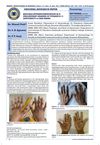 July 2021 in “PARIPEX INDIAN JOURNAL OF RESEARCH”
 Knuckle darkening can be an early sign of vitamin B12 deficiency.
18 citations
,
January 2013 in “Evidence-based Complementary and Alternative Medicine” Aconiti Lateralis Preparata Radix helps mouse stem cells grow and turn into bone cells faster than usual methods.