 September 2023 in “Curēus”
 A 21-year-old male has a benign skin condition called Becker's nevus, which he chose not to treat.
June 2023 in “International Journal of Dermatology” Lichen planus pigmentosus mainly affects middle-aged women with darker skin, is underreported, and is hard to treat.
April 2023 in “The Medical Journal of Australia” A five-year-old girl has a harmless, unchanging bald patch on her scalp.
 August 2022 in “Our Dermatology Online”
 The conclusion is that examining the scalp closely and checking for iron levels and thyroid issues is key to understanding chronic hair loss in women.
 April 2022 in “Research Square (Research Square)”
 The combination of laser and topical steroids is more effective for treating alopecia areata than topical steroids alone.
March 2020 in “QJM: An International Journal of Medicine” Standard intralesional corticosteroids are the best treatment for patchy alopecia areata.

Platelet-rich plasma injections effectively treat hair loss in both men and women, increasing hair density with high patient satisfaction and no significant side effects.
Benign tumors from hair follicles can look like other skin cancers but have distinct features under dermoscopy.
May 2019 in “CINECA IRIS Institutial Research Information System (University of Genoa)” MITF+ melanoma patients are more likely to have multiple melanomas and unique skin patterns.
 October 2018 in “InTech eBooks”
 Better tools are needed to assess alopecia effectively.
 March 2017 in “The American Journal of Cosmetic Surgery”
 Transplanted hair follicles can resist hair loss from an autoimmune condition better than natural hair.
September 2016 in “Journal of dermatological science” The conclusion is that the variation in hair thinness in patients is mostly due to the amount of underdeveloped hairs, and treatments that thicken fine hairs might work for those with mild to severe conditions.
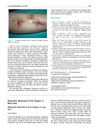 November 2012 in “Actas Dermo-Sifiliográficas”
 An 86-year-old man had a rare tongue melanoma but refused treatment, showing the need for early cancer detection and treatment.
 February 2011 in “Journal of the American Academy of Dermatology”
 A 60-year-old man with a long-term balding condition also developed a rare hair loss condition usually seen in postmenopausal women.
January 1982 in “Clinical Cosmetic and Investigational Dermatology” Familial dyskeratotic comedones are a rare, inherited skin condition that is hard to treat but may improve slightly with topical retinoids and urea cream.
Pediatric lichen is rare and diverse, and dermoscopy helps improve diagnosis and management in children.
 April 2026 in “American Journal of Dermatopathology”
 Increased blood vessel growth in lichen planopilaris may signal active disease needing aggressive treatment.
 March 2026 in “Biomedicines”
 Antera 3D® offers more precise and detailed scar assessment than traditional methods.
 February 2026 in “International Journal of Research in Dermatology”
 Two adults with unusual scalp fungus symptoms were successfully treated.
 February 2026 in “Journal of Dermatology and Skin Science”
 Dermatologists are key in detecting and managing OCD and BFRBs by working with psychiatrists.
 February 2026 in “International Journal of Science and Research (IJSR)”
 Androgenetic alopecia is the most common hair disorder, affecting more males, while telogen effluvium is more common in females, with stress and nutrition as key factors.
 January 2026 in “Archives of Current Medical Research”
 Telogen effluvium is the most common hair loss in women, often linked to low iron, while tight hairstyles and headscarves increase traction alopecia risk.
January 2026 in “Clinical Case Reports” A 6-year-old girl had both monilethrix and trichorrhexis nodosa, causing brittle hair, with minimal improvement from treatment.
 January 2026 in “Indian Journal of Dermatopathology and Diagnostic Dermatology”
 Corkscrew hairs can help diagnose trichotillomania.
December 2025 in “Indian Dermatology Online Journal” Improved diagnosis and affordable topical treatments are essential for managing alopecia areata in India.
September 2025 in “Journal of Cosmetic Dermatology” Single-needle radiofrequency is effective and safe for treating facial sebaceous hyperplasia.
May 2025 in “Dermatology Online Journal” Erlotinib can cause excessive eyelash growth.
Brunsting-Perry pemphigoid can cause scarring hair loss and may be underdiagnosed.
May 2025 in “International Journal of Trichology” Hair Heat Disease is caused by wet, oily hair and friction in hot, humid conditions.

Traumatic anserine folliculosis is a harmless skin condition in young males that needs correct diagnosis to avoid unnecessary treatments.