 January 2019 in “The Egyptian Journal of Hospital Medicine”
 Trichoscopy helps effectively tell apart different types of patchy hair loss in Egyptian patients.
 December 2023 in “Portuguese journal of dermatology and venereology”
 Trichoscopy can reliably distinguish between alopecia areata and trichotillomania.
January 1982 in “Clinical Cosmetic and Investigational Dermatology” Familial dyskeratotic comedones are a rare, inherited skin condition that is hard to treat but may improve slightly with topical retinoids and urea cream.
 January 2020 in “Journal of Cutaneous and Aesthetic Surgery”
 The congress was praised for its organization and educational value.
 16 citations
,
April 2014 in “Dermatologic Clinics”
16 citations
,
April 2014 in “Dermatologic Clinics” Dermatoscopy helps diagnose hair and scalp disorders in people with Afro-textured hair, but more research is needed for better understanding and treatment.
 October 2024 in “Dermatology Practical & Conceptual”
 Using dermoscopy improves diagnosis of scalp and hair disorders in children.
 44 citations
,
April 2012 in “American Journal of Clinical Dermatology”
44 citations
,
April 2012 in “American Journal of Clinical Dermatology” Scarring alopecias are complex hair loss disorders that require early treatment to prevent permanent hair loss.
 39 citations
,
January 2011 in “Archives of Dermatology”
39 citations
,
January 2011 in “Archives of Dermatology” Reflectance confocal microscopy confirms that yellow dots are signs of damaged hair follicles in alopecia areata.
 11 citations
,
May 2020 in “Anais Brasileiros de Dermatologia”
11 citations
,
May 2020 in “Anais Brasileiros de Dermatologia” Dermoscopy helps diagnose syphilitic alopecia, and treatment with penicillin can regrow hair.
8 citations
,
August 2017 in “Skin appendage disorders” Red dots on the upper chest may be an early sign of certain types of hair loss.
3 citations
,
June 2021 in “Actas Dermo-Sifiliográficas” Dermoscopy can effectively identify Malassezia folliculitis.
 1 citations
,
January 2023 in “Journal of Drugs in Dermatology”
1 citations
,
January 2023 in “Journal of Drugs in Dermatology” Early detection of Graham-Little-Piccardi-Lasseur syndrome is key for better management.
 1 citations
,
November 2017 in “International Journal of Research in Medical Sciences”
1 citations
,
November 2017 in “International Journal of Research in Medical Sciences” Dermoscopy helps distinguish between scarring and non-scarring hair loss and accurately diagnoses hair and scalp conditions without needing hair plucking.
 1 citations
,
October 2013 in “Expert Review of Dermatology”
1 citations
,
October 2013 in “Expert Review of Dermatology” Diagnosing alopecia areata is challenging and requires careful examination and various tests to distinguish it from other hair loss types.
Follicular atopic dermatitis in dark skin can look different, making diagnosis harder.
January 2026 in “Clinical Case Reports” A 6-year-old girl had both monilethrix and trichorrhexis nodosa, causing brittle hair, with minimal improvement from treatment.
 October 2025 in “Dermatology Practical & Conceptual”
 Dermatoscopy helps track scar changes and guide treatment.
June 2025 in “Indian Journal of Dermatology” A rare skin condition was identified and planned for treatment in an elderly man.
 April 2025 in “Clinical Dermatology Review”
 Trichoscopy is effective for diagnosing hair and scalp disorders without invasive biopsies.
 January 2025 in “International Journal of Scientific Research”
 12.5% of women with PCOS experience moderate hair loss, highlighting the need for early detection and management.
January 2025 in “Surgical & Cosmetic Dermatology” Temporal triangular alopecia causes permanent hair loss and can be managed with treatments like minoxidil or hair transplantation.
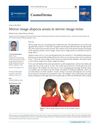
Mirror-image twins can have alopecia areata on opposite sides of their heads.
 September 2023 in “Zenodo (CERN European Organization for Nuclear Research)”
 Trichoscopy helps diagnose and track treatment for hair loss in men and women.
 March 2023 in “Journal of Cosmetic Dermatology”
 A woman's progressive hair loss was correctly diagnosed as a rare condition called fibrosing alopecia in a pattern distribution after initially being mistaken for a more common type.
 October 2022 in “Medičnì perspektivi”
 Darier-White disease causes skin and nail issues, starts around age 20, worsens until 40-50, and has poor treatment options.
 July 2021 in “Australasian Journal of Dermatology”
 The trichoscopy-assisted hair pull test is useful for diagnosing different types of hair loss.
 July 2018 in “Elsevier eBooks”
 Lichen Planopilaris is a hair loss condition best treated early with various medications, including hydroxychloroquine, to prevent permanent baldness.
 January 2018 in “Springer eBooks”
 Congenital triangular alopecia is a harmless, non-spreading hair loss condition often seen in young children.
 January 2018 in “Journal of clinical and investigative dermatology”
 Dermoscopy is a useful, low-cost method for diagnosing various types of hair loss disorders known as Cicatricial Alopecia.
June 2015 in “Turkish Journal of Dermatology” Trichoscopy helps diagnose different hair diseases effectively.