 June 2024 in “International journal of molecular sciences”
 Adenosine complex helps increase hair thickness and density in hair loss.
1 citations
,
April 2013 in “Journal of Investigative Dermatology”  September 2004 in “Hair transplant forum international”
 The ABHRS has outlined its goals for the next year.
475 citations
,
October 2006 in “Proceedings of the National Academy of Sciences” Folliculin helps regulate energy and nutrient sensing, impacting Birt–Hogg–Dubé syndrome.
77 citations
,
March 2000 in “Journal of Investigative Dermatology” The research identified six functional hair keratin genes and four pseudogenes, providing insights into hair formation and gene organization.
Tannin improved dermatitis symptoms and may help hair growth in affected mice.
January 2015 in “Journal of Neuromuscular Diseases” Danon disease can be hard to diagnose due to non-specific symptoms.
 February 2025 in “Journal of Investigative Dermatology”
 DMG-Na may help reduce hair loss and improve hair growth, but more research is needed.
 17 citations
,
April 2007 in “Kidney international”
17 citations
,
April 2007 in “Kidney international” Vitamin D boosts a specific gene activity in kidney cells that could improve heart and kidney function.
98 citations
,
February 2010 in “Dermatology Online Journal” Vitamin D may help treat hair disorders.
1 citations
,
August 2025 in “Clinica Chimica Acta” 
The study aims to create a model to improve personalized and preventive health care.
76 citations
,
January 2022 in “Journal of Tissue Engineering” Microneedle patches could replace injections but need more development for better use in medicine.
 5 citations
,
January 2023 in “International Journal of Molecular Sciences”
5 citations
,
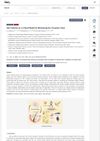
January 2023 in “International Journal of Molecular Sciences” Hair follicles could be used to noninvasively monitor our body's internal clock and help identify risks for related diseases.
 July 2016 in “The journal of investigative dermatology/Journal of investigative dermatology”
 Scientists created a new 3D skin model from cells of plucked hairs that works like real skin and is easier to get.
 10 citations
,
September 2015 in “PLoS ONE”
10 citations
,
September 2015 in “PLoS ONE” New mutations in the VDR gene cause vitamin D-resistant rickets without hair loss.
The bio-patch improves wound healing by reducing stress, inflammation, and promoting blood vessel growth.
 1 citations
,
April 2022 in “Regenerative Therapy”
1 citations
,
April 2022 in “Regenerative Therapy” Activating the GDNF-GFRα1-RET signaling pathway could potentially promote skin and limb regeneration in humans and could be used to treat hair loss and promote wound healing.
December 2025 in “Chemical Biology & Drug Design” Hesperidin may help reduce hair loss by protecting hair follicles.
January 1996 in “Studia iuridica” Two new gene mutations cause a rare hair disorder.
 June 2026 in “Zenodo (CERN European Organization for Nuclear Research)”
 Henna is a safer, natural hair dye but needs more research and standardization.
 19 citations
,
May 2016 in “Clinical, cosmetic and investigational dermatology”
19 citations
,
May 2016 in “Clinical, cosmetic and investigational dermatology” FGF-2&D/P nanoparticles can help treat hair loss.
119 citations
,
August 2010 in “Journal of Investigative Dermatology” Increased 11β-HSD1 activity in skin may contribute to aging and could be targeted to reduce aging effects.

Using a combination of AMD3100 and FK506 can speed up and improve wound healing in diabetic rats.
9 citations
,
March 2018 in “Plastic and Aesthetic Research” Direct hair implantation with special pens improves hair transplant precision and effectiveness.
47 citations
,
September 1995 in “British Journal of Dermatology” Diphencyprone therapy for hair loss can cause vitiligo.
 2 citations
,
May 2017 in “International journal of pharmacy and pharmaceutical sciences/International Journal of Pharmacy and Pharmaceutical Sciences”
2 citations
,
May 2017 in “International journal of pharmacy and pharmaceutical sciences/International Journal of Pharmacy and Pharmaceutical Sciences” Hutchinson-Gilford Progeria Syndrome is a rare genetic disorder caused by a specific gene mutation, characterized by aging symptoms and managed by monitoring heart health and using low-dose aspirin.
1 citations
,
October 2023 in “Heliyon” An infant with Hutchinson-Gilford Progeria Syndrome had successful surgery to fix breathing issues caused by a new genetic mutation.
 2 citations
,
September 2022
2 citations
,
September 2022 The PER3 rs772027021 SNP may cause mild skin pigmentation changes in a new subtype of dyschromatosis universalis hereditaria.
October 2020 in “Journal of the American Society of Nephrology” Drospirenone can hide symptoms of certain hormonal disorders, complicating diagnosis.