1 citations
,
January 2026 in “JDDG Journal der Deutschen Dermatologischen Gesellschaft” LC-OCT can help diagnose different types of scarring alopecia.
1 citations
,
November 2022 in “Indian Journal of Dermatology/Indian journal of dermatology” Dermoscopy helps accurately diagnose and treat benign skin cysts.
 April 2026 in “Research Square”
 Trichoscopy is reliable for diagnosing different types of frontal non-scarring hair loss.
 March 2026 in “Dermatology and Therapy”
 Distinct miRNA signatures could help diagnose and treat severe Alopecia Areata.
January 2026 in “Indian Journal of Paediatric Dermatology” Trichoscopy effectively diagnoses and monitors treatment in children with tinea capitis.
Trichoscopy is a valuable tool for accurately diagnosing scalp conditions without invasive procedures.
 January 2025 in “Dermatology and Therapy”
 UVFT helps diagnose hair and scalp diseases by showing different fluorescence patterns.
 March 2024 in “Skin research and technology”
 New dermoscopic criteria accurately diagnose and grade the severity of hair loss in androgenetic alopecia.
September 2023 in “JEADV Clinical Practice” Dermoscopy helps diagnose folliculotropic mycosis fungoides by identifying specific skin patterns.
76 citations
,
January 2011 in “Indian Journal of Dermatology/Indian journal of dermatology” Dermoscopy is a useful tool for diagnosing and managing alopecia areata.
 66 citations
,
February 2013 in “Pediatric Dermatology”
66 citations
,
February 2013 in “Pediatric Dermatology” Dermoscopy improves diagnosis and treatment monitoring for children's skin infections, inflammations, and hair disorders.
15 citations
,
September 2023 in “International Journal of Microbiology Research” AMH is a promising biomarker for diagnosing PCOS.
A new CNN model can detect Alopecia Areata with 98% accuracy.
 9 citations
,
November 2009 in “Journal of the European Academy of Dermatology and Venereology”
9 citations
,
November 2009 in “Journal of the European Academy of Dermatology and Venereology” Cutting scalp biopsies in consecutive slices improves diagnosis of hair loss conditions.
7 citations
,
January 2007 in “PubMed” Videodermoscopy is a helpful, non-invasive tool for accurately diagnosing hair and scalp disorders.
3 citations
,
July 2024 in “Journal of Vascular Diseases” Ischemia-modified albumin can help diagnose ischemic conditions early, but better detection methods are needed.
 2 citations
,
June 2012 in “Dermatologica Sinica”
2 citations
,
June 2012 in “Dermatologica Sinica” Dermoscopy is useful for diagnosing and monitoring discoid lupus erythematosus by showing specific skin patterns.
 1 citations
,
July 2018 in “Elsevier eBooks”
1 citations
,
July 2018 in “Elsevier eBooks” Triple horizontal scalp biopsies are 98% accurate in diagnosing hair loss, better than single biopsies.
1 citations
,
January 2014 in “PubMed” Specialists often can't accurately diagnose skin diseases.
December 2025 in “Cosmetics” Gut bacteria differences could help diagnose and treat alopecia areata.
 October 2025 in “Turkish Journal of Biochemistry”
 Technological advancements and standardization are crucial for improving diagnostic accuracy and laboratory efficiency.
July 2025 in “Preprints.org” Specific miRNA profiles can help diagnose and treat alopecia areata.
June 2025 in “Australasian Journal of Dermatology” Pigmented rings with central clearing help diagnose melasma more accurately.
May 2025 in “Preprints.org” Unique microRNA patterns can help diagnose and treat severe alopecia areata.
March 2025 in “Archives of Dermatological Research” miR-155-5p can help diagnose and track alopecia areata severity.
Androstenedione is better than testosterone for diagnosing PCOS in Indian women.
 January 2024 in “Wiadomości Lekarskie”
 AI improves medical care by enhancing diagnosis and treatment for better patient outcomes.
October 2023 in “Clinical and Experimental Dermatology” Syphilitic alopecia can look like alopecia areata, so careful diagnosis is important.
 May 2023 in “Experimental Dermatology”
 RCM and OCT are effective for diagnosing and monitoring hair-related skin diseases but lack standardized protocols and need more research.
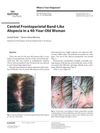 January 2018 in “Skin appendage disorders”
 A woman's hair loss was correctly diagnosed as Lichen planopilaris after initial misdiagnosis, highlighting the usefulness of trichoscopy in diagnosing hair disorders.