August 2013 in “Fertility and sterility” Metformin can help diagnose and treat high testosterone levels in women, often due to insulin resistance rather than a tumor.
July 2024 in “Vestnik dermatologii i venerologii” Post-COVID-19 hair loss is different from androgenetic alopecia and can be identified by lower copper and higher selenium levels.
2 citations
,
March 2011 in “International Journal of Dermatology” An 18-year-old man was diagnosed with a rare genetic disorder causing hair loss, severe light sensitivity, and skin issues.
October 2023 in “Journal of Mind and Medical Sciences” Early detection and a multidisciplinary approach are crucial for improving gastric cancer survival rates.
 16 citations
,
February 2018 in “European Journal of Endocrinology”
16 citations
,
February 2018 in “European Journal of Endocrinology” Diagnosing hyperandrogenism in women is complex and requires accurate testing methods and consideration of SHBG levels.
January 2025 in “Genetics in Medicine Open” Biotinidase deficiency can mimic neuromyelitis optica and should be considered for accurate diagnosis and treatment.
 15 citations
,
November 2016 in “Journal of The American Academy of Dermatology”
15 citations
,
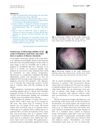
November 2016 in “Journal of The American Academy of Dermatology” Exclamation mark hairs suggest early scalp disease, while white dots indicate it's chronic.
7 citations
,
June 2017 in “Journal of Cutaneous Pathology” Cystic panfolliculoma resembles hair follicle tumors due to specific cell interactions.
 6 citations
,
December 2018 in “The American Journal of Dermatopathology”
6 citations
,
December 2018 in “The American Journal of Dermatopathology” Early shedding of the inner root sheath in noninflamed hair follicles is a relatively specific sign of Central Centrifugal Cicatricial Alopecia.
 September 2023 in “Skin Research and Technology”
 The paper suggests a way to diagnose male hair loss and check treatment results using a dermoscope at four specific scalp points.
 61 citations
,
January 2019 in “American Journal of Clinical Dermatology”
61 citations
,
January 2019 in “American Journal of Clinical Dermatology” The cause of Frontal Fibrosing Alopecia is unclear, diagnosis involves clinical evaluation and various treatments exist, but their effectiveness is uncertain.

Early recognition and a multidisciplinary approach are crucial for effectively managing complex autoimmune conditions like SLE with CAPS and AHA.
January 2006 in “International water power & dam construction” Nevus comedonicus can appear later in life and affect both eyelids.
October 2025 in “Diseases” Long COVID causes lasting symptoms in many body systems, needing more research for better treatments.
Prostatitis is a common male condition with various causes and treatments, often involving antibiotics and lifestyle changes.
4 citations
,
January 2015 in “Case Reports in Rheumatology” Early recognition and management of connective tissue diseases like lupus are crucial in young patients.
 212 citations
,
September 2015 in “Journal of Investigative Dermatology”
212 citations
,
September 2015 in “Journal of Investigative Dermatology” The document provides a method to classify human hair growth stages using a model with human scalp on mice, aiming to standardize hair research.
 April 2026 in “JOJ Dermatology & Cosmetics”
 Skin issues in PCOS signal hormone problems, and combined treatments improve outcomes.
95 citations
,
September 2012 in “Oman Medical Journal” Mutations in keratin genes can cause skin and mucosa disorders.
 19 citations
,
February 2016 in “Journal of The American Academy of Dermatology”
19 citations
,
February 2016 in “Journal of The American Academy of Dermatology” CD3+ T-cell presence is a reliable marker to tell apart alopecia areata from pattern hair loss.
 11 citations
,
April 2016 in “The American Journal of Dermatopathology”
11 citations
,
April 2016 in “The American Journal of Dermatopathology” Special and immunohistochemical stains are not routinely needed for diagnosing hair disorders.
 10 citations
,
January 2004 in “KARGER eBooks”
10 citations
,
January 2004 in “KARGER eBooks” Diagnosing PCOS in teenage girls is tricky and requires careful evaluation and management.
 8 citations
,
October 2010 in “Scandinavian Journal of Clinical & Laboratory Investigation”
8 citations
,
October 2010 in “Scandinavian Journal of Clinical & Laboratory Investigation” Normal-range ALT levels can indicate metabolic and hormonal imbalances in young women.
6 citations
,
September 2024 in “Journal of Clinical Medicine” Thyroid and skin autoimmune diseases share genetic and immune links, affecting both tissues.
2 citations
,
August 2025 in “Reports — Medical Cases Images and Videos” A rare pigmented skin tumor called melanotrichoblastoma was diagnosed in a 51-year-old woman.
 2 citations
,
February 2014 in “Hair therapy & transplantation”
2 citations
,
February 2014 in “Hair therapy & transplantation” Alopecia Areata is an autoimmune condition causing hair loss, influenced by genetics, environment, and possibly improved by anti-MIF therapy, with many patients experiencing regrowth within a year.
 December 2010 in “Jurnal Natural (Faculty of Mathematics and Natural Science, Syiah Kuala University)”
 Age, race, family history, and certain genetic factors increase prostate cancer risk.
October 2025 in “JMIR Dermatology” Exclamation-mark hairs and yellow dots indicate alopecia areata, while follicular ostia loss and white scarring indicate lichen planopilaris and discoid lupus erythematosus.
October 2024 in “Heliyon” Consider systemic lupus erythematosus in patients with unexplained intracranial hypertension.
Women with PCOS are at higher risk for gum disease, and managing shared risk factors can help both conditions.