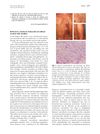
 7 citations
,
June 2010 in “Journal of The American Academy of Dermatology”
7 citations
,
June 2010 in “Journal of The American Academy of Dermatology” Tranilast successfully treated a man's skin sarcoidosis when other treatments failed.
November 2001 in “Oncology Times” The committee decided not to approve the drug due to low effectiveness and high risks.
7 citations
,
April 2025 in “Science Advances” Silicate-based therapy may help treat inflammatory heart disease by reducing immune inflammation.
March 2021 in “Arrow - TU Dublin (Technological University Dublin)” The folate-cyclodextrin conjugate targets cancer cells more precisely, potentially reducing chemotherapy side effects.
 September 2019 in “Journal of Investigative Dermatology”
 Abrocitinib at 100 mg and 200 mg daily may significantly improve moderate-to-severe atopic dermatitis in patients 12 years and older.
83 citations
,
May 2021 in “Biomolecules” The 5/G hydrogel effectively improves diabetic wound healing.
24 citations
,
March 2022 in “Journal of the American Academy of Dermatology” Adalimumab improved folliculitis decalvans in most patients.
 3 citations
,
February 2024 in “Journal of the American Academy of Dermatology”
3 citations
,
February 2024 in “Journal of the American Academy of Dermatology” Topical tofacitinib cream may help treat certain hair loss conditions with fewer risks.
Encapsulating hair loss drugs in cyclodextrins improves their solubility and reduces scalp irritation.
 September 2024 in “Journal of Cosmetic Dermatology”
 Ectoin helps prevent cortisone-induced skin problems and supports skin health.
 March 2002 in “Clin-Alert”
 In 2002, various drugs caused serious side effects, including vitamin B12 deficiency, heart issues, blindness, hypersexuality, allergic reactions, blood clotting problems, pupil dilation, capillary leak syndrome, muscle breakdown, hepatitis, skin reactions, and lupus.
Further trials are needed to explore the efficacy of triamcinolone acetonide in dermatology.
 April 2026 in “Dermatology and Therapy”
 TNFα inhibitors are effective and well-tolerated for treating severe scalp cellulitis.
21 citations
,
September 2013 in “Current medicinal chemistry” HAC and BAC improve skin targeting and reduce diffusion without causing irritation.
 1 citations
,
May 2025 in “Frontiers in Medicine”
1 citations
,
May 2025 in “Frontiers in Medicine” Dual-targeted therapy is effective and safe for difficult-to-treat inflammatory bowel disease.
 May 2017 in “Journal of The American Academy of Dermatology”
 An intact skin barrier is crucial to prevent infection in cases of tether-induced tenosynovitis.
 June 2023 in “Dermatology and Therapy”
 Using fractional CO2 laser with halometasone cream works better for chronic hand eczema than just the cream, improving symptoms and quality of life with fewer relapses.
 November 2025 in “Mendeley Data”
 Standard dosing is more effective for severe alopecia areata in children, but unorthodox dosing can be safe and considered if needed.
40 citations
,
January 2022 in “Frontiers in Chemistry” The patch speeds up deep wound healing.
2 citations
,
August 2002 in “British Journal of Ophthalmology” Tangent screens help detect visual field defects from vigabatrin.
August 2025 in “Processes” Rosemary may help reduce dyspepsia and gastric cancer risk.
 56 citations
,
November 1993 in “Journal of The American Academy of Dermatology”
56 citations
,
November 1993 in “Journal of The American Academy of Dermatology” Capsaicin cream quickly relieved itching in two patients with brachioradial pruritus.
 January 2024 in “Indonesian Journal of Pharmaceutical Education”
 The Caffein Herbasome® cream is stable and suitable for skin use.
 March 2026 in “Journal of Pakistan Association of Dermatologists”
 Tofacitinib helps hair regrowth in alopecia areata but relapse is common after stopping treatment.
16 citations
,
April 2021 in “Biomedicines” Ferulic acid helps wounds heal faster by reducing inflammation and promoting skin cell movement.
 June 2017 in “Journal of the American Academy of Dermatology”
 Tofacitinib is effective and safe for treating severe alopecia areata and related conditions.
 9 citations
,
March 1989 in “The BMJ”
9 citations
,
March 1989 in “The BMJ” Adding diltiazem to a beta blocker can cause dangerously slow heart rates.
 25 citations
,
November 2022 in “British journal of dermatology/British journal of dermatology, Supplement”
25 citations
,
November 2022 in “British journal of dermatology/British journal of dermatology, Supplement” Baricitinib for severe alopecia areata is generally safe, with common side effects like infections and acne, and low rates of serious complications.
 6 citations
,
April 2014 in “European journal of medicinal chemistry”
6 citations
,
April 2014 in “European journal of medicinal chemistry” New compounds similar to cromakalim were less effective at inhibiting insulin release but improved in solubility and one acted as a calcium entry blocker, not a potassium channel opener.
June 2017 in “Journal of the American Academy of Dermatology” The new cream is safe and effective for mild to moderate atopic dermatitis.