 August 2024 in “Pakistan Journal of Health Sciences”
 PRP with finasteride is better for hair regrowth than minoxidil with finasteride.
 July 2023 in “Archives of Dermatological Research”
 Minoxidil may help with hair loss caused by cancer treatments.
2 citations
,
January 2016 in “Journal of Evolution of medical and Dental Sciences” PRP is more effective than minoxidil for treating male pattern baldness.
 22 citations
,
July 2006 in “Indian Journal of Pharmaceutical Sciences”
22 citations
,
July 2006 in “Indian Journal of Pharmaceutical Sciences” Minoxidil gels with higher concentrations are more stable and effective for treating hair loss.
Finasteride and minoxidil help regrow hair by improving hair thickness and length.
 May 2013 in “Reactions Weekly”
 Using minoxidil can cause severe skin reactions in some people.
 October 2016 in “International journal of medical research and review”
 Minoxidil, a hair loss treatment, may cause acne-like skin eruptions.
 15 citations
,
January 2000 in “Japanese Heart Journal”
15 citations
,
January 2000 in “Japanese Heart Journal” A man developed heart problems after using a baldness treatment for 4 months, suggesting that people with heart issues should avoid this treatment.
2 citations
,
March 2020 in “International journal of dermatology and clinical research” Microneedling helps hair growth, with hair multivitamins showing slightly better results than minoxidil.
May 2026 in “Journal of the American Academy of Dermatology” Adding microneedling to minoxidil treatment doesn't improve hair growth in women.
 88 citations
,
February 2011 in “Journal of Dermatological Science”
88 citations
,
February 2011 in “Journal of Dermatological Science” Minoxidil helps hair growth by activating the β-catenin pathway.
 December 2025 in “Saudi Pharmaceutical Journal”
 The new minoxidil formula speeds up hair growth effectively.
 June 2025 in “Journal of Population Therapeutics and Clinical Pharmacology”
 The combination of microneedling, PRP, and minoxidil is more effective for hair loss than minoxidil alone.
June 2025 in “British Journal of Dermatology” Low-dose oral minoxidil is increasingly used by dermatologists in the UK and Ireland to treat various hair loss conditions.
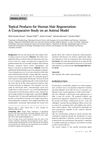 3 citations
,
January 2016 in “Annals of Dermatology”
3 citations
,
January 2016 in “Annals of Dermatology” Minoxidil was the most effective treatment for hair regrowth in rats compared to Aminexil or Kerium.
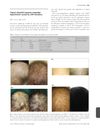 7 citations
,
March 2015 in “British Journal of Dermatology”
7 citations
,
March 2015 in “British Journal of Dermatology” Applying minoxidil can help improve hair growth in people with hair loss caused by LIPH gene mutations.
 February 2018 in “Medicine - Programa De Formación Médica Continuada Acreditado”
 Minoxidil and finasteride are the main FDA-approved treatments for hair loss, with other methods showing promise but lacking strong evidence.
 August 2025 in “Macromolecular Bioscience”
 Microneedles with minoxidil and nitric oxide improve hair growth effectively and painlessly.
 9 citations
,
March 1985 in “Head & Neck Surgery”
9 citations
,
March 1985 in “Head & Neck Surgery” Topical minoxidil is the most promising treatment for male pattern hair loss, but more research is needed to confirm its effectiveness and safety.
 February 2022 in “Programa de Iniciação Científica - PIC/UniCEUB - Relatórios de Pesquisa”
 PRP is more effective than Minoxidil for reducing hair loss and promoting hair growth.
3 citations
,
May 2024 in “International Journal of Dermatology” December 2021 in “Clinical and Experimental Dermatology” Systemic minoxidil might help maintain hair regrowth in alopecia areata.
 3 citations
,
January 2018 in “Annals of Dermatology”
3 citations
,
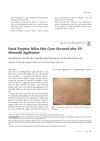
January 2018 in “Annals of Dermatology” A woman developed facial hair cysts after using a 3% minoxidil solution for hair loss, which disappeared after stopping the treatment and removing the cysts surgically.
 13 citations
,
March 2014 in “Pediatric Dermatology”
13 citations
,
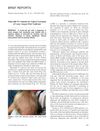
March 2014 in “Pediatric Dermatology” Minoxidil 5% solution significantly improved hair density in a girl with loose anagen hair syndrome over 28 months, with no side effects.
 30 citations
,
September 2003 in “Experimental Dermatology”
30 citations
,
September 2003 in “Experimental Dermatology” Minoxidil helps prevent stress-caused hair loss in mice.
 June 2017 in “Journal of The American Academy of Dermatology”
 Microneedling with PRP and minoxidil (5%) improves hair growth more than minoxidil (5%) alone.
August 2022 in “DOAJ (DOAJ: Directory of Open Access Journals)” 0.5 mm microneedling with minoxidil effectively and safely treats male hair loss.

Low-dose oral and topical minoxidil are recommended for managing hair loss in transplant patients, with specific doses and precautions.
January 2017 in “Faculty of 1000 Research Ltd” Oral minoxidil reduced hair shedding in women with chronic telogen effluvium.
 August 2018 in “Reactions Weekly”
 A woman had an allergic skin reaction to a hair loss treatment called minoxidil.