October 2024 in “International Journal of Pharmaceutics” The finasteride patch effectively treats hair loss by enhancing skin absorption.
May 2023 in “Journal of Pharmaceutical Innovation” 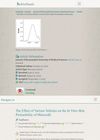 October 2022 in “Journal of Kermanshah University of Medical Sciences”
 Different substances can affect how well the skin absorbs minoxidil, a hair loss drug. Caprylic acid helps the skin absorb it the best, followed by propylene glycol and water.
December 2021 in “Journal of natural fibers” The conclusion is that new methods for isolating hair cuticle cells and removing the cuticle layer are effective and convenient.
April 2019 in “Journal of the Endocrine Society” Androgens and estrogens are crucial for insulin secretion in males.
Nanoparticles with caffeine can be used for slow, continuous hair growth stimulation.
July 2025 in “Journal of Investigative Dermatology” TRIV-509 quickly improves skin barrier and cell health in atopic dermatitis.
November 2022 in “Asian Journal of Pharmaceutical Research” The hydrogel with Finasteride provides controlled, sustained drug release and improved bioavailability.
31 citations
,
April 2020 in “Pharmaceutics” Nanocrystals greatly improve dexamethasone delivery into the skin.
95 citations
,
July 2015 in “European journal of pharmaceutics and biopharmaceutics” Lipid nanoparticles can help deliver drugs through hair follicles but struggle to penetrate deeper skin layers.
78 citations
,
May 2012 in “Journal of Investigative Dermatology” A specific gene mutation causes woolly hair and hair loss.
44 citations
,
February 2009 in “Pain” Progesterone reduces spinal reflex activity by increasing certain GABA(A) receptor subtypes.
40 citations
,
December 2010 in “Human Genetics” 38 citations
,
April 2016 in “The Journal of Pathology” Alkaline ceramidase 1 is crucial for healthy skin and energy balance.
37 citations
,
January 2022 in “Frontiers in Genetics” Aging reduces dermal sheath cells, affecting youthful skin appearance.
29 citations
,
October 2004 in “Differentiation” Multiple mouse desmoglein 1 isoforms have distinct roles in skin and hair development.
26 citations
,
December 2022 in “Future Journal of Pharmaceutical Sciences” Invasomes with natural terpenes can improve drug delivery through the skin.
21 citations
,
March 2022 in “Pharmaceuticals” The new Brigatinib nanocarrier is more effective against lung cancer cells than the free drug.
17 citations
,
February 2004 in “PubMed” PCOS treatment focuses on inducing ovulation, reducing androgens, and managing long-term health risks with medications and lifestyle changes.
15 citations
,
June 2020 in “The journal of investigative dermatology/Journal of investigative dermatology” Mice with extra human KLK14 had hair and skin problems, including weaker cell bonds and inflammation, linked to Netherton syndrome.
15 citations
,
July 2014 in “The journal of investigative dermatology/Journal of investigative dermatology” iPSCs can help treat genetic skin disorders by creating healthy skin cells from a small biopsy.
14 citations
,
November 2024 in “Pharmaceuticals” Spanlastic nano-vesicles improve famotidine's effectiveness and absorption.
13 citations
,
March 2017 in “Skin Research and Technology” Formaldehyde damages curly hair more than glyoxylic acid.
11 citations
,
July 2023 in “Applied Nanoscience” 11 citations
,
March 2023 in “Stem Cell Research & Therapy” Epidermal stem cells improve skin graft survival by promoting early blood vessel formation.
9 citations
,
July 2016 in “Genes” Genetic variants in PDE6H and LPAR6 cause vision impairment and hair loss in two Pakistani brothers.
 8 citations
,
October 2022 in “Regenerative Therapy”
8 citations
,
October 2022 in “Regenerative Therapy” New regenerative treatments for hair loss show promise but need more research for confirmation.
6 citations
,
February 2025 in “International Journal of Molecular Sciences” The new system greatly improves carvedilol's solubility and effectiveness.
5 citations
,
January 2023 in “Journal of Cosmetic Dermatology” Intradermal microbotox injections work better and last longer for reducing large facial pores than topical application.
 5 citations
,
July 1998 in “PubMed”
5 citations
,
July 1998 in “PubMed” Excessive androgen in women can cause acne, hair growth, baldness, and PCOS, often treatable with medication.