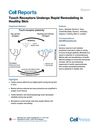
 31 citations
,
November 2016 in “Cell Reports”
31 citations
,
November 2016 in “Cell Reports” Touch sensitivity in mouse skin decreases during hair growth due to changes in touch receptors.
 6 citations
,
September 2021 in “Experimental Brain Research”
6 citations
,
September 2021 in “Experimental Brain Research” Rats have different touch receptors in their paws that help with movement and handling objects.
 April 2026 in “Journal of Aesthetic Medicine”
 The MIRA technique improves cellulite treatment and skin quality better than standard methods.
 17 citations
,
September 2014 in “PLoS ONE”
17 citations
,
September 2014 in “PLoS ONE” SK2 channels help control sensory signals in rat muscle spindles and hair follicles.
 15 citations
,
April 2007 in “Journal of child neurology”
15 citations
,
April 2007 in “Journal of child neurology” An 11-month-old boy with Menkes disease had severe brain shrinkage and abnormal blood vessels, and didn't respond well to treatment.
11 citations
,
January 2023 in “Biophysics Reviews” Light-based bioelectronic devices improve health monitoring and disease treatment.
10 citations
,
January 1989 in “Archives of Dermatological Research” The method effectively analyzes human hair proteins, especially nonfilamentous ones.
36 citations
,
February 1998 in “Journal of Anatomy” Fibre optic confocal imaging can visualize skin layers, blood vessels, and nerves in live mice.
15 citations
,
February 2000 in “Journal of Cutaneous Pathology” The arrector pili muscle attaches to the extracellular matrix using α5β1 integrin and connects muscle cells using α1β1 integrin.
12 citations
,
January 1994 in “Dermatology” The patient's hair had unique damage and a lower sulfur-to-nitrogen ratio compared to relatives, but not compared to healthy controls.
75 citations
,
January 2004 in “Molecular and Cellular Biology” XEDAR deficiency prevents muscle degeneration in EDA-A2 transgenic mice.
49 citations
,
May 2020 in “The Scientific World JOURNAL” Mesotherapy is a skin injection therapy used for pain and local conditions, with scientific support but needing more clinical trials.
25 citations
,
May 2004 in “Prenatal Diagnosis” Prenatal genetic diagnosis may not predict MELAS syndrome severity in offspring.
3 citations
,
October 2024 in “International Journal of Molecular Sciences” CRET therapy affects inflammation in skin cells by changing cytokine levels and activating certain proteins.
14 citations
,
May 2008 in “Journal of Visualized Experiments” Mouse epidermal neural crest stem cells can become various cell types and are easily obtained from hair follicles.
March 2010 in “European Urology Supplements” 46 citations
,
April 1987 in “Brain Research” Hair-follicle nerves in cats' spinal cords can be inhibited by GABA-related connections.
 11 citations
,
December 2018 in “Bone”
11 citations
,
December 2018 in “Bone” Removing a methyl group from the ITGAV gene speeds up bone formation in a specific type of bone disease model.
 6 citations
,
October 2018 in “Bioelectromagnetics”
6 citations
,
October 2018 in “Bioelectromagnetics” Rice bran extract and low-frequency electromagnetic fields together may help treat vitiligo and white hair.
December 2015 in “OPAL (Open@LaTrobe) (La Trobe University)” Oleuropein increases IGF-1 levels in mouse skin.
 3 citations
,
April 2021 in “Journal of Cosmetic Dermatology”
3 citations
,
April 2021 in “Journal of Cosmetic Dermatology” The micrometer caliper is a reliable tool for measuring hair diameter for FUE surgery.
November 2023 in “Bioengineering” AMT® is effective and safe for early-stage knee osteoarthritis.
 12 citations
,
February 2025 in “Scientific Reports”
12 citations
,
February 2025 in “Scientific Reports” MSC-EVs and UCB-EVs improve skin wound healing and reduce scarring.
 1 citations
,
December 2014 in “Scanning”
1 citations
,
December 2014 in “Scanning” Multiphoton microscopy effectively images rabbit skin structures in detail without staining and shows differences from human skin.
8 citations
,
January 2025 in “Cell Transplantation” MSC-derived EVs show promise for therapy, but production and understanding need improvement.
 August 2007 in “Microscopy and Microanalysis”
 Hair fibers break by cuticle cell slipping, shape changing, cuticle fraying, and surface cracking when stretched under specific conditions.
 September 2022 in “Anais Brasileiros de Dermatologia”
 Dermoscopy helped diagnose a rare skin disease which slightly improved with treatment.
6 citations
,
January 2022 in “BIO-PROTOCOL” The protocol allows easy imaging of dividing cells in C. elegans and can be used for other organisms.
 12 citations
,
July 2016 in “Forensic science international”
12 citations
,
July 2016 in “Forensic science international” The research found that postmortem root bands in hair are likely caused by the breakdown of a specific part of the hair's inner structure after death.
 October 2010 in “Reproductive Biomedicine Online”
 A new method can almost perfectly distinguish adenomyosis from similar conditions using blood tests.