 15 citations
,
November 2016 in “Journal of The American Academy of Dermatology”
15 citations
,
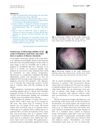
November 2016 in “Journal of The American Academy of Dermatology” Exclamation mark hairs suggest early scalp disease, while white dots indicate it's chronic.
26 citations
,
April 2003 in “PubMed” Hair loss in two ferrets was caused by ovarian tissue tumors, not adrenal issues.
33 citations
,
March 2015 in “Experimental Dermatology” LHX2 and SOX9 identify unique hair follicle cell groups, crucial for hair maintenance.
18 citations
,
February 2001 in “Der Hautarzt” A woman with myotonic dystrophy had multiple skin tumors on her scalp, suggesting a genetic link.
56 citations
,
March 1991 in “Journal of Investigative Dermatology” October 2025 in “JMIR Dermatology” Exclamation-mark hairs and yellow dots indicate alopecia areata, while follicular ostia loss and white scarring indicate lichen planopilaris and discoid lupus erythematosus.
July 2024 in “LA Referencia (Red Federada de Repositorios Institucionales de Publicaciones Científicas)” Adipose tissue and eccrine gland displacement are common in certain alopecias but don't help differentiate between them.

A 16-year-old girl with gum overgrowth and excessive hair growth had successful gum surgery and healed well.
 April 2017 in “European Psychiatry”
 Women with schizophrenia on atypical antipsychotics are more likely to have polycystic ovarian syndrome (PCOS) than women without schizophrenia.
23 citations
,
January 2024 in “Journal of Investigative Dermatology” Corticosteroids can reduce scarring in acne keloidalis by targeting specific cells.
1 citations
,
June 2025 in “Frontiers in Immunology” Higher IgE levels may play a role in alopecia areata, especially in males, children, and severe cases.
 68 citations
,
August 2012 in “Journal of the American Academy of Dermatology”
68 citations
,
August 2012 in “Journal of the American Academy of Dermatology” Dermatoscopy is a useful tool for diagnosing hair disorders and can help choose samples for more detailed analysis.
20 citations
,
July 1987 in “Development Genes and Evolution” 3 citations
,
August 2024 in “Skin Research and Technology” LC-OCT can help identify lupus-related scarring hair loss by spotting unique features.
39 citations
,
March 2009 in “Dermatology Online Journal” Erlotinib can cause persistent excessive hair growth.
7 citations
,
January 2017 in “Sub-cellular biochemistry/Subcellular biochemistry” 66 citations
,
February 2002 in “Veterinary dermatology” Malassezia in cat skin biopsies may indicate internal cancer.
March 2026 in “Anais Brasileiros de Dermatologia” Lichen planopilaris and frontal fibrosing alopecia are likely distinct diseases with different tissue involvement.
13 citations
,
February 2019 in “Zoology” Lustre mutant sheep have normal hair structure and proteins but differ in felting properties.
 34 citations
,
April 2016 in “International Journal of Dermatology”
34 citations
,
April 2016 in “International Journal of Dermatology” Trichoscopy is a useful method for identifying primary cicatricial alopecias and their specific types.
17 citations
,
June 1994 in “Archiv für Pathologische Anatomie und Physiologie und für Klinische Medicin” Tenascin is present in normal skin and certain skin tumors but not in sebaceous glands or their tumors.
7 citations
,
August 1971 in “JAMA” Tinea faciale can be mistaken for lupus due to similar symptoms.
1 citations
,
January 2021 in “Springer Proceedings in Materials” Researchers developed a new method to clearly see and label hair proteins with minimal errors using advanced freezing and microscopy techniques.
 5 citations
,
January 2015 in “Skin appendage disorders”
5 citations
,
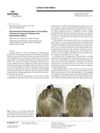
January 2015 in “Skin appendage disorders” Colored hair-thickening fibers can help hide hair loss in some people with Epidermolysis Bullosa but may cause scalp irritation.
11 citations
,
November 1996 in “Pediatric dermatology” Trichostasis spinulosa can look like acne but usually affects adults, not children.
 November 2023 in “International surgery journal”
 A man's neck lump was a trichilemmal cyst, not cancer, and should be fully removed due to rare risk of becoming malignant.
1 citations
,
February 2025 in “Journal of the Neurological Sciences” Beta-trace protein may help diagnose and predict treatment response in certain nerve disorders.
5 citations
,
July 1996 in “Journal of Cutaneous Medicine and Surgery” TTD patients don't have a higher skin cancer risk because their main issue is with transcription, not DNA repair.
6 citations
,
December 2019 in “International Journal of Cosmetic Science” White hair has weaker tryptophan fluorescence than other unpigmented fibers, possibly due to UV exposure or unknown substances.
92 citations
,
May 2004 in “Journal of Investigative Dermatology”