 4 citations
,
December 2017 in “International Journal of Biomedicine”
4 citations
,
December 2017 in “International Journal of Biomedicine” Fibroblast transplantation improves wound healing, with dermal equivalents slightly enhancing skin regeneration.
3 citations
,
June 2025 in “Wound Repair and Regeneration” 3D bioprinting shows promise for creating skin substitutes, but standardized methods are needed for clinical use.
3 citations
,
January 2025 in “Discovery Medicine” Fruit acids can help prevent skin aging from UV exposure.
 3 citations
,
October 2021 in “PLoS ONE”
3 citations
,
October 2021 in “PLoS ONE” Piperonylic acid speeds up wound healing by reducing inflammation and boosting collagen.
 3 citations
,
December 1994 in “JEADV. Journal of the European Academy of Dermatology and Venereology/Journal of the European Academy of Dermatology and Venereology”
3 citations
,
December 1994 in “JEADV. Journal of the European Academy of Dermatology and Venereology/Journal of the European Academy of Dermatology and Venereology” Oral itraconazole effectively reaches and treats deep skin layers in guinea pigs.
 2 citations
,
December 2022 in “Journal of toxicologic pathology”
2 citations
,
December 2022 in “Journal of toxicologic pathology” Skin structure complexity and variability are crucial for assessing skin toxicity in safety tests.
 2 citations
,
September 2022 in “Organoid”
2 citations
,
September 2022 in “Organoid” A new method was developed to efficiently grow skin hair follicles from stem cells, potentially aiding alopecia treatment.
2 citations
,
September 2018 in “bioRxiv (Cold Spring Harbor Laboratory)” Hair follicle niches are specified before they form and depend on progenitor cells.
2 citations
,
January 2017 in “International Journal of Trichology” Trichoscopy can reveal specific hair and scalp changes in linear morphea.
 2 citations
,
June 2012 in “Dermatologica Sinica”
2 citations
,
June 2012 in “Dermatologica Sinica” Dermoscopy is useful for diagnosing and monitoring discoid lupus erythematosus by showing specific skin patterns.
 1 citations
,
May 2024 in “Advanced Functional Materials”
1 citations
,
May 2024 in “Advanced Functional Materials” The artificial skin promotes better wound healing and skin regeneration.
1 citations
,
January 2021 in “SSRN Electronic Journal” Transplanted hair follicles can improve and remodel mature scars.
1 citations
,
September 2019 in “Journal of Investigative Dermatology” Anti-Desmocollin 3 antibodies can cause pemphigus-like symptoms in mice.
1 citations
,
October 2018 in “PubMed” EK significantly improved wound healing and reduced infection in burn wounds.
1 citations
,
June 2015 in “Experimental Dermatology” Fat may help skin health and repair, but more research is needed.
 1 citations
,
October 2012 in “Elsevier eBooks”
1 citations
,
October 2012 in “Elsevier eBooks” Skin stem cells can help improve skin repair and regeneration.
1 citations
,
January 2010 in “Shenyang Nongye Daxue xuebao” IGF-1 and EGF together significantly boost hair follicle growth in cashmere goats.
 1 citations
,
January 2009 in “Elsevier eBooks”
1 citations
,
January 2009 in “Elsevier eBooks” The document concludes that a deeper understanding of skin aging and photodamage is needed to create better skin treatments.
 April 2026 in “BMC Biotechnology”
 A new peptide, DualPep-ALO, may help hair growth by reducing inflammation and boosting growth factors.
January 2026 in “Advanced Healthcare Materials” The new bioreactor improves skin grafts by evenly stretching cells and monitoring conditions for better growth.
January 2026 in “Minia Journal of Medical Research” SVF cell therapy may help regenerate hair in androgenic alopecia.
November 2025 in “The Journal of Immunology” BST2 is highly expressed in certain immune cells in alopecia areata, suggesting a role in the disease.
November 2025 in “The Journal of Immunology” Different γδ T cell types have unique roles in causing alopecia areata.
 August 2025 in “Academic International Journal of Veterinary Medicine”
 Aloe vera extract speeds up and improves wound healing in rabbits.
April 2025 in “ALEXMED ePosters” Combining nanofat with FUE improves scar appearance and function better than FUE alone.
January 2025 in “Online Publication Service of Würzburg University (Würzburg University)” A protocol was developed to create 3D skin models from adult diseased cells to study Small Fiber Neuropathy.
 November 2024 in “Fermentation”
 Fermented ginsenosides from kimchi bacteria may promote hair growth better than finasteride.
July 2024 in “Journal of Investigative Dermatology” Cell movements and forces shape feather growth in chicken skin.
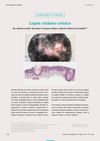 January 2024 in “Revista Dermatológica Centro Uraga”
 The patient has Chronic Cutaneous Lupus, a skin condition causing plaques and hair loss.
 August 2023 in “International Journal of Molecular Sciences”
 Human skin xenografting could improve our understanding of skin development, renewal, and healing.