 32 citations
,
June 2012 in “PLoS ONE”
32 citations
,
June 2012 in “PLoS ONE” Blocking IL-8 can reduce skin rashes from cancer treatment.
January 2008 in “Memorial University Research Repository (Memorial University)” Pygopus 2 helps ovarian cancer cells grow by aiding ribosomal RNA production, independent of Wnt signaling.
12 citations
,
January 2021 in “Journal of Cutaneous and Aesthetic Surgery” Epidermal growth factor helps skin and hair regeneration but needs more research for better understanding.
19 citations
,
August 2022 in “Plant Signaling & Behavior” ROS and calcium oscillations are essential for root hair growth in plants.
 3 citations
,
January 2011 in “Annals of Dermatology”
3 citations
,
January 2011 in “Annals of Dermatology” Blocking EGFR in skin cells doesn't majorly increase inflammation markers.
 May 2026 in “Signal Transduction and Targeted Therapy”
 BMP signaling is essential for forming skin structures called rete ridges, aiding skin thickness and regeneration.
13 citations
,
April 1982 in “The Journal of Dermatology” Poly(ADP-ribose) synthesis is linked to skin cell differentiation.
September 2018 in “Apollo (University of Cambridge)” Translation levels actively determine keratinocyte cell fate.
 7 citations
,
August 2005 in “British Journal of Dermatology”
7 citations
,
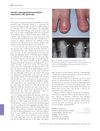
August 2005 in “British Journal of Dermatology” Etanercept improved symptoms of a specific type of psoriatic arthritis in a patient who didn't respond to other treatments.
13 citations
,
July 2020 in “World journal of stem cells” Vitamin D and calcium are important for skin stem cell function and wound healing.
2 citations
,
July 2011 in “International Journal of Dermatology” EPF can occur without visible pustules.
44 citations
,
January 2013 in “BMC Dermatology” TGFβ signaling prevents sebaceous gland cells from producing fats.
November 2025 in “Journal of Investigative Dermatology” Dark skin has stronger barriers and structure due to specific gene activity.
March 2026 in “Adipocyte” Spt4 and Spt6 are essential for fat cell development.
7 citations
,
January 2024 in “Cancer Research Communications” TAp63 and NRF2 work together to manage oxidative stress, preventing premature aging and aiding skin functions.
 19 citations
,
September 2019 in “EMBO molecular medicine”
19 citations
,
September 2019 in “EMBO molecular medicine” Blocking TSLP reduces skin inflammation and cell overgrowth in psoriasis.
13 citations
,
August 2021 in “Frontiers in Bioengineering and Biotechnology” Exosomes from fat stem cells can reduce fat cell formation.
 October 2025 in “Clinical Cosmetic and Investigational Dermatology”
 Targeting specific cell interactions may help treat skin fibrosis.
3 citations
,
February 2015 in “Mechanisms of development” Hormones and stretching both needed for nipple area skin growth in mice.
201 citations
,
May 2001 in “Proceedings of the National Academy of Sciences” Overexpression of COX-2 in mice skin causes abnormal skin and hair development.
 40 citations
,
June 2013 in “Molecular Pharmaceutics”
40 citations
,
June 2013 in “Molecular Pharmaceutics” The gelatin/β-TCP scaffold with nanoparticles improves wound healing and skin regeneration.
 April 2023 in “The journal of investigative dermatology/Journal of investigative dermatology”
 Key skin cell regulators and gene organization changes are crucial for skin cell development and could help treat skin disorders.
5 citations
,
November 2021 in “The journal of investigative dermatology/Journal of investigative dermatology” Wnt/β-catenin signaling is important for keeping skin cell attachment structures stable.
249 citations
,
May 2003 in “Developmental Biology” Ectodysplasin-A1 is crucial for developing hair, teeth, and glands.
 6 citations
,
May 2013 in “PloS one”
6 citations
,
May 2013 in “PloS one” The Foxn1(-/-) nude mouse shows disrupted and expanded skin stem cell areas due to high Lhx2 levels.
February 2019 in “Journal of Physiology & Pathology in Korean Medicine” Puerariae Radix extract may be a promising cosmetic ingredient for skin health.
546 citations
,
February 2008 in “PLANT PHYSIOLOGY” OsPHR2 gene causes excessive phosphate in rice shoots, affecting plant growth and root development.
1 citations
,
January 2025 in “Proceedings of the National Academy of Sciences” LPAR6 has a unique way of binding and activating, which helps in designing treatments for hair loss and cancer.
23 citations
,
July 2015 in “PubMed” PDGF and its receptors are crucial for stem cell growth and function.
November 2022 in “Journal of Investigative Dermatology” ILC1-like cells can cause alopecia areata by themselves.