 December 2025 in “Ciencia Latina Revista Científica Multidisciplinar”
 Nanotechnology shows promise in improving hair loss treatments by enhancing drug delivery and reducing side effects.

Recent research on androgenetic alopecia focuses on optimizing treatments, with promising new therapies emerging.
 January 2025 in “Case Reports in Dermatological Medicine”
 Exosome therapy improved hair growth and quality in a child with hair issues.
 April 2026 in “Nanomaterials”
 Plant-derived vesicles from Ayurvedic plants may improve treatment delivery for hair growth and other conditions.
January 2026 in “Burns & Trauma” RNA modifications help heal wounds and could lead to new treatments.
 December 2025 in “Journal of Clinical Practice and Medical Case Report.”
 Exosome therapy may help treat hair loss.
 August 2024 in “International Journal of Basic & Clinical Pharmacology”
 Secretome-based therapies could improve hair growth better than current treatments.
 August 2024 in “International Journal of Dermatology”
 New therapies and treatments for hair disorders, especially in curly hair, show promise.

Umbilical cord blood is a valuable source of stem cells for medical treatments, but its use is less common than other transplants, and there are ethical issues to consider.
 July 2022 in “The journal of investigative dermatology/Journal of investigative dermatology”
 Exosome therapy shows promise for hair loss but needs more research on safety and effectiveness.

Microneedling with exosome therapy may effectively regrow hair without side effects.
 October 2024 in “Biology”
 Dermal papilla cells can help regrow hair and are promising for hair loss treatments.
 June 2026 in “Journal of General-Procedural Dermatology & Venereology Indonesia”
 Skin boosters can help improve skin health but aren't yet proven as primary treatments.
August 2025 in “Biomolecules” Fibroblast growth factors could be a better, safer treatment for hair loss than current options.
 September 2022 in “Institutional Repositories DataBase (IRDB)”
 3D-oxy exosomes may significantly boost hair growth, offering new treatment options for hair loss.
November 2025 in “JPRAS Open” Exosome therapy could help with hair loss, but more research and regulation are needed.
January 2025 in “Case Reports in Dermatological Medicine” Adipose tissue-derived exosomes may help regrow hair in alopecia areata.
 192 citations
,
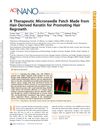
April 2019 in “ACS nano”
192 citations
,
April 2019 in “ACS nano” A new microneedle patch made from hair proteins helps regrow hair faster and better than current treatments.
January 2026 in “Ciencia Latina Revista Científica Multidisciplinar” Exosome-based therapy successfully restored hair in a 14-year-old with difficult-to-treat alopecia areata.
 July 2024 in “Clinical Cosmetic and Investigational Dermatology”
 Exosomes can help promote hair growth and may treat hair loss.
 January 2022 in “Journal of St. Marianna University”
 Substances from human hair cells can affect hair loss-related genes, potentially leading to new treatments for baldness.
 8 citations
,
June 2021 in “International Journal of Molecular Sciences”
8 citations
,
June 2021 in “International Journal of Molecular Sciences” Exosomes from umbilical cord cells fix hearing loss and damaged ear hair cells in mice.

Exosomes may be more effective than PRP for hair restoration.
14 citations
,
September 2024 in “Cosmetics” Exosomes and cell culture-conditioned media improve skin quality and reduce aging signs.
December 2025 in “Clinical Case Reports” The exosome injections were from stem cells and plants, not umbilical cords.
 May 2026 in “Russian Journal of Skin and Venereal Diseases”
 Salmon tissue-derived exosomes improve hair growth better than platelet-rich plasma for treating hair loss.
148 citations
,
August 2022 in “Stem Cell Research & Therapy” Encapsulated stem cell exosomes in hydrogel improve wound healing.
 25 citations
,
March 2017 in “Experimental Dermatology”
25 citations
,
March 2017 in “Experimental Dermatology” The document concludes that understanding hair follicles requires more research using computational methods and an integrative approach, considering the current limitations in hair treatment products.
1 citations
,
March 2025 in “Journal of Cosmetic Dermatology” Exosomes and laser therapy can help regrow and repigment hair.
1 citations
,
February 2024 in “Journal of Microscopy and Ultrastructure” Exosomes from stem cells speed up wound healing.