 December 2025 in “Journal of AI”
 The USA, China, Italy, and Türkiye lead in diverse PRP research, focusing on healing and pain management.
 December 2025 in “EMBO Reports”
 Cells communicate with neighbors to coordinate their development.
 November 2025 in “Frontiers in Immunology”
 Immune cells are crucial for normal skin development and their dysfunction can cause skin disorders.
 July 2025 in “Archives of Toxicology”
 The new skin model can predict how chemicals might cause skin allergies.
 January 2025 in “Institutional Repositories DataBase (IRDB)”
 Maslinic acid from olive extracts promotes hair growth like minoxidil.
 January 2025 in “Bright Sky Publications eBooks”
 Advancements in medical physics and laser technology are improving healthcare but access remains unequal globally.
 November 2024 in “Communities in ADDI (University of the Basque Country)”
 Antisense oligonucleotides show promise for treating Myotonic Dystrophy type I.
 April 2024 in “Journal of cancer research and clinical oncology”
 Tissue-derived extracellular vesicles are crucial for cancer diagnosis, prognosis, and treatment.
 March 2024 in “Frontiers in genetics”
 Different types of fibroblasts play specific roles in wound healing and cancer, which could help improve treatments.
 January 2024 in “Indian Journal of Plastic Surgery/Indian journal of plastic surgery”
 The flap advancement technique effectively treats severe scalp skin conditions, preserving hair and improving appearance.
 October 2023 in “Biomedical science and engineering”
 Innovative methods are reducing animal testing and improving biomedical research.
 October 2021 in “Research Square (Research Square)”
 Melatonin affects certain genes and pathways involved in cashmere goat hair growth.
 June 2021 in “bioRxiv (Cold Spring Harbor Laboratory)”
 The gene Tfap2b is essential for creating a type of stem cell in zebrafish that can become different pigment cells.
 June 2021 in “Research Square (Research Square)”
 Melatonin can increase cashmere yield by altering gene expression and restarting the growth cycle early.

The workshop promoted better medicine use and health practices through global collaboration.

The workshop successfully promoted better medicine use and international collaboration.
 October 2020 in “Veterinary Dermatology”
 New treatments and diagnostic methods for various animal skin conditions showed promising results.
 November 2019 in “Harper's Textbook of Pediatric Dermatology”
 The document is a detailed medical reference on skin and genetic disorders.
 April 2019 in “Journal of Investigative Dermatology”
 The search scheme SMRI is faster and more secure for retrieving encrypted data from the cloud.
 January 2019 in “LASER THERAPY”
 Laser technologies improve medical treatments and outcomes.
 July 2018 in “Plastic and Aesthetic Nursing”
 The 2018 ISPAN Meeting emphasized hands-on learning, patient safety, and professional growth in medical aesthetics and reconstructive practices.
 January 2014 in “Durham e-Theses (Durham University)”
 Notch1 helps skin heal by attracting cells that aid repair.
 January 2012 in “Durham e-Theses (Durham University)”
 Keratin 15 affects cell behavior and characteristics in skin cells.
 January 2008 in “Durham e-Theses (Durham University)”
 Hair follicle stem cells are similar to mesenchymal stem cells and can become neural-like cells under certain conditions.
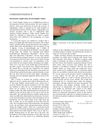 May 2002 in “British Journal of Dermatology”
 A pregnant woman's skin condition improved after giving birth, possibly due to high estrogen levels during pregnancy.
 April 2026 in “Frontiers in Marine Science”
 Guadalupe fur seals at San Benito Archipelago face high mortality and health issues due to pollution and marine debris.
 April 2026 in “Scientific Reports”
 MSF-VMDNet accurately segments skin cancer images better than existing methods.
 March 2026 in “Frontiers in Pharmacology”
 Taxifolin, found in onions and milk thistle, has health benefits but needs more research for safe use.
 March 2026 in “BioScience Trends”
 UV radiation causes skin aging by damaging cells and triggering harmful processes.
 February 2026 in “Frontiers in Immunology”
 Age-related immune changes worsen Parkinson's disease, suggesting new treatment strategies.