
Reprogramming adult fibroblasts may enable scar-free healing.
 June 2023 in “Plastic and Reconstructive Surgery – Global Open”
 Exosomes may improve skin, scars, hair growth, and fat grafts in plastic surgery, but more research is needed.
October 2025 in “Bioengineering” Coating surgical meshes with PRP may improve hernia repair outcomes.
 February 2026 in “International Journal of Molecular Sciences”
 Extracellular vesicles show promise for medical use but face challenges in standardization and safety.
 14 citations
,
May 2019 in “Experimental Dermatology”
14 citations
,
May 2019 in “Experimental Dermatology” Fat tissue extract may help treat vitiligo by reducing cell stress and promoting skin repair.
 77 citations
,
August 2025 in “Signal Transduction and Targeted Therapy”
77 citations
,
August 2025 in “Signal Transduction and Targeted Therapy” Extracellular vesicles show promise for treating diseases but face challenges in development and regulation.
 22 citations
,
December 2013 in “Molecular biology of the cell”
22 citations
,
December 2013 in “Molecular biology of the cell” ILK is essential for proper hair follicle development and structure.
 10 citations
,
September 2024 in “Journal of Nanobiotechnology”
10 citations
,
September 2024 in “Journal of Nanobiotechnology” The microneedle patch helps heal infected wounds quickly and without scars.
 September 2022 in “Institutional Repositories DataBase (IRDB)”
 Adipose-derived stem cells can be transformed into hair-forming cells using specific extracellular vesicles, offering potential for hair regeneration therapies.
 13 citations
,
July 2022 in “Frontiers in cell and developmental biology”
13 citations
,
July 2022 in “Frontiers in cell and developmental biology” Tiny natural vesicles from cells might help treat hair loss.
 220 citations
,
March 2020 in “Advanced functional materials”
220 citations
,
March 2020 in “Advanced functional materials” Biomaterials with MSC-derived substances could improve tissue repair and have advantages over direct cell therapy.

A new microneedle patch helps repair spinal cord injuries by reducing scarring and promoting nerve growth.

The Chromolaena odorata patch significantly speeds up wound healing.
 192 citations
,
April 2019 in “ACS nano”
192 citations
,
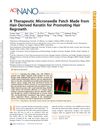
April 2019 in “ACS nano” A new microneedle patch made from hair proteins helps regrow hair faster and better than current treatments.
 October 2024 in “SPIRE - Sciences Po Institutional REpository”
 Glypicans help hair follicle stem cells differentiate by interacting with specific receptors, influencing hair growth.

The mesenchymal stem cell secretome may effectively treat various diseases as an alternative to traditional stem cell therapies.
 1160 citations
,
November 2018 in “Physiological Reviews”
1160 citations
,
November 2018 in “Physiological Reviews” The document concludes that better targeted treatments are needed for wound healing, and single-cell technologies may improve cell-based therapies.
 57 citations
,
February 2013 in “Journal of Dermatological Science”
57 citations
,
February 2013 in “Journal of Dermatological Science” Improving the environment and cell interactions is key for creating human hair in the lab.
 27 citations
,
March 2018 in “Biomaterials”
27 citations
,
March 2018 in “Biomaterials” Three specific proteins can turn adult skin cells into hair-growing cells, suggesting a new hair loss treatment.
 1 citations
,
October 2025 in “Nano Research”
1 citations
,
October 2025 in “Nano Research” A new microneedle patch effectively treats atopic dermatitis by reducing skin stress and restoring immune balance.
 August 2020 in “Research Square (Research Square)”
 Neural progenitor cell-derived nanovesicles help hair growth by activating a key signaling pathway.
 25 citations
,
December 2013 in “Journal of Investigative Dermatology Symposium Proceedings”
25 citations
,
December 2013 in “Journal of Investigative Dermatology Symposium Proceedings” New methods like nanoparticles and microneedles show promise for better skin drug delivery, especially for hair disorders.
 30 citations
,
December 2018 in “Trends in Endocrinology and Metabolism”
30 citations
,
December 2018 in “Trends in Endocrinology and Metabolism” Both immature and mature fat cells are important for hair growth cycles, with immature cells promoting growth and mature cells possibly inhibiting it.
 March 2026 in “Trends in Sciences”
 PRF and CGF are becoming more popular than PRP in regenerative medicine due to their simplicity and lack of additives.
 92 citations
,
August 2017 in “Proceedings of the National Academy of Sciences of the United States of America”
92 citations
,
August 2017 in “Proceedings of the National Academy of Sciences of the United States of America” Newborn mouse skin cells can grow hair and this process can be recreated in adult cells to potentially help with hair loss.
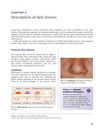
The document explains different types of skin lesions and their characteristics, causes, and related conditions.
 60 citations
,
June 1997 in “Journal of The American Academy of Dermatology”
60 citations
,
June 1997 in “Journal of The American Academy of Dermatology” Apoptosis is crucial for healthy skin and treating skin diseases.
 13 citations
,
April 2022 in “Frontiers in oncology”
13 citations
,
April 2022 in “Frontiers in oncology” Melanoma development can be linked to the breakdown of skin's melanin-producing units.
 8 citations
,
January 1996 in “Springer eBooks”
8 citations
,
January 1996 in “Springer eBooks” Male pattern baldness may be caused by factors like poor blood circulation, scalp tension, stress, and hormonal imbalances, but the exact causes are still unclear.
 1 citations
,
October 2020 in “Journal of Investigative Dermatology Symposium Proceedings”
1 citations
,
October 2020 in “Journal of Investigative Dermatology Symposium Proceedings” Platelet-Rich Plasma treatment improved hair growth and reduced inflammation in patients with patchy hair loss, but not in total hair loss, and Optical Coherence Tomography was useful in tracking this progress.