 157 citations
,
June 2011
157 citations
,
June 2011 Dermatoscopy and videodermatoscopy are useful for diagnosing and monitoring various skin, hair, and nail conditions.
 103 citations
,
January 2009 in “Carbon”
103 citations
,
January 2009 in “Carbon” Pure carbon nanotubes are safe for mice, but impure ones cause immune issues and hair loss.
 72 citations
,
June 2013 in “Journal of feline medicine and surgery”
72 citations
,
June 2013 in “Journal of feline medicine and surgery” The document says to treat cat fungal infections with medicine and clean the environment, noting that cats without symptoms can still spread it to humans.
 59 citations
,
February 2003 in “Veterinary Dermatology”
59 citations
,
February 2003 in “Veterinary Dermatology” Cyclosporin is effective for treating skin conditions in small animals, but requires careful dosing and monitoring for side effects.
 53 citations
,
September 2007 in “Veterinary dermatology”
53 citations
,
September 2007 in “Veterinary dermatology” Allergic cats with yeast overgrowth improved with antifungal treatment.
 25 citations
,
July 2013 in “Environmental Toxicology and Chemistry”
25 citations
,
July 2013 in “Environmental Toxicology and Chemistry” Spironolactone harms fish reproduction and is more potent in fish than invertebrates, needing environmental monitoring.
 24 citations
,
April 2007 in “European Journal of Pharmaceutics and Biopharmaceutics”
24 citations
,
April 2007 in “European Journal of Pharmaceutics and Biopharmaceutics” Microparticles containing artocarpin extract could effectively treat hair loss and acne with minimal side effects.
 18 citations
,
July 2001 in “Australian veterinary journal”
18 citations
,
July 2001 in “Australian veterinary journal” A cat with skin bumps and itching had high blood fats and skin infections, which improved with diet and medication changes.
 7 citations
,
July 2015 in “Parasitology Research”
7 citations
,
July 2015 in “Parasitology Research” Seresto® collar is safe to use with Advocate® and Profender® on dogs and cats.
 5 citations
,
January 2021 in “Veterinary dermatology”
5 citations
,
January 2021 in “Veterinary dermatology” Low-level laser therapy did not reduce licking or improve lesions in dogs with ALD but did increase hair growth.
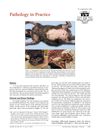 4 citations
,
May 2014 in “Javma-journal of The American Veterinary Medical Association”
4 citations
,
May 2014 in “Javma-journal of The American Veterinary Medical Association” The cat had liver cancer and a related hair loss condition, with a likely cause being bile duct cancer.
 4 citations
,
July 2005 in “International Journal of Dermatology”
4 citations
,
July 2005 in “International Journal of Dermatology” Topical PUVA and tacrolimus ointment can effectively and safely treat infant alopecia universalis.
 3 citations
,
May 2018 in “The Journal of the American Animal Hospital Association/Journal of the American Animal Hospital Association”
3 citations
,
May 2018 in “The Journal of the American Animal Hospital Association/Journal of the American Animal Hospital Association” Deslorelin implants successfully treated hair loss in two male Keeshonden dogs.
 2 citations
,
January 2005 in “The Japanese Journal of Veterinary Dermatology”
2 citations
,
January 2005 in “The Japanese Journal of Veterinary Dermatology” Abnormal adrenal function is not the cause of alopecia in Pomeranians; it may be due to breed-specific hormones.
 May 2026 in “International Journal of Advanced Biochemistry Research”
 A multimodal treatment approach significantly improved the Labrador's skin condition and itching.
 March 2026 in “Buletin Veteriner Udayana”
 The cat's hair loss and skin issues improved with less stress and more owner attention.
 March 2026 in “Buletin Veteriner Udayana”
 The dog's skin condition and worm infection improved with a combination of candlenut oil and other treatments.
 January 2025 in “International Journal of Biology Sciences”
 Combining systemic and topical treatments effectively cured a dog's skin condition.
 January 2025 in “International Journal of Advanced Biochemistry Research”
 Microsporum spp. is the most common fungus causing skin infections in dogs.
 January 2025 in “International Journal of Veterinary Sciences and Animal Husbandry”
 Sarolaner effectively treats generalized demodicosis in dogs without side effects.
 January 2025 in “International Journal of Advanced Biochemistry Research”
 Alpha linolenic acid and linoleic acid help treat inflammatory skin conditions in dogs.
 November 2024 in “Open Repository of the University of Porto (University of Porto)”
 Tailored medication preparation and ongoing education are crucial for effective treatments.
 September 2023 in “Small animal advances”
 The kitten's skin infection was cured with medication in three weeks.
 December 2022 in “Indian Journal of Animal Research”
 Both fluoxetine and clomipramine effectively treat dog lick dermatitis, but fluoxetine works faster with lower recurrence, while clomipramine has fewer side effects.
Water and fatty acids affect hair's surface differently based on hair damage, and models can help understand hair-cosmetic interactions.
 January 2020 in “Frontiers in Medical Case Reports”
 A dog developed skin issues from too many steroids, but reducing steroids and using a specific treatment fixed the problems.
 December 2019 in “Mehmet Akif Ersoy Üniversitesi Sağlık Bilimleri Enstitüsü dergisi”
 One cat with low thyroid hormone had growth issues, and another with high thyroid hormone had skin problems; both got better with treatment.
 September 2016 in “Elsevier eBooks”
 Different types of hair loss in dogs and cats have various causes and treatments, with outcomes ranging from good to uncertain.
 March 2007 in “The FASEB Journal”
 Henna mixed with PPD can cause skin reactions, scarring, and a specific type of baldness, and needs more research to understand these effects.
 August 2001 in “Veterinary Dermatology”
 The meeting presented findings on effective treatments for various pet skin conditions and insights into the immune responses of dogs with atopic dermatitis.