1 citations
,
September 2024 in “Life” Combining fractionated CO2 laser with tacrolimus may help treat chronic alopecia areata.
Oral contraceptives may cause significant hair loss in women.
January 2016 in “Indian dermatology online journal” The patient has frontal fibrosing alopecia (FFA).
 5 citations
,
August 2018 in “PubMed”
5 citations
,
August 2018 in “PubMed” An 8-year-old with severe hair loss regrew all hair after six months of tofacitinib treatment.
 17 citations
,
June 2016 in “Australasian Journal of Dermatology”
17 citations
,
June 2016 in “Australasian Journal of Dermatology” Treatment with dutasteride, minoxidil, and artificial hair transplantation improved appearance but caused folliculitis.
 5 citations
,
March 2012 in “Clinical and Experimental Dermatology”
5 citations
,
March 2012 in “Clinical and Experimental Dermatology” A woman experienced temporary hair loss after taking albendazole, which resolved on its own within 3 months.
 5 citations
,
June 2019 in “Open Forum Infectious Diseases”
5 citations
,
June 2019 in “Open Forum Infectious Diseases” Six African American women experienced hair loss after switching to a new HIV medication.
June 2023 in “Journal of Paediatrics and Child Health” Early treatment of a rare scalp infection led to full recovery and hair regrowth.
 1 citations
,
October 2015 in “The American journal of gastroenterology”
1 citations
,
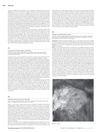
October 2015 in “The American journal of gastroenterology” Stopping infliximab and using strong topical steroids can regrow hair lost due to psoriasiform alopecia.
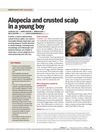 March 2026 in “Open MIND”
 Early treatment of scalp infections can prevent permanent hair loss.
1 citations
,
January 2024 in “Arab Board Medical Journal” Tofacitinib effectively regrows hair in alopecia areata patients, especially in younger individuals, with manageable side effects.
January 2016 in “Indian dermatology online journal” Frontal fibrosing alopecia causes hair loss at the front hairline, and no effective treatment exists.
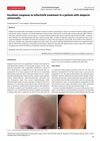 16 citations
,
January 2017 in “Acta dermatovenerologica Alpina, Pannonica et Adriatica (Tiskana izd.)”
16 citations
,
January 2017 in “Acta dermatovenerologica Alpina, Pannonica et Adriatica (Tiskana izd.)” A patient with complete hair loss regrew all her hair using tofacitinib.
 68 citations
,
May 2012 in “Annals of Oncology”
68 citations
,
May 2012 in “Annals of Oncology” Some breast cancer chemotherapy can cause permanent hair loss.
 36 citations
,
December 2017 in “Journal of the American Academy of Dermatology”
36 citations
,
December 2017 in “Journal of the American Academy of Dermatology” Most patients with frontal fibrosing alopecia stabilized with treatment, especially younger ones, using intralesional corticosteroids and tacrolimus.
 23 citations
,
July 2018 in “Journal of Cosmetic Dermatology”
23 citations
,
July 2018 in “Journal of Cosmetic Dermatology” Chemotherapy caused hair loss with specific patterns, but most patients had hair regrowth after treatment, while some had lasting hair loss.
16 citations
,
December 2001 in “The Journal of Dermatology” A woman recovered from hair loss and skin eruptions after stopping a tuberculosis drug and using steroids.
1 citations
,
December 2012 in “Journal of dermatological science” Combining ficlatuzumab and gefitinib can cause severe scarring hair loss.
May 2003 in “Journal of clinical oncology” Early diagnosis and treatment of frontal fibrosing alopecia are crucial to prevent permanent hair loss.
February 2025 in “Journal of the European Academy of Dermatology and Venereology” Mogamulizumab can cause hair loss, often linked to a better treatment response.
June 2026 in “British Journal of Dermatology” Hair transplants may trigger frontal fibrosing alopecia.
 179 citations
,
December 2004 in “Journal of The American Academy of Dermatology”
179 citations
,
December 2004 in “Journal of The American Academy of Dermatology” Some postmenopausal women with frontal fibrosing alopecia stopped losing hair with finasteride treatment, hinting at a possible hormonal cause.
5 citations
,
October 2019 in “JAAD Case Reports” These hair loss conditions might be part of a spectrum, not separate issues.
 September 2024 in “Acta Medica Philippina”
 Radiation from a medical procedure caused temporary hair loss, but hair regrew with treatment.
 155 citations
,
September 2008 in “British journal of dermatology/British journal of dermatology, Supplement”
155 citations
,
September 2008 in “British journal of dermatology/British journal of dermatology, Supplement” FFA is more common in postmenopausal women, can affect younger women, and may stabilize over time.
 January 2022 in “Eduvest”
 A teenage girl with a fungal scalp infection got better with antifungal and allergy medication, plus medicated shampoo.
17 citations
,
December 1997 in “Transplantation” Tacrolimus can cause hair loss in kidney transplant patients.
20 citations
,
September 1995 in “PubMed” Many drugs can cause temporary hair loss, which usually stops when the drug is discontinued.
 1 citations
,
January 2023 in “Mycopathologia”
1 citations
,
January 2023 in “Mycopathologia” A woman's hair loss and scalp swelling, caused by a fungal infection, was wrongly treated but eventually cured with Terbinafine, emphasizing its effectiveness.