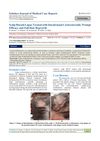
 October 2025 in “Scholars Journal of Medical Case Reports”
 Intralesional corticosteroids effectively treat scalp Discoid Lupus and restore hair.
 August 2025 in “International Journal of Research in Dermatology”
 Combining glucocorticoids with immunosuppressants like cyclophosphamide improves remission and reduces relapse in pemphigus patients.
 1 citations
,
July 2024 in “International Journal of Innovative Science and Research Technology (IJISRT)”
1 citations
,
July 2024 in “International Journal of Innovative Science and Research Technology (IJISRT)” Stopping steroids and providing supportive care improved the patient's Cushing Syndrome symptoms and ulcers.
 20 citations
,
October 2003 in “The Journal of Dermatology”
20 citations
,
October 2003 in “The Journal of Dermatology” DCP therapy causes side effects like weakness, flushing, headaches, and taste changes, but less frequently causes hypertension and diabetes.
 102 citations
,
April 2014 in “International Journal of Dermatology”
102 citations
,
April 2014 in “International Journal of Dermatology” The treatment helped reduce symptoms and stabilize the hairline in most patients with Frontal Fibrosing Alopecia, but hair regrowth was limited.
 4 citations
,
February 2019 in “PubMed”
4 citations
,
February 2019 in “PubMed” Clascoterone may be an effective topical treatment for hair loss.
October 2020 in “Journal of the American Society of Nephrology” Drospirenone can hide symptoms of certain hormonal disorders, complicating diagnosis.
May 2025 in “Pakistan Armed Forces Medical Journal” Dithranol is more effective than Tacrolimus for hair regrowth in alopecia areata.
37 citations
,
September 2002 in “Acta pædiatrica” A cystic fibrosis patient developed Cushing's syndrome from a drug interaction between itraconazole and budesonide, which improved after stopping the medications.
 80 citations
,
August 1991 in “The journal of allergy and clinical immunology/Journal of allergy and clinical immunology/The journal of allergy and clinical immunology”
80 citations
,
August 1991 in “The journal of allergy and clinical immunology/Journal of allergy and clinical immunology/The journal of allergy and clinical immunology” Methotrexate reduced the need for steroids in asthma patients without worsening their condition.
 December 2022 in “Jurnal Farmasi Klinik Base Practice”
 Cyclophosphamide helped 59.4% of children with steroid-resistant nephrotic syndrome but caused side effects in 40.6%.
 September 2024 in “Egyptian Journal of Dermatology and Venerology”
 Combining TRA and latanoprost is most effective for treating localized alopecia areata.
10 citations
,
April 2023 in “JAAD Case Reports” Topical clascoterone may help treat hidradenitis suppurativa.
1 citations
,
February 2024 in “JEADV Clinical Practice” Pulse corticosteroid therapy helps many with severe alopecia areata regrow hair, but has side effects.
 1 citations
,
December 2020 in “Dermatology Archives”
1 citations
,
December 2020 in “Dermatology Archives” Systemic steroids temporarily improve severe alopecia areata in children but often lead to relapse.
 July 2025 in “Journal of the Pakistan Medical Association”
 Combining TCA with 5-FU is more effective and safer for treating keloids than TCA alone.
June 2023 in “Clinical Chemistry” Unregulated supplements can contain hidden drugs causing misleading symptoms and test results.
 34 citations
,
October 2018 in “Journal of The American Academy of Dermatology”
34 citations
,
October 2018 in “Journal of The American Academy of Dermatology” Hormone treatments can help with women's skin and hair disorders, but they need careful monitoring and more research.
 May 2011 in “Journal of The American Academy of Dermatology”
 Objective assessment is needed to accurately determine medication use and adherence.
9 citations
,
November 2022 in “Journal of Cosmetic Dermatology” Combining cryotherapy with steroids reduces keloid size more effectively than steroids alone.
 March 2024 in “Clinical and experimental dermatology”
 Topical corticosteroids may be a safe and effective treatment for severe alopecia areata in children.
 23 citations
,
April 1999 in “The Journal of Clinical Endocrinology and Metabolism”
23 citations
,
April 1999 in “The Journal of Clinical Endocrinology and Metabolism” All treatments reduce hair growth; low dose flutamide most effective with fewer side effects.
 75 citations
,
March 1999 in “Fertility and sterility”
75 citations
,
March 1999 in “Fertility and sterility” Finasteride, CPA, and flutamide are all equally effective in reducing excessive hair growth in women.
18 citations
,
June 2020 in “Dermatologic Therapy” FCO2 laser is a better treatment for alopecia areata than intralesional steroids.
6 citations
,
May 2024 in “JAAD Case Reports” Topical ruxolitinib cream may help treat frontal fibrosing alopecia.
 October 2015 in “Reactions Weekly”
 A woman got a scalp condition from using latanoprost, but it improved after stopping the drug and starting other treatments.
 September 2025 in “Clinical Cosmetic and Investigational Dermatology”
 Many people in Jordan misuse topical steroids without proper knowledge, highlighting the need for better education and regulation.
 1 citations
,
October 2023 in “BMC oral health”
1 citations
,
October 2023 in “BMC oral health” Two patients treated with TAC for mouth fibrosis improved but developed Cushing's Syndrome symptoms.
6 citations
,
November 2015 in “JAMA” Oral contraceptives help mild hirsutism, while flutamide and spironolactone help severe cases.
 3 citations
,
August 2022 in “JAAD case reports”
3 citations
,
August 2022 in “JAAD case reports” A woman developed swelling in her body after taking low-dose oral minoxidil for hair loss, but it resolved after stopping the medication.