 16 citations
,
May 2013 in “Australasian Journal of Dermatology”
16 citations
,
May 2013 in “Australasian Journal of Dermatology” Hair loss in Cronkhite-Canada syndrome is reversible by treating the gut issues and doesn't need steroid treatment for the hair itself.
 13 citations
,
January 2018 in “BioMed Research International”
13 citations
,
January 2018 in “BioMed Research International” Scalp involvement is common in pemphigus and can lead to hair loss, with the severity of scalp lesions linked to overall disease severity.
 9 citations
,
June 2014 in “British Journal of Dermatology”
9 citations
,
June 2014 in “British Journal of Dermatology” The study found that balding scalps have more thin hairs and larger oil glands, which might contribute to skin conditions related to hair loss.
 4 citations
,
September 2017 in “Skin appendage disorders”
4 citations
,
September 2017 in “Skin appendage disorders” The dog with an Alopecia Areata-like condition showed signs of an autoimmune disease and partially regrew hair without treatment, suggesting dogs could be models for human AA research.
 3 citations
,
March 1998 in “Aesthetic Surgery Journal”
3 citations
,
March 1998 in “Aesthetic Surgery Journal” Experts suggest various surgical methods for hair restoration, including scalp reduction, transplantation using minigrafts, and establishing a permanent frontal hairline with follicular units. The drug finasteride may also be used alongside these procedures.
 3 citations
,
January 1989 in “PubMed”
3 citations
,
January 1989 in “PubMed” The review found that specific changes in scalp tissue can help diagnose different types of hair loss.
June 2026 in “Russian Journal of Skin and Venereal Diseases” Salmon-derived exosomes effectively improve hair growth in androgenetic alopecia.
May 2025 in “OPAL (Open@LaTrobe) (La Trobe University)” EX104 effectively promotes hair growth and regenerates follicles in androgenetic alopecia.
 July 2023 in “Journal of Clinical Medicine”
 The document concludes that understanding hair follicle histology and the hair cycle is crucial for diagnosing alopecia.

More research is needed to understand chemotherapy-induced hair loss and its phases.
 July 2008 in “Expert Review of Dermatology”
 Proper planning for hair transplants is crucial for natural results, with careful patient selection and strategic graft placement being key factors.
 May 2026 in “Zenodo (CERN European Organization for Nuclear Research)”
 Alopecia treatments are improving, but future therapies need to target underlying causes for better results.
 May 2026 in “Zenodo (CERN European Organization for Nuclear Research)”
 Alopecia treatments are improving, but future therapies need to target underlying causes for better results.
 July 2019 in “Journal of Investigative Dermatology”
 The research found that male pattern hair loss is mostly genetic and involves hair thinning due to hormonal effects and changes in gene expression.
 February 2021 in “Journal of The American Academy of Dermatology”
 Fibrosis in the bulge area of hair follicles can cause hair thinning in male pattern baldness, and drugs that inhibit fibrosis might help reverse this.
 May 2026 in “Frontiers in Cell and Developmental Biology”
 Collagen networks play a key role in hair loss and follicle miniaturization.
 1 citations
,
July 2020 in “Revista Cereus”
1 citations
,
July 2020 in “Revista Cereus” Using growth factors with microneedling is effective for treating hair loss.
 June 2026 in “HAL (Le Centre pour la Communication Scientifique Directe)”
 SH-1 effectively treats hair loss without side effects.
 June 2026 in “Zenodo (CERN European Organization for Nuclear Research)”
 SH-1 effectively treats hair loss without side effects.
 September 2025 in “PubMed”
 Hair miniaturization is the main cause of long-term hair loss after stem cell transplantation and chemotherapy, and treatments like topical minoxidil can help improve hair volume.
 16 citations
,
February 2018 in “Journal of The American Academy of Dermatology”
16 citations
,
February 2018 in “Journal of The American Academy of Dermatology” Scalp biopsies from dermatomyositis patients show chronic hair loss without scarring, with mucin and blood vessel changes being very common.
 May 2026 in “Zenodo (CERN European Organization for Nuclear Research)”
 Androgenetic alopecia is common hair loss caused by genetics and hormones, with treatments to slow it but no cure.
 June 2023 in “Brazilian Journal of Health Review”
 Common baldness is a hereditary condition that can be treated with medications or surgery to prevent progression and improve self-esteem.
 8 citations
,
February 2017 in “Archives of Dermatological Research”
8 citations
,
February 2017 in “Archives of Dermatological Research” Intense pulsed light treatment effectively reduces underarm hair by making hair follicles smaller and extending their resting phase.
 1 citations
,
January 2010 in “Springer eBooks”
1 citations
,
January 2010 in “Springer eBooks” Hair loss in androgenetic alopecia may be due to ongoing tiny inflammation and tissue changes around hair follicles.
 May 2026 in “Zenodo (CERN European Organization for Nuclear Research)”
 Androgenetic alopecia is common hair loss caused by genetics and hormones, with treatments mainly slowing it down.
 February 2026 in “Nature Communications”
 Inhibiting connective tissue sheath contraction may improve hair growth in male pattern baldness.
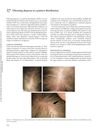 April 2012 in “Informa Healthcare eBooks”
 Fibrosing alopecia in a pattern distribution is a unique hair loss condition with inflammation and scarring, resembling but distinct from common balding.
 July 2012 in “Medical Hypotheses”
 Artemis dysfunction might cause hair loss through telomere shortening.
 January 2020 in “Przegla̧d dermatologiczny”
 A 5-year-old boy was diagnosed with congenital triangular alopecia, a type of hair loss without skin changes, usually starting between ages 2-5, with no specific treatment.