2 citations
,
March 2025 in “Cancer Gene Therapy” Targeting Sirt1 can reduce androgen levels and slow glioblastoma growth.
305 citations
,
March 2008 in “AJP Endocrinology and Metabolism” SSAT is a key enzyme affecting cell growth and metabolism, with potential but risky use in disease treatment.
 March 2025 in “Journal of Endocrinology and Metabolism”
 Rodent models of PCOS show some hormone changes similar to humans, but also have key differences.
Ultrasound alone isn't enough to diagnose PCOS.
159 citations
,
August 2010 in “British journal of dermatology/British journal of dermatology, Supplement” Hydroxychloroquine effectively reduces symptoms of frontal fibrosing alopecia, especially in the first 6 months.
 December 2022 in “International journal of preventive, curative & community medicine”
 PCOS is a common hormonal disorder in women, causing symptoms like acne and irregular periods, and is managed with medication and lifestyle changes.
Protein profiling of forehead skin can help distinguish between frontal fibrosing alopecia and androgenetic alopecia.
4 citations
,
September 2015 in “JAAD case reports” Substance P may play a role in the inflammation seen in keratosis follicularis spinulosa decalvans.
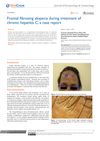 September 2017 in “Journal of Dermatology & Cosmetology”
 Hepatitis C treatment may cause frontal fibrosing alopecia.
January 2024 in “Biomarker Insights” Certain genetic variants may increase the risk of developing PCOS.
December 2024 in “Food Bioscience” Limosilactobacillus fermentum MF10 helps hair grow by activating certain cell signals in mice.
23 citations
,
March 2017 in “JAAD case reports” The document suggests a possible link between FAM111B gene mutations and increased cancer risk, particularly pancreatic cancer.
 6 citations
,
August 2022 in “Science immunology”
6 citations
,
August 2022 in “Science immunology” Foxn1 gene regulation is crucial for thymus development but not for hair growth.
16 citations
,
January 2023 in “Gynecological Endocrinology” Liver damage in PCOS is linked to iron overload and cell death due to the miR-761-hepcidin/GPX4 pathway.
 3 citations
,
February 2024 in “Journal of the American Academy of Dermatology”
3 citations
,
February 2024 in “Journal of the American Academy of Dermatology” Topical tofacitinib cream may help treat certain hair loss conditions with fewer risks.
lncRNA MRPS28 regulates hair follicle development in cashmere goats, affecting cashmere quality.
 1 citations
,
April 2022 in “Annals Academy of Medicine Singapore”
1 citations
,
April 2022 in “Annals Academy of Medicine Singapore” PCOS care in Singapore can be bettered by refining referral systems, standardizing diagnosis and treatment, enhancing complication screening, and offering educational resources for clinicians.
May 2022 in “International Journal of Trichology” 3 citations
,
January 2018 in “International Journal of Trichology” The new system helps detect and track early female hair loss better.
February 2026 in “Indian Dermatology Online Journal” Tofacitinib significantly improved skin and hair conditions without side effects.
75 citations
,
September 2007 in “Journal of Heredity” FGF5 gene mutations cause long hair in domestic cats.
 December 2024 in “Livers”
 Recognizing rare causes of MASLD is crucial for effective treatment and preventing complications.
21 citations
,
October 2007 in “Journal of Investigative Dermatology” Fetuin-A helps wounds heal without scars by promoting cell movement.
 23 citations
,
January 2017 in “Current Rheumatology Reports”
23 citations
,
January 2017 in “Current Rheumatology Reports” Unique fat cells near fibrotic areas contribute to systemic sclerosis progression.
12 citations
,
December 2003 in “Gene” The ovine Hoxc-13 gene is crucial for hair formation and may have other skin functions.
 4 citations
,
January 2019 in “Acta dermato-venereologica”
4 citations
,
January 2019 in “Acta dermato-venereologica” Women with severe frontal fibrosing alopecia are more likely to have rosacea.

Lnc056 helps hair follicle stem cells grow by increasing TRIP6 expression.
 15 citations
,
July 2020 in “Dermatologic Therapy”
15 citations
,
July 2020 in “Dermatologic Therapy” FPHL is common in women, influenced by genetics and hormones, and can be treated with medications, laser therapy, or hair transplantation.
 9 citations
,
July 2021 in “Frontiers in Pharmacology”
9 citations
,
July 2021 in “Frontiers in Pharmacology” Cholesterol-modified siRNAs targeting certain genes increased hair growth in mice.
3 citations
,
May 2024 in “BMC Medical Genomics” A new ARID1B gene variation causes Coffin-Siris syndrome 1 and early high myopia in a Chinese family.