 39 citations
,
July 2015 in “British Journal of Dermatology”
39 citations
,
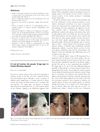
July 2015 in “British Journal of Dermatology” The pseudo 'fringe sign' can also appear in frontal fibrosing alopecia, not just in traction alopecia, showing that this condition may be more common than thought.
2 citations
,
January 1987 in “PubMed” Woolly hair syndrome is a genetic condition causing frizzy, fragile hair.
 4 citations
,
January 2017 in “Annals of Dermatology”
4 citations
,
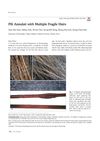
January 2017 in “Annals of Dermatology” Frequent hairdryer use may worsen hair fragility in people with Pili Annulati.
 7 citations
,
August 2009 in “Applied Mathematics and Mechanics-English Edition”
7 citations
,
August 2009 in “Applied Mathematics and Mechanics-English Edition” Hair fibers have fractal patterns with properties related to the golden mean, which may affect their functionality.
December 2014 in “Nicolaus Copernicus University Repository (Nicolaus Copernicus University)” Polyquaternium-7 improves hair condition.
 19 citations
,
October 1985 in “British Journal of Dermatology”
19 citations
,
October 1985 in “British Journal of Dermatology” The document concludes that unruly hair can be congenital or acquired, often lacks specific treatments, and can be managed with oils and short hairstyles.
28 citations
,
June 1995 in “The Journal of Dermatology” The flaky skin mouse mutation is a natural model for studying human psoriasis.
September 2023 in “Journal of the American Academy of Dermatology” Sunscreen use is linked to frontal fibrosing alopecia, especially in males.
2 citations
,
July 2013 in “Acervo Digital da Universidade Estadual Paulista (Universidade Estadual Paulista)” The shampoo effectively defines and models curls while reducing frizz and volume.
20 citations
,
July 2005 in “Experimental dermatology” The fuzzy gene is crucial for controlling hair growth cycles.
38 citations
,
July 2020 in “EMBO journal” SIRT7 protein is crucial for starting hair growth in mice.
January 2010 in “EPub Bayreuth (University of Bayreuth)” Polyquaternium-87 reduces hair friction the most among tested polymers.
 1 citations
,
September 2021 in “CRC Press eBooks”
1 citations
,
September 2021 in “CRC Press eBooks” Frontal Fibrosing Alopecia is a hair loss condition mainly affecting postmenopausal women, with unclear causes and various clinical patterns.
1 citations
,
May 1967 in “Pediatric Research” September 2023 in “Journal of the American Academy of Dermatology” The hair care routine effectively improved scalp health and reduced fungus in children with kinky hair.
 1 citations
,
December 2017 in “Anais Brasileiros de Dermatologia”
1 citations
,
December 2017 in “Anais Brasileiros de Dermatologia” Frontal fibrosing alopecia can mimic traction alopecia but has distinct features like facial papules and eyebrow thinning.
Managing telogen effluvium is challenging due to limited scientific evidence.
 March 2005 in “International Journal of Cosmetic Science”
 A new method helps understand hair shine and various products improve hair care.
1 citations
,
July 2015 in “Microscopy Research and Technique” Friedreich's ataxia causes thin, weak hair with surface damage and cavities.
 13 citations
,
January 2012 in “International journal of trichology”
13 citations
,
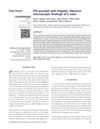
January 2012 in “International journal of trichology” The study found that hair fragility in Pili annulati may be caused by cavities and damage within the hair shafts.
May 2026 in “Inovasi Kesehatan Global” A 7-year-old boy's fungal infection was treated successfully, but some hair loss was permanent.
December 2021 in “Cosmetics”  November 2022 in “The journal of investigative dermatology/Journal of investigative dermatology”
 Linalool in personal care products may contribute to hair loss by damaging hair follicle stem cells and triggering harmful immune responses.
 April 2023 in “World Journal Of Advanced Research and Reviews”
 Cosmetic products or emotional factors might contribute to Frontal Fibrosing Alopecia, and trichoscopy is useful for diagnosis.
 November 2008 in “Medical & surgical dermatology”
 A device was made in 2008 to measure hair loss severity. Other findings include: frizzy mutation in mice isn't related to Fgfr2, C/EBPx marks preadipocytes, Cyclosporin A speeds up hair growth in mice, blocking plasmin and metalloproteinases hinders healing, hyperbaric oxygen helps ischemic wound healing, amniotic membranes heal wounds better than polyurethane foam, rhVEGF165 from a fibrin matrix improves tissue flap viability and induces VEGF-R2 expression, and bFGF enhances wound healing and reduces scarring in rabbits.
5 citations
,
January 1992 Silicones in shampoos make hair smoother, easier to manage, and reduce friction.
 28 citations
,
December 2010 in “Langmuir”
28 citations
,
December 2010 in “Langmuir” Hair fibers interact through classical forces, which are influenced by treatments and products, important for hair care and other applications.
April 2019 in “Journal of Investigative Dermatology” Targeting immune pathways like JAK/STAT may help treat frontal fibrosing alopecia.
7 citations
,
October 2019 in “Frontiers in bioengineering and biotechnology” Fusion proteins can protect hair from heat damage.