 October 2022 in “Indian journal of anatomy and surgery of head, neck and brain”
 The nasolabial flap is effective for repairing the mouth in patients with oral submucous fibrosis.
 3 citations
,
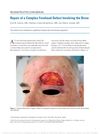
April 2016 in “Dermatologic Surgery”
3 citations
,
April 2016 in “Dermatologic Surgery” A man's forehead and eyebrow were successfully reconstructed with a skin and hair graft that matched his other eyebrow, without needing frequent trimming.
January 2026 in “Indian Journal of Paediatric Dermatology” A rare case shows a possible link between Neurofibromatosis type 1 and Becker nevus due to genetic mutations.
 September 2024 in “Egyptian Journal of Medical Human Genetics”
 Consider NF1 in newborns with rare congenital anomalies.
Additional surgeries are often needed to fix facial issues in patients with orofacial clefts.
 1 citations
,
January 2018 in “Indian journal of otolaryngology and head and neck surgery”
1 citations
,
January 2018 in “Indian journal of otolaryngology and head and neck surgery” The new surgery method successfully healed the patient's nasal wound without complications.
7 citations
,
January 2013 in “Ophthalmic plastic and reconstructive surgery” A 79-year-old man was diagnosed with a rare skin condition called nevus comedonicus on his eyelids.
 July 2021 in “Archives of Aesthetic Plastic Surgery”
 The combined surgery effectively rejuvenates the upper face without serious complications.
33 citations
,
August 2013 in “Current Opinion in Ophthalmology” Frontalis suspension surgery using autologous fascia lata is effective for treating unilateral congenital ptosis with poor levator function.
44 citations
,
January 1999 in “Dermatology” Nevus comedonicus is a rare skin condition with grouped open pores, sometimes linked to other body issues.
1 citations
,
October 2023 in “The Laryngoscope” The procedure effectively removes forehead osteomas with minimal scarring and no complications.
August 2024 in “Clinical Case Reports” Pilomatricoma is a rare, benign skin tumor that requires surgical removal for best results.
15 citations
,
April 2021 in “Annals of Translational Medicine” Facial gender surgery techniques focus on forehead and hairline changes for accurate results.
9 citations
,
August 2002 in “British journal of ophthalmology” The document reports a rare case of ECCL with a new association with optic disc colobomas.
 1 citations
,
December 2019 in “American journal of ophthalmology. Case reports”
1 citations
,
December 2019 in “American journal of ophthalmology. Case reports” A rare skin condition caused droopy and outward-turning eyelids in a patient.
January 2026 in “JDDG Journal der Deutschen Dermatologischen Gesellschaft” A 5-year-old boy has Nevus Comedonicus Syndrome, causing skin lesions and a cataract.
1 citations
,
January 2007 in “The Internet Journal of Dermatology” A rare, harmless skin tumor was found on a man's nose.
31 citations
,
January 2016 in “Skin Appendage Disorders” Frontal fibrosing alopecia and vitiligo might be linked, not just coincidental.
The treatment improved facial structure and corrected bite issues in patients.
28 citations
,
November 2018 in “American Journal of Medical Genetics Part A” ODC1 gene mutations cause a neurodevelopmental disorder with large head size, hair loss, and facial abnormalities.
 September 2023 in “Clinical anatomy”
 Forehead creases are formed by a tight connection between the skin and muscle through dense fibers, with changes in skin thickness and fewer skin appendages near the creases.
August 2018 in “Journal of the American Academy of Dermatology” March 2017 in “Dermatologic Surgery” Using fillers and neurotoxins together can improve the look of aging eyebrows.
 April 2016 in “Plastic and reconstructive surgery. Global open”
 Surgery may help infants with sagittal craniosynostosis develop more typical language processing.
 August 2004 in “Journal of the American College of Surgeons”
 Several genes, including Hox-7A, Stra6, and Lim-1, are involved in normal palate formation.
39 citations
,
April 2009 in “Journal of Plastic Reconstructive & Aesthetic Surgery” The surgery for severe congenital ptosis in children is safe and effective, with good long-term results.
 18 citations
,
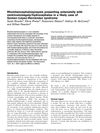
December 2006 in “Clinical dysmorphology”
18 citations
,
December 2006 in “Clinical dysmorphology” A 2-year-old boy with a rare brain malformation may have Gomez–López-Hernández syndrome.
9 citations
,
June 2013 in “Journal of Cosmetic Dermatology” Lateral oblique forehead lines are caused by muscle movement, not sleep positions, and can be treated with botulinum toxin A.
 73 citations
,
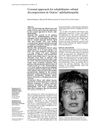
January 1997 in “British Journal of Ophthalmology”
73 citations
,
January 1997 in “British Journal of Ophthalmology” The coronal approach is effective and safe for reducing eye bulging in Graves' eye disease.