 December 2017 in “Facial Plastic Surgery”
 The document concludes that successful treatment of upper and midface trauma should focus on restoring both appearance and function, with attention to facial structure, skin, and hair repair.
 1 citations
,
December 2017 in “Anais Brasileiros de Dermatologia”
1 citations
,
December 2017 in “Anais Brasileiros de Dermatologia” Frontal fibrosing alopecia can mimic traction alopecia but has distinct features like facial papules and eyebrow thinning.
1 citations
,
September 2016 in “Plastic & Reconstructive Surgery Global Open” Facial Feminization Surgery is effective and safe, with minimal complications.
 1 citations
,
November 2002 in “Neurosurgery Clinics of North America”
1 citations
,
November 2002 in “Neurosurgery Clinics of North America” The article concludes that cranial reconstruction should aim for the best aesthetic result, using various techniques tailored to individual needs and conditions.
April 2025 in “Indian Journal of Dermatology” A rare, benign facial tumor called fibrofolliculoma was successfully treated with surgery.
2 citations
,
June 2021 in “Sultan Qaboos University medical journal” Familial frontal fibrosing alopecia is rare, mostly affects women, and often occurs between sisters or mother-daughter pairs.
39 citations
,
September 2018 in “American Journal of Medical Genetics Part A” A new genetic mutation in the ODC1 gene causes developmental delay and other symptoms in a young girl.
 131 citations
,
September 2010 in “The Laryngoscope”
131 citations
,
September 2010 in “The Laryngoscope” Forehead modification greatly increases the perception of femininity and is a safe procedure.
EFBL offers hidden incisions, faster recovery, and fewer risks, but may raise hairline and cost more.
66 citations
,
June 1997 in “The Laryngoscope” Tailored treatments for aging brows and foreheads improve results.
 5 citations
,
February 2015 in “JEADV. Journal of the European Academy of Dermatology and Venereology/Journal of the European Academy of Dermatology and Venereology”
5 citations
,
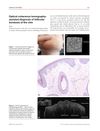
February 2015 in “JEADV. Journal of the European Academy of Dermatology and Venereology/Journal of the European Academy of Dermatology and Venereology” OCT can non-invasively diagnose follicular keratosis and other hair follicle disorders.
 4 citations
,
January 2020 in “Skin appendage disorders”
4 citations
,
January 2020 in “Skin appendage disorders” A woman with an unusual pattern of hair loss was confirmed to have Frontal Fibrosing Alopecia and treated with specific medications.
Pilomatricoma is a rare, harmless skin lump that needs accurate diagnosis and timely treatment.
 July 2024 in “Dermatology Practical & Conceptual”
 LC-OCT helps accurately diagnose different types of infant hair loss without invasive methods.
2 citations
,
June 2016 in “Oral Surgery Oral Medicine Oral Pathology and Oral Radiology” Oral lichen planus can appear before lichen planopilaris.
 4 citations
,
May 2015 in “Indian Journal of Dermatology, Venereology and Leprology”
4 citations
,
May 2015 in “Indian Journal of Dermatology, Venereology and Leprology” Congenital triangular alopecia can occur outside the typical fronto-temporal region.
August 2025 in “BMC Pharmacology and Toxicology” The LTF gene may help predict and manage nonspecific orbital inflammation.
 1 citations
,
June 2012 in “Revista Brasileira de Cirurgia Plástica”
1 citations
,
June 2012 in “Revista Brasileira de Cirurgia Plástica” The procedure is effective for reducing the forehead despite potential for visible scars.
 5 citations
,
October 2018 in “Dermatologic therapy”
5 citations
,
October 2018 in “Dermatologic therapy” Recognizing congenital triangular alopecia is crucial to avoid unnecessary treatments.
 65 citations
,
June 2003 in “EMBO journal”
65 citations
,
June 2003 in “EMBO journal” Noggin overexpression delays eyelid opening by affecting cell death and skin cell development.
 May 2013 in “Facial Plastic Surgery Clinics of North America” March 2015 in “Plastic and reconstructive surgery”
 No single forehead lift procedure suits all; techniques vary based on hairline and desired outcomes.

Early combination therapy can effectively regrow hair in frontal fibrosing alopecia.

The hairline can reliably guide neurosurgical planning.
 October 2018 in “Biomedical Journal of Scientific & Technical Research”
 Otoplasty can cause permanent hair loss if bandages are too tight.
 65 citations
,
September 1998 in “Eye”
65 citations
,
September 1998 in “Eye” Orbital decompression surgery for Graves' orbitopathy caused double vision in 19% of patients, with similar rates for two surgical methods.
 2 citations
,
October 2010 in “Springer eBooks”
2 citations
,
October 2010 in “Springer eBooks” Using cheek skin and cartilage grafts for nose reconstruction after skin cancer surgery can maintain shape and function but may require multiple surgeries and hair removal in men.
2 citations
,
January 2016 in “Dermatology online journal” A 46-year-old man was diagnosed with frontal fibrosing alopecia, a condition usually seen in postmenopausal women.
 November 2023 in “Indian Journal of Dermatology”
 The study found that Frontal Fibrosing Alopecia in North-East India mainly affects middle-aged women and is often associated with lichen planus pigmentosus.
 June 1998 in “Plastic and Reconstructive Surgery”
 Facial proportion is important in hair restoration surgery.