2 citations
,
April 2023 in “Polymers” The study created 3D-printed pills that effectively release a hair loss treatment drug over 24 hours.
 2 citations
,
November 2021 in “International Journal of Applied Pharmaceutics”
2 citations
,
November 2021 in “International Journal of Applied Pharmaceutics” The phytosome lotion made from Mangkokan leaf extract was more effective for hair growth than 2% minoxidil, especially at 30% concentration.
 1 citations
,
March 2023 in “PubMed”
1 citations
,
March 2023 in “PubMed” Rosemary hair lotion significantly promotes hair growth and could be a potential alternative to commercial hair growth products.
1 citations
,
June 2016 in “Experimental Dermatology” Metabolomics can identify hair damage markers, but its use in creating treatments is uncertain.

The hydrogels show promise for targeted cervical cancer treatment but need more testing.
 May 2026 in “Archives of Dermatological Research”
 Vitamin E and gamma-oryzanol protect hair from UV damage.
 May 2026 in “Zenodo (CERN European Organization for Nuclear Research)”
 The serum with microneedling device improves hair loss treatment effectively and safely.

Stinging nettle infusions improve the strength and antioxidant properties of k-carrageenan hydrogels.
February 2026 in “Macromolecular Bioscience” Keratin-based hydrogels with calcium are effective for delivering anti-fibrotic drugs.
December 2025 in “Sustainable Chemistry One World” Mangosteen waste can be used as an eco-friendly natural hair dye, producing a lasting reddish color and strengthening hair.
December 2025 in “Pharmacological Research - Natural Products” Shrimp extracts may help heal burns and fight bacteria.
November 2025 in “ACS Nano” The microreactor effectively fights antibiotic-resistant infections and promotes tissue healing.
 October 2025 in “Journal of Molecular Structure”
 Hyaluronic acid microneedles help deliver minoxidil derivatives effectively for hair regrowth.
September 2025 in “Cosmetics” Lipid content and structure affect water absorption in different hair types.
 August 2025 in “Journal of Applied Pharmaceutical Research”
 F4 and F6 hair gels showed promise for improving hair care but need more testing.
March 2025 in “Digital Library of Theses and Dissertations (Universidade de São Paulo)” Ferulic acid and resveratrol protect hair from chemical and sun damage.
 February 2025 in “Processes”
 A new CBD topical formulation may effectively and safely treat alopecia.
 January 2025 in “ACS Applied Materials & Interfaces”
 Nanoparticles with specific drugs can help regrow hair in alopecia areata.
 June 2024 in “Majallah-i dānishgāh-i ̒ulum-i pizishkī-i Kirmān.”
 Eucalyptus and Tween 80 most effectively increase cetirizine skin absorption.
 February 2024 in “Bioengineering”
 The hydrogel made of chitosan, HPMC, and insulin speeds up wound healing and could be a new dressing, especially for diabetics.
 February 2024 in “Current Bioactive Compounds”
 The new gel formulation effectively delivers Finasteride for hair growth treatment without skin irritation.
December 2023 in “Pharmaceutics” The new adhesive nanoparticles are effective for delivering Minoxidil to the scalp without skin irritation.

Thiolated cyclodextrin-based nanoparticles effectively deliver Minoxidil for scalp treatment without causing skin irritation.
 January 2022 in “DOAJ (DOAJ: Directory of Open Access Journals)”
 Argan oil-based nano carriers could potentially deliver caffeine to hair follicles to treat hair loss.
 October 2021 in “Austin journal of biomedical engineering”
 The material combining eggshell protein and scaffold helps wounds heal faster and regenerates tissue effectively.
January 2014 in “Spectrum Research Repository (Concordia University)” FA-MNPs effectively targeted and killed cancer cells but didn't overcome drug resistance.
 39 citations
,
July 2015 in “British Journal of Dermatology”
39 citations
,
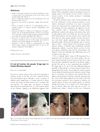
July 2015 in “British Journal of Dermatology” The pseudo 'fringe sign' can also appear in frontal fibrosing alopecia, not just in traction alopecia, showing that this condition may be more common than thought.
 April 2017 in “Journal of Investigative Dermatology”
 Laser treatment may help with hair growth in some people with frontal fibrosing alopecia, but results vary and the exact way it works is unclear.
 January 2005 in “Seibutsu Butsuri/Seibutsu butsuri”
 Chemical treatments damage hair more than UV exposure, making it thinner and less flexible.
8 citations
,
July 2020 in “Clinical, cosmetic and investigational dermatology” Excessive sun protection might cause frontal fibrosing alopecia by disrupting skin immune balance.