Search
forProducts matching "gamma linoleic acid"
Tracking 1 products like 374 Scalp Therapy - 90 Day Supply from by companies like The Revivogen MD . View product »
Sort by
Research
630-660 / 1000+ resultsresearch Additional file 1 of Rejuvenating senescent hair follicles: a novel conjugated linoleic acid based nanovesicle approach to treat androgenic alopecia

research Genomic and transcriptomic landscape to decipher the genetic basis of hyperpigmentation in Lanping black-boned sheep (Ovis aries)
Two genes, ERBB4 and ROR1, may cause the unique pigmentation in Lanping black-boned sheep.
research Lipid levels in women with androgenetic alopecia
Women with AGA have higher lipid levels, increasing heart disease risk.
research Effects of scalp lotion containing alpha lipoic acid derivatives for chemotherapy-induced alopecia in patients with gastrointestinal cancer: A prospective cohort study
The scalp lotion helped increase hair thickness in cancer patients undergoing chemotherapy.
research 438 Laminin-511 is a new player in the development of psoriasis and controlled via cannabinoid receptor type 1
Laminin-511 is involved in psoriasis development and can be regulated by cannabinoid receptor type 1.
research Position of systemic therapy in the treatment of lichen pigmentosus
Tranexamic acid and oral retinoids may effectively treat lichen plan pigmentosus.
research Promoting effect of type 17 collagen production by chlorogenic acid using PLGA nanoparticles in the human epidermal keratinocyte cell
Encapsulating chlorogenic acid in nanoparticles boosts type 17 collagen production, potentially aiding skin care.
research Topical latanoprost acid for female androgenetic alopecia: a pilot proof-of-concept trial with mechanistic evidence of FP-receptor activation
Topical latanoprost acid at 0.05% concentration improved hair growth in women with androgenetic alopecia.
research News Review: Lipid Technology 5/2014
New cleaning surfactants, biofuel production plans, dairy expansions, improved lipid testing methods, and various product launches and developments were reported in lipid technology.
research The high-polarity fraction of tail fat derived from Lanzhou Fat-Tailed sheep enhances skin wound healing through the regulation of inflammatory factors and the TGF-β1/Smad3 signaling pathway
Tail fat from Lanzhou Fat-Tailed sheep helps heal skin wounds by reducing inflammation and promoting tissue repair.
research Treatment with Malva verticillata Seed Extracts Alleviates Alopecia via Activation of Wnt/β-catenin Signaling
Malva verticillata seed extracts, specifically linoleic acid, can help reduce hair loss and promote hair growth by activating a specific pathway in hair cells.
research 097 LFA-1 blockade prevents the onset of alopecia areata in C3H/HeJ mice
Blocking LFA-1 prevents hair loss in mice.
research Lamellar ichthyosis with pseudoexon activation in the transglutaminase 1 gene
The boy's severe skin disorder is caused by two new mutations in his TGM1 gene.
research Treatment with Malva verticillata Seed Extracts Alleviates Alopecia via Activation of Wnt/β-catenin Signaling
Malva verticillata seed extracts, specifically linoleic acid, can help reduce hair loss and promote hair growth by activating certain cell signals.
research Anti-Inflammatory, Thrombolytic and Hair-Growth Promoting Activity of the n-Hexane Fraction of the Methanol Extract of Leea indica Leaves
The leaf extract of Leea indica may reduce inflammation, dissolve blood clots, and promote hair growth.
research A Pilot Study of a Grape Seed Procyanidin Extract for Lung Cancer Chemoprevention
Grape seed extract may safely and effectively help prevent lung cancer.
research Lignans and Neolignans: Plant secondary metabolites as a reservoir of biologically active substances
Lignans and neolignans from plants may help protect against various health issues, including cancer and heart disease.

research Enhanced therapeutic effects of all-trans retinoic acid nanostructured lipid carrier composite gel drug delivery system for alopecia areata
The gel improves hair regrowth and reduces irritation in alopecia areata treatment.
research Anti-androgenic and Hair Growth Promoting Activities of Lygodii Spora (Spore of Lygodium japonicum) I. Active Constituents Inhibiting Testosterone 5.ALPHA.-Reductase.
Lygodii Spora extract may help treat hair loss by blocking a hair loss-related enzyme and promoting hair growth.
research Genotype Triad for HOTAIR rs10783618, LINC-ROR rs1942347, and MALAT1 rs3200401 as Molecular Markers in Systemic Lupus Erythematous
Certain genetic markers can indicate higher or lower risk for systemic lupus erythematosus.
research Expression level of leucine-rich repeat containing 15 regulates characteristics of dermal papilla cells of human hair follicle
The gene LRRC15 is more active in balding areas of the scalp compared to non-balding areas.
research Lipid Droplets from Plants and Microalgae: Characteristics, Extractions, and Applications
Plant and algal lipid droplets are promising for natural oil production but need better extraction methods.
research Diagnosing Essential Fatty Acid Deficiency
Mild essential fatty acid deficiency can cause health issues and is worsened by low-fat diets.
research Topical latanoprost acid for female androgenetic alopecia: a pilot proof-of-concept trial with mechanistic evidence of prostaglandin F2α receptor activation
Topical latanoprost acid may help hair growth in women with hair loss.
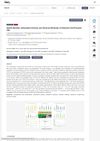
research Health Benefits, Antioxidant Activity, and Sensory Attributes of Selected Cold-Pressed Oils
Cold-pressed rapeseed oil is most resistant to oxidation and certain oils may reduce chronic disease risk; consumers like the taste of pumpkin oil best.
research Lambertianic Acid from Platycladus orientalis Inhibits Muscle Atrophy in Dexamethasone-Induced C2C12 Muscle Atrophy Cells
Lambertianic acid helps prevent muscle wasting.
research Low-Level Light Therapy for Androgenetic Alopecia: A 24-Week, Randomized, Double-Blind, Sham Device–Controlled Multicenter Trial
Low-level light therapy safely improves hair growth and thickness for androgenetic alopecia.
research Safety assessment of Linum usitatissimum (Linn.) Ingestion in New Zealand rabbits
Prolonged linseed ingestion is safe for rabbits.

research Heat‐treated Limosilactobacillus fermentumLM1020 with menthol, salicylic acid, and panthenol promotes hair growth and regulates hair scalp microbiome balance in androgenetic alopecia: A double‐blind, randomized and placebo‐controlled clinical trial
Heat-treated Limosilactobacillus fermentum with menthol, salicylic acid, and panthenol promotes hair growth and balances scalp microbiome in people with androgenetic alopecia.