 3 citations
,
September 2024 in “Frontiers in Bioscience-Scholar”
3 citations
,
September 2024 in “Frontiers in Bioscience-Scholar” Pantaneiro sheep have more genetic diversity than Texel sheep, with potential for future research in Brazilian farming.
November 2005 in “Hair transplant forum international” Genetic differences in hair loss can help improve diagnosis and treatment.
 7 citations
,
January 2019 in “Australasian Journal of Dermatology”
7 citations
,
January 2019 in “Australasian Journal of Dermatology” A genetic marker linked to a type of hair loss was found in most patients studied.
9 citations
,
June 2023 in “Human Genomics” MX1 and AR genes are linked to milder COVID-19, while TMPRSS2 increases severe risk, especially in women.
7 citations
,
March 2024 in “Skin Research and Technology” miR-200c-3p could help diagnose and treat alopecia areata.
 March 2025 in “Clinical Cosmetic and Investigational Dermatology”
 The Tru9I variant in the VDR gene may influence alopecia areata risk and vitamin D levels.
5 citations
,
October 2023 in “Forests” Ginkgo biloba has high genetic diversity, useful for future breeding.
August 2025 in “Skin Research and Technology” The article's correction clarifies scientific and methodological concerns about miR-200c-3p's role in alopecia areata.
 133 citations
,
February 2017 in “PLoS Genetics”
133 citations
,
February 2017 in “PLoS Genetics” Genetic factors can help predict male pattern baldness risk.
 58 citations
,
December 2018 in “Nature Communications”
58 citations
,
December 2018 in “Nature Communications” Male pattern baldness is mostly inherited, involves many genes, and is linked to other traits like early puberty and strong bones.
 43 citations
,
April 2017 in “Experimental Dermatology”
43 citations
,
April 2017 in “Experimental Dermatology” Female pattern hair loss has unclear causes, possibly involving genetics, hormones, and environment, and needs better treatments.
 3 citations
,
November 2022 in “European Journal of Human Genetics”
3 citations
,
November 2022 in “European Journal of Human Genetics” New models predict male pattern baldness better than old ones but still need improvement.
 July 2022 in “Postepy biochemii”
 DNA markers can predict physical traits for forensic use, but there are ethical and technical challenges.
 February 2026 in “Frontiers in Pharmacology”
 Genetics can help tailor treatments for male pattern hair loss, improving outcomes like stabilization or modest regrowth.
 48 citations
,
January 2003 in “Fertility and Sterility”
48 citations
,
January 2003 in “Fertility and Sterility” There's no significant link between the D19S884 marker at the insulin receptor gene and polycystic ovary syndrome.
1 citations
,
January 2022 in “Food & Function” Certain Egyptian Sabal fruit extracts may help treat anti-androgenic diseases like benign prostatic hyperplasia.
 January 2020 in “Archives of Medicine and Health Sciences”
 Certain immune molecules and stress affect hair loss, and while genes play a role, more research is needed to fully understand and treat it.
 29 citations
,
January 2010 in “Methods in Enzymology”
29 citations
,
January 2010 in “Methods in Enzymology” The document concludes that careful design of genetic fate mapping experiments is crucial for accurate cell lineage tracing in mice.
 115 citations
,
September 2000 in “The Lancet”
115 citations
,
September 2000 in “The Lancet” Early hair loss may indicate risk of insulin resistance.
 May 2026 in “Endocrine Connections”
 Androgenetic alopecia in PCOS is linked to insulin resistance, inflammation, and genetics, not just hormones.
299 citations
,
March 2001 in “Journal of Investigative Dermatology” Male pattern baldness is linked to specific genetic variations in the androgen receptor gene.
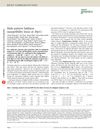 111 citations
,
October 2008 in “Nature Genetics”
111 citations
,
October 2008 in “Nature Genetics” Researchers found a new gene area linked to male-pattern baldness, which, along with another gene, significantly increases the risk of hair loss in men.
 57 citations
,
November 2017 in “Nature Communications”
57 citations
,
November 2017 in “Nature Communications” Researchers found 71 genetic regions linked to male pattern baldness, which account for 38% of its genetic risk.
44 citations
,
December 2005 in “Journal of Investigative Dermatology” Certain genetic markers, especially the MICA gene, are linked to alopecia areata.
 37 citations
,
October 2015 in “European Journal of Human Genetics”
37 citations
,
October 2015 in “European Journal of Human Genetics” Genetic data can predict male-pattern baldness with moderate accuracy, especially for early-onset cases in some European men.
 28 citations
,
March 2010 in “British Journal of Dermatology”
28 citations
,
March 2010 in “British Journal of Dermatology” Genetic marker rs12558842 strongly linked to male hair loss.
 23 citations
,
August 2017 in “Scientific Reports”
23 citations
,
August 2017 in “Scientific Reports” Darker hair may lead to higher cortisol readings, suggesting a need to adjust for hair color in studies.
 17 citations
,
March 2012 in “The Journal of Pathology”
17 citations
,
March 2012 in “The Journal of Pathology” In vivo lineage labelling is better than in vitro methods for identifying and understanding stem cells.
 14 citations
,
January 2018 in “Advances in Clinical Chemistry”
14 citations
,
January 2018 in “Advances in Clinical Chemistry” The document concludes that hormonal biomarkers are key for diagnosing hyperandrogenemia in women and hypogonadism in men.
 11 citations
,
February 2019 in “Research and reports in forensic medical science”
11 citations
,
February 2019 in “Research and reports in forensic medical science” DNA phenotyping helps predict physical traits from DNA with varying accuracy and requires careful ethical and legal handling.