25 citations
,
March 2021 in “Australasian Journal of Dermatology” Ustekinumab successfully treated a man's resistant skin condition when other treatments failed.
5 citations
,
January 2024 in “Therapeutic Advances in Hematology” Mogamulizumab treatment in Sézary syndrome may cause skin issues and hair loss but can lead to a complete response.
April 2022 in “JAAD case reports” Alitretinoin helped clear up a skin condition called generalized granuloma annulare in an elderly man.
 July 2025 in “SKIN The Journal of Cutaneous Medicine”
 Adding dupilumab led to almost complete hair regrowth in a patient with alopecia areata who only partially responded to baricitinib.
 6 citations
,
August 2013 in “Joint Bone Spine”
6 citations
,
August 2013 in “Joint Bone Spine” Tocilizumab treatment was associated with significant hair regrowth in one patient and temporary hair loss followed by regrowth in another.
5 citations
,
July 2003 in “Annals of the Rheumatic Diseases” An antibiotic called co-trimoxazole can effectively treat autoimmune diseases.

Selective immunotherapies like anifrolumab and belimumab are more effective for treating systemic lupus erythematosus than traditional drugs.
 May 2026 in “SHILAP Revista de lepidopterología”
 Dupilumab effectively treated severe alopecia areata in a child.
August 2021 in “The journal of investigative dermatology/Journal of investigative dermatology” TAGX-0003 protected hair follicles and reversed alopecia areata in a mouse model.
December 2025 in “Skin Health and Disease” Dupilumab can cause rare hair loss, but switching treatments can restore hair and control eczema.
20 citations
,
November 2017 in “JAAD case reports” Ustekinumab significantly improved psoriasis, vitiligo, and alopecia areata in a patient.
30 citations
,
January 2024 in “Frontiers in Pharmacology” These migraine prevention drugs can cause side effects like constipation, hair loss, injection site reactions, fatigue, and sometimes unexpected issues like Raynaud's phenomenon and weight gain.
 1 citations
,
October 2021 in “Deleted Journal”
1 citations
,
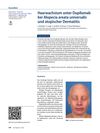
October 2021 in “Deleted Journal” Dupilumab can help regrow hair and improve skin conditions in patients with severe atopic dermatitis and alopecia areata.
15 citations
,
February 2024 in “Journal of Dermatological Treatment” Dupilumab may help treat alopecia areata without needing high IgE levels.
1 citations
,
September 2024 in “Dermatological Reviews” Dupilumab effectively improves skin conditions, reduces symptoms, and enhances quality of life in certain dermatological issues.
October 2024 in “The American Journal of Gastroenterology” Upadacitinib improved both Crohn's ileitis and alopecia universalis in a patient.
 60 citations
,
September 2013 in “Alimentary Pharmacology & Therapeutics”
60 citations
,
September 2013 in “Alimentary Pharmacology & Therapeutics” Immunosuppressive and anti-TNF therapies in IBD patients can increase the risk of skin cancer and cause various skin issues.
31 citations
,
July 1975 in “PubMed” Intensive immunosuppression can reduce relapse rates in multiple sclerosis patients, despite some side effects.
 May 2025 in “The Journal of Rheumatology”
 Early diagnosis and treatment are crucial for CAPS, and Eculizumab can be effective.
June 2025 in “British Journal of Dermatology” Dual-targeting therapies like Janus kinase inhibitors may treat both alopecia areata and other immune diseases.

Infliximab was effective in treating a scalp condition that did not respond to other treatments.
 October 2004 in “Australian Prescriber”
 Agalsidase alfa helps treat Fabry's disease but needs more research for long-term benefits.
 3 citations
,
May 2015 in “Journal of The American Academy of Dermatology”
3 citations
,
May 2015 in “Journal of The American Academy of Dermatology” Adalimumab significantly improves quality of life for patients with moderate to severe hidradenitis suppurativa.
November 2025 in “JEADV Clinical Practice” Leflunomide may lower alopecia areata risk, while other immunomodulators might increase it.
 May 2026 in “Frontiers in Immunology”
 Bimekizumab effectively treats scalp cellulitis and improves quality of life.
 18 citations
,
March 2006 in “Expert Review of Neurotherapeutics”
18 citations
,
March 2006 in “Expert Review of Neurotherapeutics” The document concludes that managing side effects of MS therapies is crucial for treatment success and patient adherence.
Alopecia universalis from alemtuzumab in multiple sclerosis can be reversed with specific treatments.
 November 2010 in “Value in Health”
 Real-life dosing of biologics for plaque psoriasis often deviates from recommended guidelines, especially for high-need patients.
Mycophenolate mofetil is a good alternative for autoimmune hepatitis patients who can't tolerate azathioprine.
9 citations
,
January 2024 in “International Journal of Dermatology” Tralokinumab may help improve symptoms of atopic dermatitis and alopecia areata.