 32 citations
,
February 2008 in “Developmental dynamics”
32 citations
,
February 2008 in “Developmental dynamics” Mice without the Sp6 gene have problems developing several body parts, including hair, teeth, limbs, and lungs.
 4 citations
,
May 2025 in “npj Parkinson s Disease”
4 citations
,
May 2025 in “npj Parkinson s Disease” PINK1 is important for controlling gut immune responses linked to early Parkinson's disease.
 7 citations
,
December 2008 in “Journal of Dermatological Science”
7 citations
,
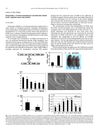
December 2008 in “Journal of Dermatological Science” Progranulin overexpression leads to shorter, thinner hair and increased cell death in mouse hair follicles.
166 citations
,
February 2005 in “Behavioural brain research” Vitamin D receptor knockout mice have significant motor impairments but no cognitive deficits.
14 citations
,
September 1999 in “Mammalian genome” The scraggly mutation causes hair loss and skin defects in mice.
 2 citations
,
February 2023 in “Transgenic Research”
2 citations
,
February 2023 in “Transgenic Research” The E2 protein affects gene activity in hair follicles of mice.
48 citations
,
July 1988 in “PubMed” Rhino mice show significant meibomian gland changes, making them a potential model for studying gland disorders.
 April 1981 in “Pediatric research”
 Copper treatments increase copper in all tissues, but brindled female mice accumulate much more copper in their kidneys without clinical effects, unlike brindled male mice where brain copper deficiency is clinically significant.
31 citations
,
April 2004 in “Journal of Investigative Dermatology” A new mouse gene, Keratin 17n, is mainly found in nail tissue and may explain why mice without Keratin 17 don't have nail issues.
15 citations
,
June 2011 in “Journal of Investigative Dermatology” Overexpressing 14-3-3σ in mice skin reduces cell growth and hair density.
33 citations
,
May 2018 in “Stem Cell Reports” Krt15+ cells in the mouse intestine resist radiation and can start tumors.
 10 citations
,
January 2010 in “Veterinary pathology”
10 citations
,
January 2010 in “Veterinary pathology” A new mutation in the hairless gene causes hair loss and skin wrinkling in mice.
 6 citations
,
October 2012 in “Journal of Heredity”
6 citations
,
October 2012 in “Journal of Heredity” The Itpr3 gene causes a specific hair pattern in mice.
November 2012 in “Experimental and Clinical Endocrinology & Diabetes” A new genetic mutation causes severe Leydig cell hypoplasia, affecting sexual development.
288 citations
,
January 2001 in “Journal of Biological Chemistry” Tgm2 helps stabilize dying cells and aids fibroblast attachment to the extracellular matrix.
6 citations
,
January 2004 in “DNA Research” A mutation in the Sgkl gene causes defective hair growth in mice.
May 2009 in “OPAL (Open@LaTrobe) (La Trobe University)” Suppressing the HGPS mutation may improve symptoms and suggest reversibility.
 15 citations
,
December 2014 in “PLoS ONE”
15 citations
,
December 2014 in “PLoS ONE” A mutation in the iRhom2 gene causes hairless mice due to abnormal hair follicle development.
50 citations
,
December 2005 in “European Journal of Immunology” RXRα is crucial for proper immune response and links diet to immune function.
April 2010 in “The FASEB Journal” Knockout mice showed anemia and hair loss, suggesting other ways exist for iron absorption.
 March 2025 in “International Journal of Molecular Sciences”
 The study created a mouse model to better understand hair follicle stem cells' role in hair growth and repair.
7 citations
,
August 2008 in “Immunogenetics” A gene mutation in mice causes increased mast cells and disorganized hair follicles in their skin.
9 citations
,
November 2015 in “Plastic and reconstructive surgery/PSEF CD journals” Gene knockout mice developed scars similar to human hypertrophic scars, useful for studying scar progression.
4 citations
,
January 2025 in “Molecules and Cells” Use ethical and humane practices in mouse research.
9 citations
,
January 2014 in “Molecular Genetics and Metabolism Reports” The rhg mutation in mice affects the Oat gene, causing hair growth issues and other symptoms.
39 citations
,
November 2007 in “Journal of Histochemistry & Cytochemistry” NG2 is crucial for normal skin and hair development in mice.
5 citations
,
June 2012 in “Journal of Investigative Dermatology” A new mouse model for vitiligo helps study immune responses and potential treatments.
7 citations
,
September 2006 in “Molecular Carcinogenesis” Homozygous K5Cre transgenic mice have wavy hair and faster cancer progression.
 28 citations
,
October 2004 in “Differentiation”
28 citations
,
October 2004 in “Differentiation” A gene deletion causes the "hairless" trait in Iffa Credo rats.
 September 2022 in “F1000Research”
 Removing hair from mice without reproductive glands led to grey hair, possibly helping to understand greying in aging.