1 citations
,
November 2022 in “International journal of molecular sciences” Human fetal placental stromal cell injections speed up healing and improve skin and hair recovery after radiation damage.
1 citations
,
May 2025 in “Carbohydrate Polymers” The new chitosan dressing heals wounds better and faster than current products.
 June 2026 in “Journal of Clinical Medicine”
 The new scalp therapy shows promise for hair growth but needs more research.

Single-cell omics can improve sheep and goat breeding by enhancing traits like wool quality and fertility.
 May 2026 in “Nature Communications”
 H3K9me3 is crucial for proper skin development and structure.
May 2026 in “Cell Reports Medicine” FR-1 reduces skin scarring and promotes healing without harmful effects.
 February 2026 in “Stem Cell Research & Therapy”
 Stem cell therapies show promise for hair regrowth in alopecia areata but need more research for safety and effectiveness.
February 2026 in “Exploration” Advancements in gene therapy, stem cells, and biomaterials show promise for reducing scarring in wound healing, but face clinical challenges.
 December 2025 in “Journal of Nanobiotechnology”
 The new microneedle system promotes hair growth by improving the hair follicle environment.
December 2025 in “eScience” A wireless, battery-free system uses Wi-Fi signals to enhance wound healing and enable smart healthcare at home.
November 2025 in “Bioactive Materials” The cryogel effectively heals infected wounds and promotes tissue regeneration without scarring.
 October 2025 in “Gene Expression”
 Exosome therapy could be a promising new way to treat hair loss.
 October 2025 in “Advanced Healthcare Materials”
 The hydrogels improve wound healing and tissue regeneration better than traditional treatments.
September 2025 in “International Journal of Biological Macromolecules” The new hydrogel with curcumin speeds up wound healing safely and effectively.
August 2025 in “Acta Biomaterialia” The new hydrogel speeds up wound healing by reducing inflammation and promoting tissue growth.
 May 2025 in “Journal of Nanobiotechnology”
 The gel improves hair regrowth and reduces irritation in alopecia areata treatment.
April 2025 in “Archives of Dermatological Research” H19 may help prevent hair loss by keeping hair cells young.

Alopecia Areata causes hair loss and needs treatments that address both physical and emotional health.
 January 2025 in “PLoS ONE”
 Aligned membranes improve wound healing by reducing scars and promoting skin regeneration.
January 2025 in “Biomaterials Research” The new zinc peroxide hydrogel speeds up wound healing and tissue regeneration effectively.
 October 2024 in “Biology”
 Dermal papilla cells can help regrow hair and are promising for hair loss treatments.
 April 2024 in “Bioactive materials”
 New microneedle treatment with growth factors and a hair loss drug shows better and faster hair growth results than current treatments.
April 2024 in “Journal of composites science” Hydrogel composites have great potential in regenerative medicine, tissue engineering, and drug delivery.
April 2024 in “Molecules/Molecules online/Molecules annual” The composite sponge helps heal diabetic wounds by reducing inflammation and promoting new blood vessel growth.
March 2024 in “Agriculture” CRISPR/Cas9 gene-editing shows promise for improving sheep and goat breeding but faces challenges with efficiency and accuracy.
 March 2024 in “Advanced science”
 A new hydrogel made from human cells improves wound healing by working with immune cells to promote repair.
 February 2024 in “Advanced Science”
 The new scaffold with two growth factors speeds up skin healing and reduces scarring.
 January 2024 in “Skin appendage disorders”
 Using growth factors and microneedling shows promise for hair regrowth in Alopecia Areata, but more research is needed.
 December 2023 in “Scientific Reports”
 Scientists created cell lines from balding patients and found that cells from the front of the scalp are more affected by hormones that cause hair loss than those from the back.
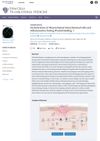 July 2023 in “Stem Cells Translational Medicine”
 Mesenchymal Stem/Stromal Cells (MSCs) help in wound healing and tissue regeneration, but can also contribute to tumor growth. They show promise in treating chronic wounds and certain burns, but their full healing mechanisms and potential challenges need further exploration.