11 citations
,
March 2012 in “Journal of the American Academy of Dermatology” Most patients with dark skin were satisfied with laser hair removal and had few complications.
10 citations
,
May 2024 in “Lasers in Surgery and Medicine” Laser hair removal effectively reduces hidradenitis suppurativa symptoms with few side effects.
 10 citations
,
January 2010 in “Indian journal of dermatology, venereology, and leprology”
10 citations
,
January 2010 in “Indian journal of dermatology, venereology, and leprology” Long pulsed Nd: YAG laser is safe and effective for long-term hair reduction in darker skin types.
 7 citations
,
March 2016 in “Journal of Cosmetic and Laser Therapy”
7 citations
,
March 2016 in “Journal of Cosmetic and Laser Therapy” Home-use lasers and IPL devices are unlikely to directly cause paradoxical hair growth; it may be linked to inflammation or hormonal issues.
 6 citations
,
January 2016 in “Journal of lasers in medical sciences”
6 citations
,
January 2016 in “Journal of lasers in medical sciences” One session of Low Level Laser Therapy before hair transplantation doesn't significantly improve hair growth.
5 citations
,
January 2024 in “Aesthetic Surgery Journal” Using sun protection and diode laser SHR reduces unexpected hair growth after laser hair removal.
3 citations
,
May 2023 in “PLoS ONE” The professional laser is more effective than the home-use laser for hair reduction.
 3 citations
,
April 2017 in “Dermatologic Surgery”
3 citations
,
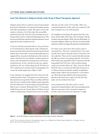
April 2017 in “Dermatologic Surgery” Laser hair removal can be an effective last-resort treatment for men with stubborn Alopecia Areata who want to be uniformly bald.
3 citations
,
January 2003 in “Facial plastic surgery” Laser hair removal is a noninvasive way to reduce unwanted hair long-term.
2 citations
,
June 2024 in “Journal of Plastic Reconstructive & Aesthetic Surgery” Hair transplantation effectively improves unnatural hairlines from laser hair removal.
Laser hair removal works well for light skin with dark hair but needs caution for darker skin.
 2 citations
,
March 2019 in “Lasers in surgery and medicine”
2 citations
,
March 2019 in “Lasers in surgery and medicine” Higher light doses cause more damage to hair follicles, predicting better hair removal results.
2 citations
,
March 2010 in “Cosmetic Dermatology” Laser hair removal uses lasers to target and damage hair follicles to reduce hair growth.
1 citations
,
February 2024 in “Aesthetic Surgery Journal” Laser hair removal works well and is safe during any menstrual cycle phase.
 1 citations
,
November 2023 in “Journal of Cutaneous and Aesthetic Surgery”
1 citations
,
November 2023 in “Journal of Cutaneous and Aesthetic Surgery” Diode laser treatment is safe and effective for reducing unwanted facial hair in hirsutism.
 1 citations
,
September 2023 in “Curēus”
1 citations
,
September 2023 in “Curēus” Using a laser to remove hair in the urethra after hypospadias repair is effective and minimally invasive.
 March 2026 in “Cosmetics”
 Using enzymes with laser hair removal may reduce unwanted hair growth better than laser alone.
May 2025 in “International Journal of Trichology” Laser hair removal might help prevent trichoepithelioma lesions, but more testing is needed.
 March 2025 in “Mediterranean Journal of Rheumatology”
 Laser hair removal is safe for people with Systemic Lupus Erythematosus.
 January 2025 in “E3S Web of Conferences”
 Lasers are effective for hair removal, skin rejuvenation, and acne treatment in dermatology.
 September 2024 in “Electronic Journal of General Medicine”
 Laser hair removal can cause severe skin irritation, but it can improve with treatment.
 April 2024 in “International Journal of Women’s Dermatology”
 Laser hair reduction can sometimes cause a rare skin condition called Fox-Fordyce disease.
January 2018 in “Archives of dermatology and skin care” Low level laser therapy may promote hair growth for patterned hair loss, but more research is needed.
May 2014 in “Hanbang an'i'bi'in'hu pibu'gwa haghoeji” Low-level laser therapy is effective and safe for treating hair loss.
Low-level laser therapy combined with Neoptide improved hair regrowth better than either treatment alone in rats.
October 2006 in “Dermatologic Surgery” Combining eflornithine cream with laser therapy effectively reduces unwanted facial hair in women.
September 1998 in “Journal of the European Academy of Dermatology and Venereology”  September 2020 in “International journal of computer science and mobile computing”
 Low-level laser therapy can stimulate hair growth and increase hair density, making it a promising treatment for hair loss.
Finasteride and low-level laser therapy are similarly effective for frontal pattern hair loss.
36 citations
,
December 2009 in “Skin pharmacology and physiology” Helium-neon laser treatment can stimulate hair growth in mice.