 December 2025 in “Applied Sciences”
 Argan oil complexes improve hair treatment by enhancing stability, antibacterial properties, and hair texture.
 October 2025 in “Journal of Molecular Structure”
 Hyaluronic acid microneedles help deliver minoxidil derivatives effectively for hair regrowth.
 April 2024 in “bioRxiv (Cold Spring Harbor Laboratory)”
 GRK2 is essential for healthy hair follicle function, and its absence can lead to hair loss and cysts.
 November 2023 in “Journal of Basic Microbiology”
 Green-synthesized zinc oxide nanoparticles effectively inhibit common fungi found on human scalp hair.
August 2021 in “Oxford University Press eBooks” The skin is a complex organ that protects the body, regulates temperature, and has roles in immunity, hormone function, and vitamin D metabolism.
September 2015 in “Research Portal (King's College London)” Human hair movement is affected by its inner structure and chemical treatments.
January 2006 in “东华大学学报:英文版” Microwave plasma treatment improves yak hair dyeing.
Transglutaminases help form strong hair by linking proteins, and can potentially alter hair properties.
January 2026 in “International Journal of Cosmetic Science” Hair vibrancy involves how hair looks and feels, helping create better hair products.
 July 2023 in “Journal of bioscience and bioengineering”
 DMSO and microfinger devices show promise for preserving hair grafts for hair loss treatments.
3D-ultrasound can non-invasively detect and predict alopecia areata phases and outcomes.
April 2023 in “Journal of Investigative Dermatology” 3D ultrasound can detect hair follicle changes and disease phases in alopecia areata.
 30 citations
,
January 2013 in “International Journal of Trichology”
30 citations
,
January 2013 in “International Journal of Trichology” The most common causes of hair loss in Jordanian children are fungal infections, autoimmune hair loss, and hair shedding after fever, with zinc deficiency also being a notable cause.
 6 citations
,
May 1993 in “Archives of Disease in Childhood”
6 citations
,
May 1993 in “Archives of Disease in Childhood” Children's hair loss can be caused by many factors, including autoimmune diseases, emotional stress, genetics, and infections, with treatment and prognosis varying.
 4 citations
,
January 2016 in “Postepy Dermatologii I Alergologii”
4 citations
,
January 2016 in “Postepy Dermatologii I Alergologii” Many hair diseases, including those caused by medications and psychological issues, can lead to hair loss and require proper treatment and specialist care.
 May 2014 in “JAMA Dermatology”
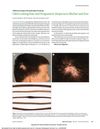
 Mother and son diagnosed with a rare genetic hair loss condition with no effective treatment.
 1 citations
,
April 2023 in “Langmuir”
1 citations
,
April 2023 in “Langmuir” Damaged hair allows water to penetrate more easily, and fatty acids from shampoos can deposit on hair surfaces.
12 citations
,
July 2015 in “British journal of dermatology/British journal of dermatology, Supplement” Curly hair breaks due to mechanical damage and environmental factors, not chemical makeup, and needs ongoing care to prevent breakage.
11 citations
,
May 2016 in “PubMed” New imaging and testing methods can effectively assess hair shape changes and damage.
 2 citations
,
July 2023 in “The journal of investigative dermatology/Journal of investigative dermatology”
2 citations
,
July 2023 in “The journal of investigative dermatology/Journal of investigative dermatology” Autophagy changes the protein makeup of hair.
1 citations
,
March 2019 in “Hygiene and Sanitation” Heavy metals can damage skin and hair in mice.
July 2026 in “Macromolecular Bioscience” Sulfated glycosaminoglycans from Acipenser baerii cartilage improve wound healing and fibroblast function.
May 2026 in “International Journal of Cosmetic Science” UV radiation damages hair similar to bleaching, but double bleaching causes more severe protein degradation.
Mutations in keratin genes may link hair disorders to dental decay.
 96 citations
,
April 2007 in “Journal of Investigative Dermatology”
96 citations
,
April 2007 in “Journal of Investigative Dermatology” Grafted rodent and human cells can regenerate hair follicles, but efficiency decreases with age.
67 citations
,
September 2017 in “Cell Reports” Caloric restriction improves skin and fur structure but can cause muscle loss and movement issues.
 42 citations
,
February 2017 in “Scientific Reports”
42 citations
,
February 2017 in “Scientific Reports” Researchers found a way to create cells from stem cells that act like human cells important for hair growth and could be used for hair regeneration treatments.
12 citations
,
January 2015 in “Skin appendage disorders” Dermoscopy helps quickly identify hair breakage in people of African descent.
 6 citations
,
November 1988 in “Journal of the American Academy of Dermatology”
6 citations
,
November 1988 in “Journal of the American Academy of Dermatology” The document concludes that hair analysis is not good for assessing nutrition but can detect long-term heavy metal exposure.
 June 2025 in “Cancer Management and Research”
 Improving hair health and managing conditions can enhance scalp cooling effectiveness in preventing hair loss during chemotherapy.