Search
for
Sort by
Research
660-690 / 1000+ results
research The ProScope HR: A promising diagnostic tool
The ProScope HR is an effective, user-friendly, and affordable tool for diagnosing hair loss.

research Hairless triggers reactivation of hair growth by promoting Wnt signaling
The HR protein helps hair grow by blocking a hair growth inhibitor, aiding in hair follicle regeneration.
research Pure Hair‐Nail Ectodermal Dysplasia: Expanding the HOXC13 Genotypic Spectrum
research A Missense Mutation in the Cadherin Interaction Site of The Desmoglein 4 Gene Underlies Localized Autosomal Recessive Hypotrichosis
A specific gene mutation causes sparse, brittle hair in a family.
research Hairy‐Skin‐Adaptive Viscoelastic Dry Electrodes for Long‐Term Electrophysiological Monitoring
The new electrode improves long-term monitoring on hairy skin by reducing motion issues and is easy to use.

research 494 Epidermolysis bullosa pruriginosa, muscular dystrophy, and immune-mediated myasthenia gravis in a patient with homozygous nonsense PLEC mutation
A patient with a PLEC mutation has epidermolysis bullosa, muscular dystrophy, and myasthenia gravis, which improved with steroid treatment.
research Enhancing therapeutic efficacy of human adipose-derived stem cells by modulating photoreceptor expression for advanced wound healing
Green OLED light improves stem cell effectiveness for better wound healing.
research Hereditary 1,25-Dihydroxyvitamin D Resistant Rickets due to a Mutation Causing Multiple Defects in Vitamin D Receptor Function
A specific gene mutation causes vitamin D resistance, but certain vitamin D analogs might help.
research Type II Vitamin D Dependent Rickets: A Case Report
Hair loss can be a key sign of a rare type of rickets when vitamin D treatment doesn't work and advanced tests aren't available.
research Human T‐lymphotropic virus 1 (HTLV‐1)‐associated lichenoid dermatitis induced by CD8+ T cells in HTLV‐1 carrier, HTLV‐1‐associated myelopathy/tropical spastic paraparesis and adult T‐cell leukemia/lymphoma
HTLV-1-associated lichenoid dermatitis (HALD) is linked to an immune response against HTLV-1-infected cells.
research Heterogeneity of ornithine decarboxylase expression in 12-O-tetradecanoylphorbol-13-acetate-treated mouse skin and in epidermal tumors
ODC expression in mouse skin and tumors is varied and can be inhibited by retinoic acid or cycloheximide.
research DNMT1 targets SRD5A2 to induce mitochondrial homeostasis and EMT in urothelial cells of hypospadias
DNMT1 may help treat hypospadias by improving cell function and preventing unwanted cell changes.
research Promising improvement in infected Wound Healing in Type two Diabetic rats by Combined effects of conditioned medium of human adipose-derived stem cells plus Photobiomodulation
Combining stem cell medium and light therapy improves wound healing in diabetic rats.

research 766 H3K9me3 methyltransferase SETDB1 controls retrotransposon silencing, DNA methylation, constitutive heterochromatin maintenance and 3D-chromatin structure in epidermal keratinocytes
SETDB1 is essential for controlling DNA methylation, silencing retrotransposons, and maintaining skin cell health, with its absence leading to skin inflammation and hair loss.
research Clinical, biochemical and mutational findings in biotinidase deficiency among Malaysian population
Some children in Malaysia with symptoms have either profound or partial biotinidase deficiency, and early testing and treatment are important.
research 3D-printed porous functional composite scaffolds with polydopamine decoration for bone regeneration
The scaffold with polydopamine and bioactive glass effectively promotes bone regeneration.
research Presence of a Deletion Mutation (c.716delA) in the Ligand Binding Domain of the Vitamin D Receptor in an Indian Patient with Vitamin D-Dependent Rickets Type II
A genetic mutation caused severe rickets and alopecia in an Indian patient, but high-dose calcium and phosphate treatment improved their condition.
research Electrospun radially oriented berberine-PHBV nanofiber dressing patches for accelerating diabetic wound healing
The new nanofiber patch speeds up diabetic wound healing and improves healing quality.
research Prostaglandin D2-Mediated DP2 and AKT Signal Regulate the Activation of Androgen Receptors in Human Dermal Papilla Cells
PGD2 increases androgen receptor activity in hair cells, which could be targeted to treat hair loss.
research [Netherton's syndrome in two sisters].
Two sisters with Netherton's syndrome had skin and hair issues, needing special diet and ointments.
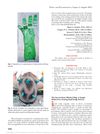
research The Sacred Heart Bilobed Flap
The Sacred Heart Bilobed Flap is a surgical method for repairing small scalp defects with local flaps, relying on scalp elasticity and hair regrowth to hide any imperfections.
research ISIDLB1777 - A novel ex vivo model of human hair follicle immune privilege collapse reveals the potential of farudodstat, a DHODH inhibitor, as a therapeutic for alopecia areata treatment
Farudodstat may effectively treat alopecia areata by protecting hair follicles without harmful effects.

research BG01 Confirming small nuclear ribonucleoprotein polypeptide E as a cause of nonsyndromic hypotrichosis
The protein called small nuclear ribonucleoprotein polypeptide E is identified as a cause of a type of hair loss without other symptoms.

research ER-located Ca2+ ATPase ACA2 regulates Ca2+ cytoplasmic pool linked to root hair growth in Arabidopsis thaliana
ACA2 is crucial for root hair growth by controlling calcium levels in cells.

research TERT/BMI1-transgenic human dermal papilla cells enhance murine hair follicle formation in vivo
Adding TERT and BMI1 to certain skin cells can improve their ability to create hair follicles in mice.

research Purification and characterization of an immuno-stimulatory compound from the water extract of royoporus badius (Pers.) A.B. De.
A new compound from Royoporus badius activates immune cells and induces inflammatory responses.
research Roles for Msx and Dlx homeoproteins in vertebrate development
Msx and Dlx genes are crucial for development, controlling cell behaviors like growth and differentiation through their roles as gene regulators.

research The CD44+ALDH+ Population of Human Keratinocytes Is Enriched for Epidermal Stem Cells with Long-Term Repopulating Ability
Certain human skin cells marked by CD44 and ALDH are rich in stem cells capable of long-term skin renewal.
research CRISPR/Cas9-mediated Generation ofCOL7A1-deficient Keratinocyte Model of Recessive Dystrophic Epidermolysis Bullosa
Scientists created cell lines to study a genetic skin disorder using CRISPR technology.