3 citations
,
January 2025 in “Biomaterials Science” Blue light-enhanced nanovesicles from stem cells improve skin and hair cell function, offering a safer treatment for skin and hair disorders.
52 citations
,
May 2015 in “Cytotherapy” DS-MSCs from hair follicles may improve diabetic wound healing.
8 citations
,
February 2021 in “Journal of Clinical Medicine” Hair follicle stem cells are promising for blood vessel formation and tissue repair.
 May 2024 in “International journal of nanomedicine”
 Plant-derived extracellular vesicles show promise for treating diseases like cancer and inflammation.
 July 2025 in “International Journal of Dermatology Venereology and Leprosy Sciences”
 The human amniotic membrane is a promising material for skin treatments and hair growth.
 February 2024 in “International Journal of Biological Macromolecules”
 The study created a new type of microsphere that effectively regrows hair.
3 citations
,
May 2013 in “International journal of molecular sciences” Epidermal stem cells show promise for treating orthopedic injuries and diseases.
 192 citations
,
April 2019 in “ACS nano”
192 citations
,
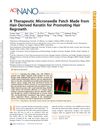
April 2019 in “ACS nano” A new microneedle patch made from hair proteins helps regrow hair faster and better than current treatments.
 19 citations
,
December 2016 in “PLOS ONE”
19 citations
,
December 2016 in “PLOS ONE” Early-stage skin cells help regenerate hair follicles, with proteins SDF1, MMP3, biglycan, and LTBP1 playing key roles.
 July 2026 in “Frontiers in Medicine”
 Regenerative therapies like PRP and exosomes show potential in hair transplantation but need more consistent evidence and standardized protocols.
3 citations
,
August 2020 in “Animals” Researchers found a way to grow cashmere goat hair cells in a lab and discovered that certain conditions improve these cells' growth and characteristics.
 2 citations
,
July 2022 in “Stem cell research & therapy”
2 citations
,
July 2022 in “Stem cell research & therapy” A new method quickly and efficiently isolates hair follicle stem cells from adult mice, promoting hair growth.
 1 citations
,
January 2023 in “Journal of pharmaceutical and biological sciences”
1 citations
,
January 2023 in “Journal of pharmaceutical and biological sciences” Ethosomes are a promising way to deliver drugs through the skin.
 February 2024 in “Journal of Cosmetic Dermatology”
 White hair patch repigmented and hair regrew in a balding patient after treatment with exosomes and laser.
 April 2026 in “Research Square”
 E13 fetal mouse fibroblast vesicles may help reduce scarring.
January 2017 in “Padua@research (University of Padova)” Adult mesenchymal stem cells show promise in improving tendon, muscle, and skin healing.
 1 citations
,
February 2023 in “International journal of research - granthaalayah”
1 citations
,
February 2023 in “International journal of research - granthaalayah” Electromagnetic energy from wound dressing paste can disrupt skin lipid droplets, possibly affecting cancer development.
37 citations
,
November 2024 in “Cosmetics” Ethosomes enhance skin penetration better than liposomes, benefiting therapeutic and cosmetic applications.
January 2007 in “Jiepouxue yanjiu” ES cell-derived stem cells can help regenerate skin and form gland-like structures.
May 2013 in “Zhonghua miniao waike zazhi” Hair follicle stem cells work well with bladder matrix for bladder repair.
 July 2025 in “Russian Journal of Skin and Venereal Diseases”
 Exosome therapy significantly increased hair density in androgenetic alopecia patients.
 April 2026 in “Nanomaterials”
 Plant-derived vesicles from Ayurvedic plants may improve treatment delivery for hair growth and other conditions.
 September 2020 in “Kocatepe Veterinary Journal”
 Equine adipose stem cells can become different cell types and are promising for healing injuries.
 February 2026 in “International Journal of Web of Multidisciplinary Studies”
 Restoring microbial balance and using exosome therapies may help treat hair disorders like alopecia and acne.
August 2025 in “Biomaterials” A new therapy using secretions from fetal cartilage cells shows promise for safe and effective hair regrowth.
 6 citations
,
October 2016 in “Journal of Cellular Physiology”
6 citations
,
October 2016 in “Journal of Cellular Physiology” Human dermal fibroblasts help microvascular endothelial cells grow, but not vice versa.

Finasteride-loaded microemulsions, made with cinnamon oil, Tween20, propylene glycol, and water, can help maintain stemness of dermal cells, potentially aiding in hair regeneration.
2 citations
,
November 2024 in “ACS Omega” Snail secretion-loaded dressings can improve skin regeneration and wound healing.
April 2026 in “IntechOpen eBooks” Exo.Reset® uses extracellular vesicle technology for skin rejuvenation.
 17 citations
,
June 2019 in “BMC genomics”
17 citations
,
June 2019 in “BMC genomics” Non-coding RNAs help control hair growth in cashmere goats.