 July 2026 in “European Journal of Plastic Surgery”
 Needle-free minoxidil delivery improves hair growth more than topical minoxidil alone in women.
4 citations
,
June 2013 in “PubMed” Minoxidil in Espumil foam stays stable for at least 90 days at room temperature.
 4 citations
,
May 2020 in “Medicine in Drug Discovery”
4 citations
,
May 2020 in “Medicine in Drug Discovery” The study developed a method to detect minoxidil and its sulfate form, found that minoxidil sulfate is temperature-sensitive, and identified a way to potentially increase its stability for hair loss treatment.
2 citations
,
May 2022 in “Advanced therapeutics” A new microneedle system effectively delivers a vasodilator to hair follicles, promoting hair growth better than current treatments.
2 citations
,
May 1989 in “JAMA” Minoxidil can help hair growth but may not always look cosmetically good.
1 citations
,
June 1990 in “PubMed” 2% topical minoxidil is safe and reduces hair shedding in Chinese men with male pattern baldness.
 11 citations
,
July 1988 in “International Journal of Dermatology”
11 citations
,
July 1988 in “International Journal of Dermatology” The study found that using 2% minoxidil solution can help grow hair and is safe.
 33 citations
,
October 2016 in “European Journal of Pharmaceutical Sciences”
33 citations
,
October 2016 in “European Journal of Pharmaceutical Sciences” Effervescent formulations may improve minoxidil delivery, increasing effectiveness and reducing applications needed.
1 citations
,
May 1989 in “JAMA” Minoxidil can help hair growth but may not always look cosmetically good.
January 2022 in “Al-Mağallaẗ al-ʻirāqiyyaẗ li-l-ṣaydalaẗ” New minoxidil formulations improve hair loss treatment.
 July 2018 in “DOAJ (DOAJ: Directory of Open Access Journals)”
 The new gel formula could improve the delivery of a hair loss treatment through the skin and might be an alternative to taking it by mouth.
Minoxidil can slow hair loss and promote regrowth but won't fully restore hair.
April 2023 in “Journal of Drug Delivery Science and Technology” The new minoxidil gel improves hair growth and reduces skin irritation.
 January 2024 in “International Journal of Dermatology Research”
 Minoxidil alone is as effective as the combination but has fewer side effects.
 1 citations
,
July 2017 in “Global journal of pharmacy & pharmaceutical sciences”
1 citations
,
July 2017 in “Global journal of pharmacy & pharmaceutical sciences” A new hair loss treatment was created using minoxidil and tretinoin in stable niosomes, which effectively released the drugs over time.
 October 2024 in “Journal of Drugs in Dermatology”
 Combining finasteride with minoxidil is more effective for male hair loss than using minoxidil alone.
2 citations
,
February 2021 in “Case reports in dermatological medicine” The new topical botanical formulation significantly regrew hair in all five patients without side effects.
1 citations
,
July 2025 in “International Journal of Women’s Dermatology” Women's minoxidil products cost more and are less effective than men's.
October 2021 in “QJM: An International Journal of Medicine” Both sildenafil and minoxidil effectively treat male hair loss, but impact hair differently.
 71 citations
,
January 2004 in “Dermatology”
71 citations
,
January 2004 in “Dermatology” Oral finasteride works better than topical minoxidil for hair growth, both are safe.
3 citations
,
November 2005 in “Journal of Research in Medical Sciences” Finasteride cream didn't significantly reduce hair more than a placebo, but users felt it helped.
 5 citations
,
June 2012 in “Journal of Cosmetic and Laser Therapy”
5 citations
,
June 2012 in “Journal of Cosmetic and Laser Therapy” Finasteride and intense pulsed light effectively reduce unwanted facial hair in women, but may not be cost-effective.
![Minoxidil and Its Use in Hair Disorders: A Review [Corrigendum]](/images/assets/d5b5fb1b-96a4-4e61-a554-3fe9a1f78497/small/11472.jpg) 1 citations
,
February 2020 in “Drug Design Development and Therapy”
1 citations
,
February 2020 in “Drug Design Development and Therapy” Low-dose Minoxidil combined with Spironolactone helps reduce hair loss and improve hair density in women, with some mild side effects.
 219 citations
,
March 2004 in “Journal of The American Academy of Dermatology”
219 citations
,
March 2004 in “Journal of The American Academy of Dermatology” 5% and 2% minoxidil solutions effectively promote hair growth and reduce hair loss, with 5% being slightly more effective but having more side effects.
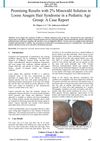 May 2023 in “International journal of science and research”
 2% minoxidil solution improved hair density and quality in children with Loose Anagen Hair Syndrome.
 January 2025 in “International Journal of Medicine in Developing Countries”
 Combining fractional photothermolysis with minoxidil is more effective for hair growth than minoxidil alone.
 2 citations
,
January 2009 in “Journal of Drug Delivery Science and Technology”
2 citations
,
January 2009 in “Journal of Drug Delivery Science and Technology” Minoxidil in distearyldimethylammonium chloride vesicles significantly promotes hair growth, while minoxidil in microparticles or poloxamer solutions doesn't.
 6 citations
,
May 2020 in “Pharmacology Research & Perspectives”
6 citations
,
May 2020 in “Pharmacology Research & Perspectives” A new gel form of minoxidil is equally effective for hair growth and safer for the heart and other organs than the traditional solution.
 1 citations
,
March 2015 in “Oriental Journal of Chemistry/Oriental journal of chemistry”
1 citations
,
March 2015 in “Oriental Journal of Chemistry/Oriental journal of chemistry” A new method accurately measures minoxidil and aminexil in drugs.
 January 2025 in “Revista Vitae”
 A new method reliably detects minoxidil in hair products, revealing some non-compliance with regulations.