 3 citations
,
August 2020 in “Cutaneous and Ocular Toxicology”
3 citations
,
August 2020 in “Cutaneous and Ocular Toxicology” ATP helps prevent skin damage from vandetanib by reducing stress.
Kalya Research is an AI tool that effectively finds and analyzes alternative medicine literature, saving researchers time.
 November 2023 in “Cell Proliferation”
 A protein from fat-derived stem cells, DKK1, is linked to hair loss and blocking it may help treat alopecia areata.
5 citations
,
December 1996 in “Biochemical and Biophysical Research Communications” Mouse hair keratins mHa1 and mHb4 can't form a strong network on their own in cells.
10 citations
,
January 2004 in “Journal of Investigative Dermatology” Krt6a-Cre transgenic mice help study gene effects on hair follicle development and tumor suppression.
4 citations
,
December 2024 in “Protein & Cell” MultiKano accurately identifies cell types in complex data better than existing methods.
 165 citations
,
January 2008 in “Journal of biomaterials science. Polymer ed.”
165 citations
,
January 2008 in “Journal of biomaterials science. Polymer ed.” The peptide GHK-Cu helps heal and remodel tissue, improves skin and hair health, and has potential for treating age-related inflammatory diseases.
2 citations
,
September 2023 in “Journal of the American Academy of Dermatology” CTP-543 effectively promotes hair regrowth in adults with moderate to severe alopecia areata.
97 citations
,
March 2010 in “The American Journal of Human Genetics” A mutation in the KRT74 gene causes tightly curled hair.
 November 2023 in “The journal of investigative dermatology/Journal of investigative dermatology”
 Blocking TYK2 might be a new way to treat hair loss from alopecia areata.
March 2007 in “Journal of Cell Science” K10 may not prevent tumors as previously thought and might increase benign tumor risk.
 33 citations
,
August 1985 in “Archives of Dermatology”
33 citations
,
August 1985 in “Archives of Dermatology” Acquired Progressive Kinking of Hair is likely an early sign of male pattern baldness.
July 2022 in “Journal of Investigative Dermatology” Inhibiting TYK2 can restore hair growth in alopecia areata.
 2 citations
,
January 2022 in “International Journal of Medical Sciences”
2 citations
,
January 2022 in “International Journal of Medical Sciences” Kartogenin may help treat hair loss by promoting hair growth and extending the hair growth phase.
February 2026 in “Macromolecular Bioscience” Keratin-based hydrogels with calcium are effective for delivering anti-fibrotic drugs.
October 2024 in “Journal of the American Society of Nephrology” Some CKD patients' kidney function remains stable over time.
37 citations
,
November 2007 in “Journal of Biological Chemistry” Ku80 is a key receptor for Thymosin β4, affecting cell migration and wound healing.
January 2006 in “Chieh P'ou Hsueh Pao” A method was found to select hair follicle stem cells, and beta-catenin helps them grow and change.
November 2005 in “PubMed” The hairless gene in Kunming mice is important for hair and skin, and shows genetic variations.
10 citations
,
January 1989 in “Archives of Dermatological Research” The method effectively analyzes human hair proteins, especially nonfilamentous ones.
288 citations
,
January 2001 in “Journal of Biological Chemistry” Tgm2 helps stabilize dying cells and aids fibroblast attachment to the extracellular matrix.
 April 2024 in “bioRxiv (Cold Spring Harbor Laboratory)”
 GRK2 is essential for healthy hair follicle function, and its absence can lead to hair loss and cysts.
July 2024 in “Journal of Investigative Dermatology” A KLK5 inhibitor effectively improved skin symptoms in a mouse model of Netherton Syndrome.
 2 citations
,
March 2023 in “BMC ecology and evolution”
2 citations
,
March 2023 in “BMC ecology and evolution” Some hair protein genes evolved early and were adapted for use in hair follicles.
 November 2022 in “Research Square (Research Square)”
 Keratin-associated proteins have ancient origins and were used for different purposes before being adapted for hair in mammals.
 April 2012 in “Informa Healthcare eBooks”
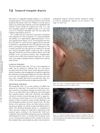
 Temporal triangular alopecia is a lifelong condition with hairless patches on the side of the head that may be present from birth.
10 citations
,
February 2019 in “Journal of cellular physiology” TGF-β2 helps yak hair follicles enter the regression phase, while HSP70 tries to prevent it.
7 citations
,
October 2023 in “Journal of Intelligent & Fuzzy Systems” The new model improves Alopecia Areata classification accuracy to 93.1%.
 February 2025 in “PubMed”
 CS12192 effectively treats alopecia areata with better safety than current options.