
The book is a detailed guide on hair growth issues and treatments, recommended for specialists and hospital libraries.
 60 citations
,
June 1997 in “Journal of The American Academy of Dermatology”
60 citations
,
June 1997 in “Journal of The American Academy of Dermatology” Apoptosis is crucial for healthy skin and treating skin diseases.
 43 citations
,
August 2008 in “Regenerative Medicine”
43 citations
,
August 2008 in “Regenerative Medicine” Scientists created early-stage hairs from mouse cells that grew into normal, pigmented hair when implanted into other mice.
52 citations
,
November 2006 in “International Journal of Cosmetic Science” Different types of wrinkles need specific treatments.
26 citations
,
January 2018 in “Annals of dermatology/Annals of Dermatology” Hair graying may be caused by stem cell depletion from stress or melanocyte damage.
10 citations
,
November 2009 in “Pigment cell & melanoma research” The document concludes that MGRN1 affects mouse fur color by interfering with a receptor's signaling, but its full role in the body is still unknown.
11 citations
,
August 1987 in “Archives of Dermatology” Langerhans' cells are not involved in hair depigmentation in these mice.
1 citations
,
December 2023 Hair grows in cycles and changes with age, starting from fetal development.
1 citations
,
October 2019 in “International Journal of Dermatology and Venereology” Zebrafish help understand genetic causes of skin pigment disorders like albinism.
January 2026 in “Aging and Disease” Targeting mitochondria can improve skin health and slow aging.
 January 2024 in “Dermatologic therapy”
 Fire Needle Therapy may help bring back skin color in vitiligo by affecting cell growth signals.
9 citations
,
October 2024 in “Burns & Trauma” Air-liquid interface culture improves hair follicle development in skin organoids.
2 citations
,
December 2022 in “International journal of molecular sciences” Plucked hairs can be used instead of skin biopsies to study hair traits because they contain specific cells related to hair.
September 2025 in “Stem Cell Research & Therapy” EVs and CMs may safely improve skin lightening and rejuvenation, but more research is needed.
Understanding wound healing and signaling pathways could lead to new alopecia treatments.
4 citations
,
February 2023 in “International Journal of Stem Cells” The FTO gene hinders stem cells in hair follicles from becoming pigment cells.
 January 2023 in “Burns & Trauma”
 The study concluded that the new wound model can be used to evaluate skin regeneration and nerve growth.
5 citations
,
June 2024 in “Free Radical Biology and Medicine” Maintaining natural oxygen levels is crucial for healthy skin cells and effective treatments.
 May 2026 in “Zenodo (CERN European Organization for Nuclear Research)”
 Clitoria ternatea has potential health and skincare benefits but needs more testing for safe use.
 May 2026 in “Zenodo (CERN European Organization for Nuclear Research)”
 Clitoria ternatea has potential health and skincare benefits but needs more testing for safe use.
 August 2025 in “Annals of Medicine”
 Mycophenolate mofetil may safely help restore skin color in depigmentation conditions.
94 citations
,
April 2018 in “Nature Genetics” New genetic locations explain much of hair color variation in Europeans.
260 citations
,
January 2020 in “Nature” Stress can cause hair to turn gray by depleting stem cells.
 6 citations
,
May 2020 in “Nutrients”
6 citations
,
May 2020 in “Nutrients” Eating fewer calories may slow skin aging and improve skin health through various biological changes.
 December 2022 in “Cureus”
 Hormones significantly influence hair growth, with conditions like hirsutism and patterned hair loss linked to hormone levels; more research is needed for full understanding.
 April 2018 in “The journal of investigative dermatology/Journal of investigative dermatology”
 The model can effectively test gene functions and drug responses in human skin.
 75 citations
,
January 2009 in “International journal of trichology”
75 citations
,
January 2009 in “International journal of trichology” Hair grays due to oxidative stress and fewer functioning melanocytes.
 6 citations
,
October 2019 in “Jo'jig gonghag gwa jaesaeng uihag/Tissue engineering and regenerative medicine”
6 citations
,
October 2019 in “Jo'jig gonghag gwa jaesaeng uihag/Tissue engineering and regenerative medicine” Rice bran extract boosts melanin production in hair follicles.
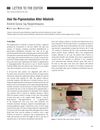 April 2025 in “Turkish Journal of Hematology”
 Nilotinib may cause gray hair to return to its original color.
 28 citations
,
November 2018 in “Journal of structural biology”
28 citations
,
November 2018 in “Journal of structural biology” Different populations have distinct hair structures related to their ancestry.