 8 citations
,
April 2020 in “Journal of Ethnopharmacology”
8 citations
,
April 2020 in “Journal of Ethnopharmacology” Herbs might help with hair loss, but more research is needed to confirm their safety and effectiveness.
January 2026 in “British Journal of Dermatology” Caffeine and DMG increase calcium influx in hair follicle cells without being toxic.
 June 2024 in “The American journal of psychiatry”
 Schizophrenia risk genes may affect early brain development, contributing to the disease.
 September 2019 in “Journal of Investigative Dermatology”
 Researchers successfully used nude mice to study human hair growth, which could help with future hair research.
 April 2023 in “Advanced functional materials”
 The study created a tool that mimics natural cell signals, which increased cell growth and could help with hair regeneration research.

Vegan exosome-like vesicles from microalgae improve skin and hair health, reducing wrinkles and enhancing elasticity.
2 citations
,
September 2025 in “Food Science and Biotechnology” Placenderm® can improve hair health and promote hair regrowth.
 September 2019 in “Journal of Investigative Dermatology”
 Botanical extracts from peas and chia seeds improved scalp health and protected hair from pollution.
November 2024 in “Journal of Investigative Dermatology” Microfluidic models improve testing for aging, wound healing, and oral tissue, reducing animal testing.
 15 citations
,
May 2004 in “Facial Plastic Surgery Clinics of North America”
15 citations
,
May 2004 in “Facial Plastic Surgery Clinics of North America” The document concludes that while "hair follicle cloning" shows promise for unlimited donor hair, it faces challenges with consistency and safety in humans.
 6 citations
,
May 2011 in “Pharmacognosy Journal”
6 citations
,
May 2011 in “Pharmacognosy Journal” Many products for hair re-growth exist, but a perfect treatment without side effects has not yet been found.
12 citations
,
April 2023 in “Molecular Pharmaceutics” A new patch can deliver stable antibodies over time for potential HIV treatment.
 11 citations
,
August 2013 in “Facial Plastic Surgery Clinics of North America”
11 citations
,
August 2013 in “Facial Plastic Surgery Clinics of North America” New cell-based therapies may improve hair loss treatments in the future.
 April 2026 in “Asian Journal of Research in Pharmaceutical Sciences”
 Semecarpus anacardium may promote hair growth, but more research is needed for safe use in humans.
 205 citations
,
March 2012 in “Science Translational Medicine”
205 citations
,
March 2012 in “Science Translational Medicine” PGD2 stops hair growth and is higher in bald men with AGA.
18 citations
,
September 2023 in “Experimental Dermatology” The skin microbiome plays a key role in treating atopic dermatitis.
 1 citations
,
June 2011 in “Journal of Genetics”
1 citations
,
June 2011 in “Journal of Genetics” Some human genetic markers work for genetic studies in pig-tailed and stump-tailed macaques, which can help in their conservation.
 7 citations
,
January 2019 in “Australasian Journal of Dermatology”
7 citations
,
January 2019 in “Australasian Journal of Dermatology” A genetic marker linked to a type of hair loss was found in most patients studied.
 January 2023 in “Advances in pharmacology and clinical trials”
 Human hair is a significant sample for various tests in clinical, nutritional, archaeological, and forensic studies.
18 citations
,
December 2005 in “Journal of Medicinal Chemistry” A brominated phenoxy compound effectively inhibits a human enzyme and shows potential for clinical use.
4 citations
,
December 1995 in “Anthropologischer Anzeiger” Family members have similar hair protein patterns, which could be useful for genetic studies.
February 2025 in “International Journal of Molecular Sciences” Alkaloids help fight influenza in animals but need more research for human use.
 47 citations
,
August 2014 in “The Journal of Clinical Endocrinology and Metabolism”
47 citations
,
August 2014 in “The Journal of Clinical Endocrinology and Metabolism” The research suggests that the global distribution of PCOS is likely due to historical human migration and that genes affecting PCOS may have different impacts on males and females.
 August 2023 in “Clinical, Cosmetic and Investigational Dermatology”
 Research on the human skin microbiome has grown, focusing on skin health and diseases, with more studies needed on antibiotic resistance and AI applications.
 104 citations
,
January 2016 in “Food & Function”
104 citations
,
January 2016 in “Food & Function” Olive oil compounds may help prevent cancer in animals, but human results are mixed.
 March 2024 in “Bioimpacts”
 400 nm particles penetrate hair follicles best, but mouse models aren't fully reliable for human studies.
115 citations
,
August 2014 in “Jo'jig gonghag gwa jaesaeng uihag/Tissue engineering and regenerative medicine” Human hair keratin can be used in many medical applications.
 April 2010 in “The Journal of Urology”
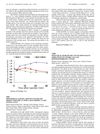
 Human prostate cells produce more WISP1/CCN4 when there's not enough oxygen.
Stem cell treatments show promise for hair loss but need more research.
 May 2021 in “Histochemistry and Cell Biology”
 The May issue discussed publishing agreements and four studies on cholesterol in hair, cancer cell changes, hormones in the uterus, and skin protein effects.