 April 2026 in “Nowotwory Journal of Oncology”
 Aesthetic treatments can safely improve cancer patients' quality of life with oncologist approval.
 April 2026 in “BMC Biotechnology”
 Curcumin spanlastics are the most effective for cancer therapy due to their strong antimicrobial, antioxidant, and antitumor effects.
 April 2026 in “International Journal of Nanomedicine”
 Quercetin delivery systems are improving its effectiveness for medical use.
 February 2026 in “Frontiers in Medical Technology”
 Keratinocyte stem cells are crucial for skin renewal and have potential in wound healing and tissue regeneration.
 January 2026 in “Physical Education Health and Social Sciences”
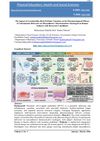
 Combining probiotics, clotrimazole gel, and laser therapy improves treatment for recurrent yeast infections.
 January 2026 in “Clinical Chemistry and Laboratory Medicine (CCLM)”
 The procedure accurately measures 5-alpha-dihydrotestosterone in blood, useful for standard tests.
 January 2026 in “Food and Nutrition Sciences”
 USPlus PRO saw palmetto extract improves urinary symptoms and is safe for men.
 December 2025 in “Ekonomia/Acta Universitatis Wratislaviensis. Ekonomia”
 Elderly demand for hair care services is rapidly increasing.
 November 2025 in “Frontiers in Pharmacology”
 Gentamicin-loaded exosomes improve healing of infected diabetic wounds in mice.
 September 2025 in “Animal Bioscience”
 Key genes and pathways affect wool fiber thickness, improving wool quality.
 August 2025 in “Frontiers in Pharmacology”
 [6]-Gingerdiol 3-monoacetate shows promise for treating T. whipplei infections.
 April 2025 in “Indian Journal of Pharmaceutical Education and Research”
 Nanofibers improve skincare products by enhancing drug delivery and hydration.
 March 2025 in “Journal of Neonatal Surgery”
 Robotic surgery and AI improve precision and recovery in medicine but face cost and training challenges.
 February 2025 in “Theranostics”
 3D bioprinting with special hydrogels can create artificial skin that heals wounds and regrows hair in mice.
 January 2025 in “Bright Sky Publications eBooks”
 Aesthetic medicine is rapidly advancing with new technologies for safer, personalized, and less invasive treatments.
 January 2025 in “Bright Sky Publications eBooks”
 Advancements in medical physics and laser technology are improving healthcare but access remains unequal globally.
 November 2024 in “Communities in ADDI (University of the Basque Country)”
 Antisense oligonucleotides show promise for treating Myotonic Dystrophy type I.
 March 2024 in “Journal of medicinal plants studies”
 Hibiscus has medicinal benefits but can be toxic in high doses and is unsafe for pregnant women and infants.
 August 2023 in “International Journal of Science and Research (IJSR)”
 Kadali is a versatile medicinal plant used to treat various health issues.
 June 2023 in “Medical records-international medical journal”
 Decreased IGF-1R expression may contribute to sacrococcygeal pilonidal sinus development.

Wild African goats have genetic adaptations for surviving harsh desert conditions.

Plant roots respond to fungus smells by possibly using certain proteins and a plant hormone to change root growth, but more research is needed.

Spironolactone may be a better acne treatment for adult women than antibiotics.
 February 2019 in “Institutional Repositories DataBase (IRDB)”
  April 2017 in “The journal of investigative dermatology/Journal of investigative dermatology”
 CD101 is highly effective in treating dermatophytosis in guinea pigs.
April 2017 in “The journal of investigative dermatology/Journal of investigative dermatology” Topical Vorinostat shows promise for treating alopecia areata by promoting hair regrowth.
![2-Deoxy-2-[18F]Fluoro-D-Glucose Positron Emission Tomography/Computed Tomography](/images/research/35fab163-57b7-4db8-b1e0-2929b51b2144/small/60162.jpg) January 2016 in “Electronic Theses of LMU Munich (Ludwig-Maximilians-Universität München)”
January 2016 in “Electronic Theses of LMU Munich (Ludwig-Maximilians-Universität München)” FDG PET/CT can improve cancer treatment plans in dogs.
 February 2015 in “Journal of Biomedical Materials Research Part B: Applied Biomaterials”
 4-META resin heals skin wounds faster and better than cyanoacrylate.

Keratin hydrogels from human hair show promise for tissue engineering and regenerative medicine.

Type II spiral ganglion neurites avoid high concentrations of laminin and fibronectin.