1 citations
,
April 2024 in “JDDG Journal der Deutschen Dermatologischen Gesellschaft” Tislelizumab can cause cutaneous lupus erythematosus.
 26 citations
,
February 2016 in “Respiratory Medicine”
26 citations
,
February 2016 in “Respiratory Medicine” Auto-antibody testing is a useful but not definitive tool in diagnosing interstitial lung diseases, and using a specific algorithm could make testing more cost-effective.
December 2025 in “ILDS-DEV” 5 citations
,
November 2005 in “Journal of Investigative Dermatology” November 2025 in “Journal of Investigative Dermatology” TEC kinases may help cause inflammation in vitiligo and could be targeted for treatment.
 August 2024 in “Qucosa (Saxon State and University Library Dresden)”
 White fat tissue in the skin helps control inflammation by affecting certain immune cells.
 40 citations
,
March 2019 in “Nature Communications”
40 citations
,
March 2019 in “Nature Communications” CRAC channels are crucial for the development and function of specialized immune cells, preventing severe inflammation and autoimmune diseases.
June 2026 in “Morphology” Macrophages play a crucial role in skin wound healing, with their numbers and sizes changing over time.
 January 2026 in “Figshare”
 ASLNC168501 may help restore hair growth in androgenetic alopecia by improving hair follicle stem cell function.
 September 2016 in “Journal of Dermatological Science”
 The protein aPKCλ is crucial for keeping hair follicle stem cells inactive and for hair growth and regeneration.
 April 2017 in “Journal of Investigative Dermatology”
 The protein CTCF is essential for skin development, maintaining hair follicles, and preventing inflammation.
245 citations
,
October 2015 in “Nature medicine” Hair follicle-derived IL-7 and IL-15 are crucial for maintaining skin-resident memory T cells and could be targeted for treating skin diseases and lymphoma.
 February 2026 in “International Journal of Molecular Sciences”
 Removing Lrig1-positive cells in mice leads to temporary loss of sebaceous glands.
54 citations
,
October 2007 in “The FASEB Journal” Phospholipase C-δ1 is crucial for normal hair development.
5 citations
,
January 2017 in “Chalmers Publication Library (Chalmers University of Technology)” Cubosomes enhance antimicrobial peptide stability and effectiveness.
 7 citations
,
August 2020 in “Animal biotechnology”
7 citations
,
August 2020 in “Animal biotechnology” A specific RNA in cashmere goats helps improve hair growth by interacting with certain molecules.
 1 citations
,
September 2020 in “Journal of Dermatological Science”
1 citations
,
September 2020 in “Journal of Dermatological Science” The gene LRRC15 is more active in balding areas of the scalp compared to non-balding areas.
11 citations
,
July 2022 in “Frontiers in Immunology” Four specific genes are linked to keloid formation and could be potential treatment targets.
 25 citations
,
November 2017 in “Molecular Medicine Reports”
25 citations
,
November 2017 in “Molecular Medicine Reports” PlncRNA-1 helps hair follicle stem cells grow and develop by controlling a specific cell signaling pathway.
 January 2026 in “Stem Cell Research & Therapy”
 ASLNC168501 can help treat hair loss by restoring hair follicle stem cell function.
November 2022 in “Journal of Investigative Dermatology” A new tool helps study hair follicle cells to develop better treatments for hair disorders.
 6 citations
,
October 2012 in “Journal of Heredity”
6 citations
,
October 2012 in “Journal of Heredity” The Itpr3 gene causes a specific hair pattern in mice.
12 citations
,
April 2004 in “PubMed” A rare skin condition in a baby showed unusual fat and hair follicle changes.
 September 2019 in “Rheumatology advances in practice”
 Diagnosing and treating rapidly worsening lung disease is difficult and requires better guidelines and understanding.
19 citations
,
May 2018 in “Molecular Medicine Reports” miR‑339‑5p can slow down hair follicle stem cell differentiation by targeting DLX5.
January 2025 in “Dermatology Research and Practice” Higher activity in lichen planopilaris is linked to certain immune and tissue genes.
1 citations
,
October 2010 in “2010 3rd International Conference on Biomedical Engineering and Informatics” The LEF-1 gene in cashmere goats was successfully cloned and analyzed, showing potential for improving cashmere production.
The curly mutation in SELH/Bc mice affects hair and may help study human genetic disorders.
 January 2024 in “Brazilian Journal of Hair Health”
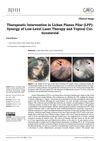
 Combining low-level laser therapy with topical corticosteroids effectively improved Lichen Planopilaris symptoms.
 4 citations
,
January 2021 in “Journal of Clinical Medical Research”
4 citations
,
January 2021 in “Journal of Clinical Medical Research” c-Kit is important for heart regeneration and cancer development.