 June 2026 in “Journal of Sulaimani Medical College”
 Adipose-derived stem cell exosomes are more effective and satisfying for treating hair loss than minoxidil.
 May 2026 in “Organoid Research”
 Hydrogel-based methods improve skin organoid development for medical and research applications.
 April 2026 in “Inflammopharmacology”
 Punica granatum leaf extract may help treat skin fibrosis by reducing inflammation and oxidative stress.
 March 2026 in “European Journal of Medical and Health Research”
 Women with hair loss had lower IGF-1 levels.
 March 2026 in “Frontiers in Pharmacology”
 Taxifolin, found in onions and milk thistle, has health benefits but needs more research for safe use.
 February 2026 in “Clinical Cosmetic and Investigational Dermatology”
 Female pattern hair loss is linked to genetics, family history, and lifestyle factors.
 January 2026 in “Frontiers in Bioscience-Landmark”
 Araliadiol protects skin cells from damage by boosting antioxidant defenses.
![Asl Us Soos [Glycyrrhiza Glabra (Linn)]: An Evidence-Based Review on Its Phytopharmacological, Therapeutic Potential and Gastroduodenal Ulcer Activity](/images/assets/6967bbcb-3ed8-4b8e-a417-ed1c34019505/small/62125.jpg) January 2026 in “International Journal of Unani and Integrative Medicine”
January 2026 in “International Journal of Unani and Integrative Medicine” Licorice can effectively treat stomach ulcers and may work as well as or better than some standard drugs.
 July 2025 in “JUNIOR RESEARCHERS”
 Wearing masks has increased skin issues like acne and eczema, especially in women and young people.
 February 2025 in “Journal of Nutrients”
 Bone broth may improve health and prevent diseases.
 December 2024 in “International Journal on Science and Technology”
 Herbal hair oils promote hair growth effectively with minimal side effects.
 August 2024 in “Frontiers in Pharmacology”
 Antibody treatments show promise for hair loss but need more research.
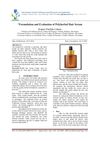 June 2024 in “International Journal of Pharmaceutical Research and Applications”
 Polyherbal hair serum can hydrate the scalp and promote hair growth safely.
 January 2024 in “Deleted Journal”
 Essential oils may help hair health but lack strong scientific proof and can cause allergic reactions.
 May 2023 in “Current Medicinal Chemistry”
 Microneedle patches improve drug delivery for skin treatments and cosmetic enhancements.
 January 2023 in “International Journal of Pharmaceutical Research and Development”
 Nanotechnology therapies can help improve quality of life for those with hair loss.
 January 2023 in “Postępy Dermatologii i Alergologii”
 Azelaic acid treats acne, rosacea, and hyperpigmentation with minimal side effects.
 January 2022 in “Journal Of Biotechnology And Crop Science”
 Liquorice has medicinal benefits, including antioxidant, anti-inflammatory, antimicrobial, antiulcer, and antiviral effects.
 January 2017 in “Clinical approaches and procedures in cosmetic dermatology”
 Anti-glycation treatments might slow skin aging, but more research is needed.

Glycyrrhizic acid and licorice extract can significantly reduce unwanted hair growth.
 August 2010 in “The Journal of Dermatology”
 The document concludes that low-dose acne treatment is most suitable for moderate acne, with high patient satisfaction and low relapse rates.
 June 2018 in “Advances in Cosmetic Surgery”
 Hair loss caused by genetics and hormones; more research needed for treatments.
 November 2025 in “Journal of Ayurveda and Integrated Medical Sciences”
 Using essential oils in Shiroabhyang can improve hair health and growth.
 2 citations
,
January 2023 in “Pharmaceuticals”
2 citations
,
January 2023 in “Pharmaceuticals” Natural products and phytochemicals may help with hair regrowth, but more research is needed.

Ashwagandha-derived nanoparticles can promote human hair growth.
 April 2023 in “Journal of Investigative Dermatology”
 Ashwagandha nanoparticles help increase hair growth.
July 2026 in “Experimental Dermatology” Ashwagandha-derived nanovesicles may help promote hair growth.

Vegan exosome-like vesicles from microalgae improve skin and hair health, reducing wrinkles and enhancing elasticity.
Bioactive compounds in neurocosmetics can improve skin health and emotional well-being.