 1 citations
,
November 2025 in “Cell Death and Disease”
1 citations
,
November 2025 in “Cell Death and Disease” Understanding how mesenchymal stem cells stay undifferentiated can improve their use in treating diseases.
 1 citations
,
October 2025 in “Nano Research”
1 citations
,
October 2025 in “Nano Research” A new microneedle patch effectively treats atopic dermatitis by reducing skin stress and restoring immune balance.
 1 citations
,
July 2025 in “Frontiers in Endocrinology”
1 citations
,
July 2025 in “Frontiers in Endocrinology” ApoBDs, once seen as waste, are now viewed as potential tools for disease treatment and tissue repair.
 1 citations
,
January 2025 in “American Journal of Translational Research”
1 citations
,
January 2025 in “American Journal of Translational Research” PPARα agonists may help treat alopecia areata by reducing inflammation.
 1 citations
,
March 2024 in “Signal transduction and targeted therapy”
1 citations
,
March 2024 in “Signal transduction and targeted therapy” NF-κB signaling is crucial in many diseases and can be targeted for new treatments.
 1 citations
,
January 2023 in “In vivo/In Vivo”
1 citations
,
January 2023 in “In vivo/In Vivo” Box A of HMGB1 can improve stem cell function, aiding anti-aging therapy.
 1 citations
,
May 2017 in “InTech eBooks”
1 citations
,
May 2017 in “InTech eBooks” Some natural remedies may help with hair regrowth, but more research is needed to confirm their effectiveness and safety.
 1 citations
,
January 2015 in “Journal of nutrition & health”
1 citations
,
January 2015 in “Journal of nutrition & health” Fish oil improves skin health in people with diabetes and high cholesterol.
 1 citations
,
February 2004 in “Journal of The European Academy of Dermatology and Venereology”
1 citations
,
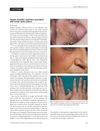
February 2004 in “Journal of The European Academy of Dermatology and Venereology” Hair loss improved with treatment and successful transplant.
 June 2026 in “Discover Immunity.”
 Mesenchymal stem cells help improve skin healing and rejuvenation.
 June 2026 in “Reports of Morphology”
 A nutrient-rich diet improved skin and hair health in stressed rats.
 June 2026 in “Frontiers in Bioengineering and Biotechnology”
 Hair follicle systems are being engineered to better mimic natural hair follicles for studying hair disorders and testing treatments.
 June 2026 in “Frontiers in Immunology”
 Understanding tissue remodeling can help create precise treatments for various organ issues.
 May 2026 in “Iranian journal of pharmaceutical research”
 HAMA hydrogels speed up skin wound healing by reducing inflammation and boosting collagen production.
 April 2026 in “Frontiers in Pharmacology”
 Erzhi Pill shows promise for health issues but needs better quality control and clearer usage guidelines.
 March 2026 in “Molecular and Cellular Biomedical Sciences”
 EH-MSCs may help treat hair loss by reducing inflammation.
 February 2026 in “Frontiers in Immunology”
 Human amniotic stem cells can safely treat psoriasis-like skin in mice.
 February 2026 in “Frontiers in Immunology”
 Age-related immune changes worsen Parkinson's disease, suggesting new treatment strategies.
 February 2026 in “Frontiers in Medical Technology”
 Keratinocyte stem cells are crucial for skin renewal and have potential in wound healing and tissue regeneration.
 February 2026 in “International Journal of Web of Multidisciplinary Studies”
 Restoring microbial balance and using exosome therapies may help treat hair disorders like alopecia and acne.
 February 2026 in “Chinese Medicine”
 Natural products might help treat hair greying.

Exosomes show promise for skin treatments but need more research and regulation in India.
 January 2026 in “Frontiers in Cell and Developmental Biology”
 Platelet-derived products can help regenerate the temporomandibular joint by enhancing natural healing processes.
 January 2026 in “Frontiers in Immunology”
 Icariin can regulate macrophages and may help treat inflammation, cancer, bone disorders, and fibrotic diseases.
 January 2026 in “The Eurasian Journal of Life Sciences”
 Pectin nanofibers show promise for medical use due to their unique properties.

Regulatory T cells enhance bone formation by influencing cell mechanics.

Adipocytes in atopic dermatitis skin change and worsen inflammation and fibrosis.
 January 2026 in “Frontiers in Molecular Biosciences”
 A new method helps diagnose alopecia areata using specific gene markers and could guide targeted treatments.
 January 2026 in “Asian Journal of Pharmaceutical and Clinical Research”
 Umbilical cord and cord blood stem cells are promising for treating chronic diseases due to their versatility and ethical acceptability.
 January 2026 in “Journal of Biomedical Research”
 Small extracellular vesicles from stem and immune cells show promise for treating various diseases but face challenges in clinical use.