38 citations
,
January 2017 in “Mediators of Inflammation” Platelet-released growth factors can reduce inflammation in joint disease.
April 2023 in “Journal of Investigative Dermatology” RNase L suppresses regeneration in mammals.
September 2017 in “Griffith Research Online (Griffith University, Queensland, Australia)” Blocking IL-17 can reduce joint inflammation in Ross River Virus infections.
 223 citations
,
September 2018 in “Rheumatology”
223 citations
,
September 2018 in “Rheumatology” JAK inhibitors are effective in treating various immune-related diseases, not just rheumatoid arthritis.
 68 citations
,
November 2015 in “The Journal of Allergy and Clinical Immunology”
68 citations
,
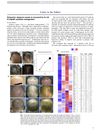
November 2015 in “The Journal of Allergy and Clinical Immunology” Blocking IL-12/IL-23p40 helped reverse severe hair loss in patients.
 October 2021 in “Journal of Investigative Dermatology”
 COVID-19 infection rates were low in patients with immune diseases, regardless of their treatment type.
 2 citations
,
April 2023 in “South East European Journal of Immunology”
2 citations
,
April 2023 in “South East European Journal of Immunology” High leptin levels may promote skin cancer and inflammation, suggesting potential for leptin-targeted therapies.
20 citations
,
September 2003 in “Journal of Investigative Dermatology” Targeting MIG and MCP-1 may help treat inflammation in alopecia areata.
1 citations
,
January 2025 in “Clinical Cosmetic and Investigational Dermatology” Higher levels of certain proteins may increase or decrease rosacea risk.
 4 citations
,
July 2017 in “Archivum Immunologiae et Therapiae Experimentalis”
4 citations
,
July 2017 in “Archivum Immunologiae et Therapiae Experimentalis” Retinol may affect immune responses in people with frequent skin boils.
2 citations
,
March 2025 in “International Journal of Dermatology” Tralokinumab successfully treated alopecia areata in a patient with atopic dermatitis.
71 citations
,
May 2024 in “New England Journal of Medicine” Ruxolitinib may effectively treat APS-1 by reducing harmful immune responses.
3 citations
,
August 2024 in “Frontiers in Immunology” Targeting specific biomarkers and immune signals is more effective and safer for treating inflammatory skin diseases.
January 2010 in “Zhongguo xiandai yixue/Zhongguo xiandai yixue zazhi” TGF-β1 and TNF-α contribute to lung damage after radiation.
July 2025 in “Journal of Investigative Dermatology” IL-17 inhibitors are more effective than methotrexate in preventing psoriatic arthritis in psoriasis patients.
 23 citations
,
August 2018 in “Biochimica and biophysica acta. Molecular and cell biology of lipids”
23 citations
,
August 2018 in “Biochimica and biophysica acta. Molecular and cell biology of lipids” Different sPLA2 enzymes affect immunity, skin and hair health, reproduction, and may be potential targets for therapy.
June 2025 in “Medical Science Journal for Advance Research” Higher levels of MIG and IP-10 may help diagnose and monitor Alopecia Areata.
 January 2022 in “The Egyptian Journal of Hospital Medicine”
 Higher IL-21 levels may help predict alopecia areata activity.
 May 2025 in “The Journal of Rheumatology”
 Anifrolumab may help improve symptoms in patients with overlapping autoimmune diseases.
July 2026 in “Journal of Investigative Dermatology”  7 citations
,
December 2021 in “European Respiratory Review”
7 citations
,
December 2021 in “European Respiratory Review” The document concludes that diagnosing and treating Interstitial Pneumonia with Autoimmune Features (IPAF) is challenging, needs a multidisciplinary approach, and further research for better diagnostic criteria and treatments. It also emphasizes regular checks for Connective Tissue Disease symptoms in all patients with Interstitial Lung Disease.
 April 2023 in “Journal of Investigative Dermatology”
 Type 2 cytokines IL-4 and IL-13 increase skin's vulnerability to Staphylococcus aureus, which could be important for treating atopic dermatitis.
June 2026 in “Strathprints: The University of Strathclyde institutional repository (University of Strathclyde)” Topical IKKα inhibitors may help prevent CCS tumours.
2 citations
,
January 2020 in “Skin Appendage Disorders” Ustekinumab treatment may reveal a genetic tendency for steatocystoma multiplex in psoriasis patients.
9 citations
,
February 2025 in “Journal of Nanobiotechnology” Biomimetic nanovesicles can speed up diabetic wound healing by regulating immune cell behavior and metabolism.
9 citations
,
January 2024 in “International Journal of Dermatology” Tralokinumab may help improve symptoms of atopic dermatitis and alopecia areata.
February 2024 in “International journal of molecular sciences” Type 3 Innate Lymphoid Cells help maintain skin health and balance, and are involved in skin diseases and healing.
May 2026 in “Journal of Human Immunity” Ruxolitinib reduced inflammation and improved symptoms in APECED patients but may cause anemia and weight gain.
January 2025 in “Fìzìologìčnij žurnal” PDRN may reduce inflammation and complications in revision rhinoplasty for patients with high fibrinogen levels.
June 2026 in “Frontiers in Immunology” JAK inhibitors effectively treat inflammatory skin diseases by targeting specific cytokine signals.