Alopecia areata causes patchy hair loss but hair can regrow on its own.
January 2020 in “Dermatology Online Journal” A young Caucasian man experienced a rare type of hair loss on the back of his head.
February 2025 in “Pediatric Dermatology”  December 2020 in “Skin appendage disorders”
 A young man with an unusual type of scarring hair loss suggests a possible new variant of a known scalp condition.
September 2023 in “Journal of the American Academy of Dermatology” Current guidelines may overlook beard and sideburn involvement in diagnosing frontal fibrosing alopecia in men.
Combining vertical and horizontal sectioning improves scalp biopsy analysis for alopecia.
 December 2023 in “Journal of ayurveda and integrated medical sciences”
 Ayurvedic treatment significantly improved hair loss in a 17-year-old male.
 February 2014 in “Medicine - Programa De Formación Médica Continuada Acreditado”
 The document concludes that non-scarring alopecias can be reversed, but scarring alopecias cause permanent hair loss.
October 2025 in “Diagnostics” Temporal triangular alopecia is a harmless, non-progressive hair loss condition.
8 citations
,
January 2002 in “Piel” Postmenopausal women may experience frontal hairline and eyebrow loss due to cicatricial fibrosis.
 June 2016 in “Experimental Dermatology”
 Changing hair follicle identity could potentially reverse balding.
 June 2025 in “International Journal of AYUSH Case Reports”
 Ayurvedic treatment successfully regrew hair in a woman with alopecia areata.
March 2025 in “Revista Foco” Early diagnosis of Alopecia Frontal Fibrosante is crucial for effective treatment.
 1 citations
,
December 2017 in “Anais Brasileiros de Dermatologia”
1 citations
,
December 2017 in “Anais Brasileiros de Dermatologia” Frontal fibrosing alopecia can mimic traction alopecia but has distinct features like facial papules and eyebrow thinning.
 January 2022 in “Consultant”
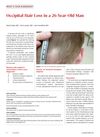
 The man's occipital hair loss was due to temporal triangular alopecia, not alopecia areata.
 May 2026 in “Journal of Case Reports and Scientific Images”
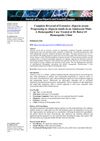
 Homeopathic treatment and lifestyle changes helped a teen regrow hair lost to alopecia.
Ayurvedic treatments improved alopecia areata symptoms.
 March 2022 in “International journal of biology, pharmacy and allied sciences”
 Ayurvedic treatment with local herbal applications successfully regrew hair in a patient with alopecia areata.

The patient with total hair loss did not regrow hair despite treatment, indicating a poor outlook for this type of hair loss.
 30 citations
,
November 2012 in “Anais Brasileiros De Dermatologia”
30 citations
,
November 2012 in “Anais Brasileiros De Dermatologia” Diagnosing diffuse alopecia, a hair loss condition, can be challenging and may require a scalp biopsy or tracking the disease's progression when symptoms and skin tests aren't enough.
25 citations
,
October 1975 in “Journal of Cutaneous Pathology” Hair growth in alopecia areata is hindered due to impaired cell activity in the surrounding tissue.
 December 2024 in “Australian Journal of General Practice”
 The woman's hair loss pattern doesn't match typical conditions like alopecia areata or female pattern hair loss.
 November 2009 in “Actas dermo-sifiliográficas/Actas dermo-sifiliográficas”
 Hair transplantation effectively treated a bald patch in an 18-year-old woman with Temporal Triangular Alopecia.
 1 citations
,
March 2020 in “Australasian Journal of Dermatology”
1 citations
,
March 2020 in “Australasian Journal of Dermatology” The paper concludes that recognizing bitemporal alopecia areata is important for early treatment and preventing its progression.
July 2024 in “International Journal of Medical Science and Clinical Research Studies” Alopecia Areata Incognita causes sudden hair loss in young females but usually has a better outcome than other types.
 2 citations
,
January 1997 in “Archives of Dermatology”
2 citations
,
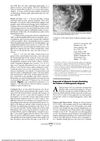
January 1997 in “Archives of Dermatology” Alopecia areata can regrow hair in a pattern similar to androgenetic alopecia.
June 2026 in “British Journal of Dermatology” Hair transplants may trigger frontal fibrosing alopecia.
 37 citations
,
November 2003 in “Veterinary pathology”
37 citations
,
November 2003 in “Veterinary pathology” Hair loss in mice starts with immune cells damaging hair roots before it becomes visible.
 2 citations
,
August 2010 in “Journal of the American Academy of Dermatology”
2 citations
,
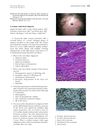
August 2010 in “Journal of the American Academy of Dermatology” A 65-year-old woman has a growing bald spot on her scalp.