49 citations
,
January 2010 in “Plant and Cell Physiology” LPR1 regulates root growth under low phosphate stress independently of SIZ1 in Arabidopsis thaliana.
34 citations
,
August 2018 in “Cancer research” Fixing DNA errors is crucial to prevent skin cancer.
3 citations
,
December 2023 in “Aging” hsa_circ_0002980 can help stop liver cancer cells from growing and spreading.
7 citations
,
November 2007 in “Differentiation” The NF-κB effector p65/RelA activates hair keratin genes, aiding hair formation.
 10 citations
,
November 2015 in “Experimental Dermatology”
10 citations
,
November 2015 in “Experimental Dermatology” Skin RAGE levels are linked to inflammation and cell death.
May 2026 in “Chemical Engineering Journal”  26 citations
,
April 2019 in “Genes”
26 citations
,
April 2019 in “Genes” lncRNA XLOC_008679 and gene KRT35 affect cashmere fineness in goats.
7 citations
,
October 2023 in “BMC Genomics” Noncoding RNAs help determine cashmere quality in goats.
27 citations
,
February 2020 in “EMBO Reports” MEX3A is crucial for maintaining intestinal stem cells in mice.
Matriptase-2 helps control iron levels by suppressing hepcidin, and its deficiency can cause iron-deficiency anemia.
 10 citations
,
June 2005 in “The journal of investigative dermatology/Journal of investigative dermatology”
10 citations
,
June 2005 in “The journal of investigative dermatology/Journal of investigative dermatology” FP-1 is a key protein in rat hair growth, active only during the growth phase.
December 2024 in “European journal of medical research”  106 citations
,
March 2013 in “Nature Communications”
106 citations
,
March 2013 in “Nature Communications” A new genetic region, 17q21.31, is linked to higher ovarian cancer risk.
 23 citations
,
December 2021 in “Frontiers in Immunology”
23 citations
,
December 2021 in “Frontiers in Immunology” IL-1 family cytokines are crucial for skin defense and healing, but their imbalance can cause skin diseases.
2 citations
,
August 2016 in “Journal of Investigative Dermatology” TNFα and interleukin-1 blockers reduce skin inflammation from EGFR antibody therapy.
8 citations
,
February 2024 in “Matrix Biology”  April 2018 in “The journal of investigative dermatology/Journal of investigative dermatology”
 Double-stranded RNA helps regenerate hair follicles by increasing retinoic acid production and signaling.
 29 citations
,
July 2014 in “PloS one”
29 citations
,
July 2014 in “PloS one” Meis1 is crucial for skin health and tumor development.
 June 2020 in “bioRxiv (Cold Spring Harbor Laboratory)”
 Lef1 helps adult skin cells maintain their ability to heal wounds and regenerate hair, but the study's methods and conclusions have been questioned.
January 2007 in “Journal of Southwest University” The ND1 gene of the Asian black bear Sichuan subspecies is similar to other bear species.
MIR135b affects wound healing by targeting genes, and PDRN may help heal wounds by altering this pathway.
9 citations
,
June 2021 in “Journal of Inflammation Research” Euph E and Euri A from Euphorbia neriifolia help control inflammation and immune response in cells.
150 citations
,
June 1999 in “Oncogene” 50 citations
,
August 2019 in “Cell Communication and Signaling” NFAT5 triggers atherosclerosis under stress by activating inflammation in blood vessels.
September 2025 in “Development” Nelfb is crucial for forming skin fat tissue by regulating genes needed for fat cell development.
August 2025 in “BMC Pharmacology and Toxicology” The LTF gene may help predict and manage nonspecific orbital inflammation.
 23 citations
,
December 2013 in “British Journal of Dermatology”
23 citations
,
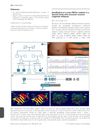
December 2013 in “British Journal of Dermatology” A new gene mutation linked to a skin condition was found in a Spanish family.
 17 citations
,
June 2017 in “Gene”
17 citations
,
June 2017 in “Gene” A rare genetic mutation found in an Indian family can be detected through prenatal screening.
 April 2015 in “Plastic and Reconstructive Surgery”
 Activating TLR3 helps improve skin and hair follicle regeneration after wounds.