Search
for
Sort by
Research
690-720 / 1000+ resultsresearch Irish dermatologists’ experience with JAK inhibitors in alopecia areata
Irish dermatologists use JAK inhibitors for alopecia areata but want standardized treatment guidelines.
research PSS20 MEDIATION MODELING AND MEASUREMENT CHARACTERISTICS OF THE ITCH SEVERITY SCORE FROM A PHASE 2B TRIAL OF ORAL CP-690-550 IN PATIENTS WITH MODERATE TO-SEVERE PLAQUE PSORIASIS
CP-690,550 significantly reduced itching in patients with moderate-to-severe plaque psoriasis.
research Type I Keratin 17 Protein Is Phosphorylated on Serine 44 by p90 Ribosomal Protein S6 Kinase 1 (RSK1) in a Growth- and Stress-dependent Fashion
Keratin 17 is modified by RSK1 in response to growth and stress, affecting skin growth and stress response.
research P123 : Oral Janus kinase inhibitors for the treatment of alopecia areata: a systematic review and metaanalysis
Both tofacitinib and ruxolitinib are effective and tolerable for treating alopecia areata.
research The Human Type II Keratin Gene Cluster on Chromosome 12q13.13: Final Count or Hidden Secrets?
The document concludes that the human keratin gene cluster is complex, with a need for updated naming to reflect over 50 functional genes important for hair and skin biology.
research Impaired Keratinocyte Proliferative and Clonogenic Potential in Transgenic Mice Overexpressing 14-3-3σ in the Epidermis
Overexpressing 14-3-3σ in mice skin reduces cell growth and hair density.
research Molecular Predictors of Ritlecitinib Efficacy in Alopecia Areata: Role of JAK3-Dependent Inflammation and Follicular Integrity
Ritlecitinib can reduce inflammation and help hair regrow in Alopecia Areata.
research Evaluation of the level of serum Interleukins (IL-2, IL-4, IL-15 andIL-17) and its relationship with disease severity in patients with alopecia areata
Interleukin levels are higher in alopecia areata patients but don't predict disease severity or duration.
research Real-World Effectiveness of JAK Inhibitors for Alopecia Totalis and Alopecia Universalis: A Single-Center Experience
JAK inhibitors are effective and safe for treating severe alopecia areata.
research Treatment of alopecia areata with JAK inhibitors
JAK inhibitors can effectively regrow hair in alopecia areata.
research Hub biomarkers in ultrasound-guided bladder cancer and osteosarcoma: Myosin light chain kinase and caldesmon
Lower levels of MYLK and CALD1 in bladder cancer and osteosarcoma are linked to worse survival rates.
research 128 Bimekizumab led to rapid & deep normalisation of molecular signatures associated with PASI sub-components, preceding clinical skin clearance
Bimekizumab quickly improves psoriasis symptoms and skin at the molecular level.
research Protein kinase Cepsilon is linked to 12-O-tetradecanoylphorbol-13-acetate-induced tumor necrosis factor-alpha ectodomain shedding and the development of metastatic squamous cell carcinoma in protein kinase Cepsilon transgenic mice.
Overexpression of PKCepsilon leads to increased TNFalpha, promoting metastatic squamous cell carcinoma in mice.
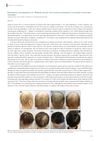
research Successful hair regrowth in a Korean patient with alopecia universalis following tofacitinib treatment
A Korean woman with complete hair loss regrew her hair after taking tofacitinib, with no side effects.
research An X-traordinary stroke
Untreated congenital adrenal hyperplasia can lead to complications like stroke and needs glucocorticoid treatment.
research Treatments for Moderate-to-Severe Alopecia Areata: A Systematic Narrative Review
Some treatments for severe hair loss work but often have side effects, with baricitinib showing the most promise.
research A RARE CASE OF ISOLATED PULMONARY INVOLVEMENT IN LYMPHOID VARIANT HYPEREOSINOPHILIC SYNDROME
A man with a rare lung-focused form of hypereosinophilic syndrome improved with steroid treatment.
research Effects of the RV3466F lotion on female telogen effluvium: Results from a 16 week, multi-centric, controlled, randomized trial
RV3466F lotion significantly reduces hair loss and improves acute telogen effluvium.
research Single Best Answers
The document provides 70 multiple choice questions to improve haematology skills.
research Section 2: Single Best Answers Questions 51–120
The document tests knowledge and decision-making in hematology through multiple-choice questions.
research 455 Beyond Immunity: TEC and JAK3 Kinase Activation in Melanocytes Drives Inflammation in Vitiligo
TEC kinases may help cause inflammation in vitiligo and could be targeted for treatment.
research Medicaid coverage of Janus kinase inhibitors for alopecia areata treatment
Medicaid coverage for alopecia areata treatments is inconsistent and often limited.
research Treatment of alopecia areata with JAK inhibitors: a review of the literature
JAK inhibitors can help regrow hair in alopecia areata but have potential long-term risks and require careful monitoring.
research Janus kinase inhibitors: An innovative treatment for alopecia areata
New medicines that block a specific pathway are showing promise for treating severe hair loss but need more testing for safety and effectiveness.
research Il-10 family members as novel responders to genotoxic stress
IL-19 and IL-24 help cells respond to DNA damage and could be targeted for cancer and age-related disease treatments.
research MultiKano: an automatic cell type annotation tool for single-cell multi-omics data based on Kolmogorov–Arnold network and data augmentation
MultiKano accurately identifies cell types in complex data better than existing methods.
research IL-3 contributes to development of lupus nephritis in MRL/Ipr mice
IL-3 worsens lupus nephritis and blocking it improves kidney health.
research TOFACITINIB IN OVERLAPPING AUTOIMMUNE AND AUTOINFLAMMATORY DISORDERS: A CASE REPORT OF A DUAL GRAHAM-LITTLE-PICCARDI-LASSEUR SYNDROME AND HIDRADENITIS SUPPURATIVA
Tofacitinib effectively treated a woman's complex autoimmune and autoinflammatory disorders.
research 0433 JAK inhibitor halts the progression of acute exacerbation of alopecia areata
Baricitinib stops hair loss and promotes regrowth in alopecia areata.