 January 2023 in “Burns & Trauma”
 The study concluded that the new wound model can be used to evaluate skin regeneration and nerve growth.
August 2022 in “Biomedicines” Turning off the Lhx2 gene in mouse embryos leads to slower wound healing and scars.
Hairlessness in mammals is due to complex genetic changes in both genes and regulatory regions.
November 2022 in “Regenerative Therapy” Advancements in tissue engineering show promise for hair follicle regeneration to treat hair loss.
 January 2022 in “Stem cell biology and regenerative medicine”
 The document concludes that hair follicle regeneration involves various factors like stem cells, noncoding dsRNA, lymphatic vessels, growth factors, minoxidil, exosomes, and induced pluripotent stem cells.
1 citations
,
April 2025 in “Experimental Dermatology” Topical ruxolitinib may help some skin conditions but needs more research for alopecia areata.
3 citations
,
January 2023 in “JEADV Clinical Practice” IL-17 is more important than IFN-γ in causing severe hair loss in chronic alopecia areata.
138 citations
,
June 2023 in “Molecules” Skin pigmentation varies due to genetics, UV exposure, and drugs, with treatments available but requiring medical advice.
32 citations
,
May 2023 in “Preprints.org” Skin pigmentation varies due to genetics, UV exposure, and medications, with treatments available but requiring medical advice.
 5 citations
,
April 2015 in “HSOA journal of clinical dermatology & therapy”
5 citations
,
April 2015 in “HSOA journal of clinical dermatology & therapy” Triamcinolone acetonide mesotherapy may be effective for treating patchy hair loss in alopecia areata.
 May 2025 in “JEADV Clinical Practice”
 Tofacitinib and methotrexate successfully treated a woman's severe skin, joint, and hair loss issues.
 January 2023 in “The Egyptian Journal of Hospital Medicine”
 New treatments for sudden hair loss include oral medications and a special laser, both showing promise in hair regrowth.
8 citations
,
March 2023 in “PubMed” JAK inhibitors show promise in treating difficult skin diseases.
8 citations
,
November 2024 in “EMBO Molecular Medicine” Targeting JAK-STAT1 can reduce inflammation and promote hair growth in conditions linked to EGFR deficiency.
 159 citations
,
October 2015 in “Science Advances”
159 citations
,
October 2015 in “Science Advances” Blocking JAK-STAT signaling can lead to hair growth.
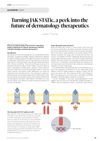 August 2024 in “New Zealand Medical Student Journal”
 JAK inhibitors show promise for treating skin diseases effectively and safely.
June 2026 in “Frontiers in Immunology” JAK inhibitors effectively treat inflammatory skin diseases by targeting specific cytokine signals.
 April 2023 in “The journal of investigative dermatology/Journal of investigative dermatology”
 JAK inhibitors help hair growth by boosting beta-catenin activity in hair root cells.
 September 2023 in “Frontiers in bioengineering and biotechnology”
 JAGGED1 could help regenerate tissues for bone loss and heart damage if delivered correctly.
 April 2017 in “Journal of Investigative Dermatology”
 Blocking JAK-STAT5 signaling in mice leads to hair growth.
October 2025 in “International Journal of Dermatology” JAK inhibitors may help treat certain types of hair loss, but more research is needed.
1 citations
,
April 2024 in “Journal of Dermatological Science”  September 2014 in “SciBX”
 JAK inhibitors may help treat alopecia areata and promote hair regrowth.
 32 citations
,
April 2019 in “JAAD case reports”
32 citations
,
April 2019 in “JAAD case reports” JAK inhibitors helped treat hair loss in two people with Down syndrome.
June 2025 in “British Journal of Dermatology” JAK inhibitors help regrow hair in alopecia areata, but their long-term safety is still unclear.
September 2025 in “Stem Cell Research & Therapy” TAZ boosts fat cell formation in goat stem cells by activating a specific signaling pathway.
 19 citations
,
February 2023 in “Environmental and experimental botany”
19 citations
,
February 2023 in “Environmental and experimental botany” Jasmonic acid helps plants grow, defend against threats, and survive stressful conditions like drought and salt.
December 2025 in “Journal of Human Immunity” JAK inhibitors may help improve symptoms in adults with APECED.
52 citations
,
September 2014 in “Nature medicine” JAK inhibitors might help treat alopecia areata.